Hokonui Rūnanga Register
  • About us
    • Who we are
    • Murihiku Regeneration
    • Property assets
    • Find us
    • Job vacancies
  • Our history
    • Our whakapapa - a deep connection to this place
    • Wai and Whakapapa
    • The Battle of Waitaramea
    • Poupoutunoa and Kauwaewhakatoro
    • Two Rivers: Mataura (Mata Ura) and Clutha (Mata Au)
  • Events & key dates
    • He Ao Hou - New Futures Murihiku Teacher PD Day
    • Energy and Innovation Wānanga 2024
    • Energy and Innovation Expo 2023
    • Science and Innovation Wānanga 2021
    • Energy, Infrastructure and Opportunities Wānanga 2026
  • Education & training
    • Education - Hokonui Rohe Team
    • Te Ara Aukati Kore - Education, Training, and Capability
    • Have your say!
  • Environment
    • Kaupapa Taiao - Hokonui Floriculture
    • Taonga Research
    • Southern Ocean - Murihiku ki te Tonga
    • Energy Transition Programme
    • Te Tapu o Tāne
    • Our Kaimahi - Staff
  • Health & wellbeing
    • Whānau Ora Navigators
    • Community youth worker and advocacy service
    • Hokonui Community-Led Health
    • Kaumatua Health Days
    • Te Kakano - Nurse-led Clinics
    • Our Kaimahi - Staff
    • Hokonui Takiwā Health and Wellbeing Village of Support
    • Referral form
    • COVID-19
  • News
    • Pānui updates
    • Photos
  • Contact us
    • Register
  1. Home
  2. News

News

Murihiku Regeneration hosted Woodside for Waitangi Day and community visits
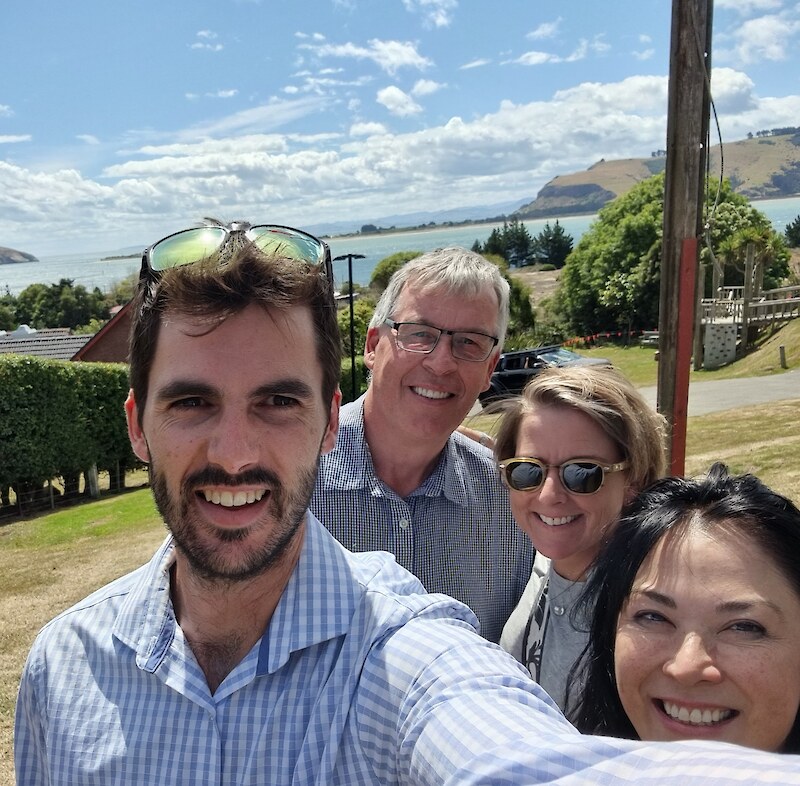
L-R: Kadin Lucas, Woodside Opportunity Lead New Zealand New Energy; Terry Nicholas, Murihiku Regeneration Portfolio Director and Upoko; Sophie Rowlands, Woodside New Energy External Affairs Manager; Ju-Lin O’Connor, Woodside Manager First Nations Relations.L-R: Kadin Lucas, Woodside Opportunity Lead New Zealand New Energy; Terry Nicholas, Murihiku Regeneration Portfolio Director and Upoko; Sophie Rowlands, Woodside New Energy External Affairs Manager; Ju-Lin O’Connor, Woodside Manager First Nations Relations.A small team from Woodside recently completed its latest community visit from 1—8 February 2023.

Woodside New Energy (Woodside)is the preferred development partner in the Southern Green Hydrogen Project.

Outside of the project development process, Woodside have been looking to progressively build its relationship and partnership with Murihiku Hapū, the community, and Te Rūnanga o Ngāi Tahu.

A series of visits have occurred over the last six months to help build connection and understanding of the community. This has included visits by their senior executives and a range of wānanga to build understanding of issues, opportunities and expectations to build a long-term relationship.

The team attended the NZ Hydrogen Symposium hosted by Otago University in Dunedin, also Waitangi Day services at Ōtākou Marae, and then completed Murihiku based visits to help better understand the social and community needs and expectations.

Michael Skerrett, Murihiku Upoko, met with Woodside during the visit, “it was a good opportunity to share some of our history, explain our values and expctations and create a positive dialogue for the future”.

The team lead - Ju Lin O’Conner commented on this visit, “it was such a great opportunity to come and participate in the Ōtākou Marae Waitangi Day events and see how Te Rūnanga o Ngāi Tahu are such a strong, connected, and vibrant part of the community. I also had an opportunity to sit down and listen to the voice of the Murihuku-Southland community and what is going to be important to them should this project occur”.

Terry Nicholas commented that, “so far, so good. We want Woodside to have a really clear picture of how partnership needs to occur, and where Hapū and the Southland community can see clear benefits from any project that is eventually realised”.

Woodside is currently progressing the next steps of the Southern Green Hydrogen project with other partners - and further visits and community based engagement is expected over the coming weeks and months.

Posted: 28 February 2023
Ninja, the Teenage Mutant Adélie Penguin of Cape Adare

Story by Dr Regina Eisert, 12 February 2023

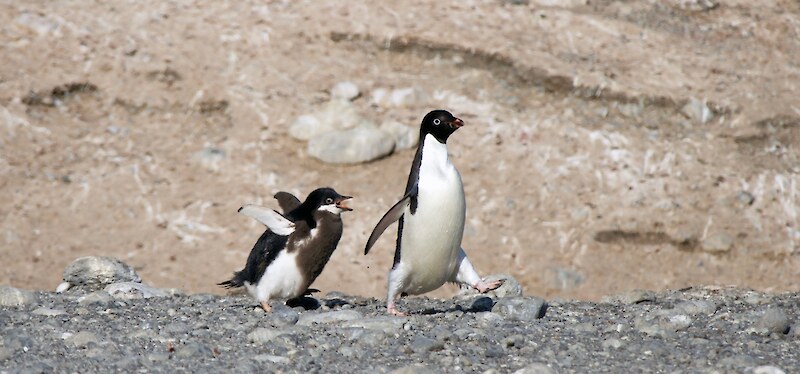
A hungry penguin chick is chasing its parent through the colony. © Dr Regina Eisert.A hungry penguin chick is chasing its parent through the colony. © Dr Regina Eisert.We arrive on the Antarctic continent at Cape Adare, site of the famous hut built by Carsten Borchgrevink. During spring and summer, Ridley Beach to the south of the Cape is home of a large colony of Adélie penguins (Pygoscelis adeliae). The end of summer is near and many birds have already left to feed at sea but a few stragglers remain along the beach.

Chicks with haphazard remnants of baby down wander through the area, begging and chasing adult penguins for food. Underfoot, circles of small rocks mark former nests. Most of all, the overwhelming smell gives us an idea of what this place must be like at the height of the breeding season.

We have been very lucky with the weather so far and today is another beautiful day of stunning Antarctic views. The cheerful sunlight makes for a stark contrast with the harsh reality of the colony: dead chicks and bones litter the ground, and the living penguins are surrounded by predators looking to make a meal of the weak and careless.

A narrow escape!

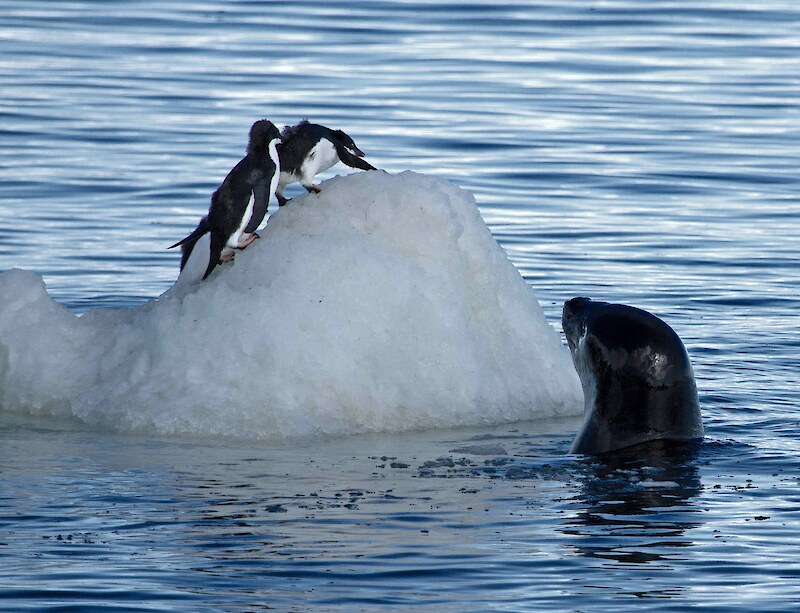
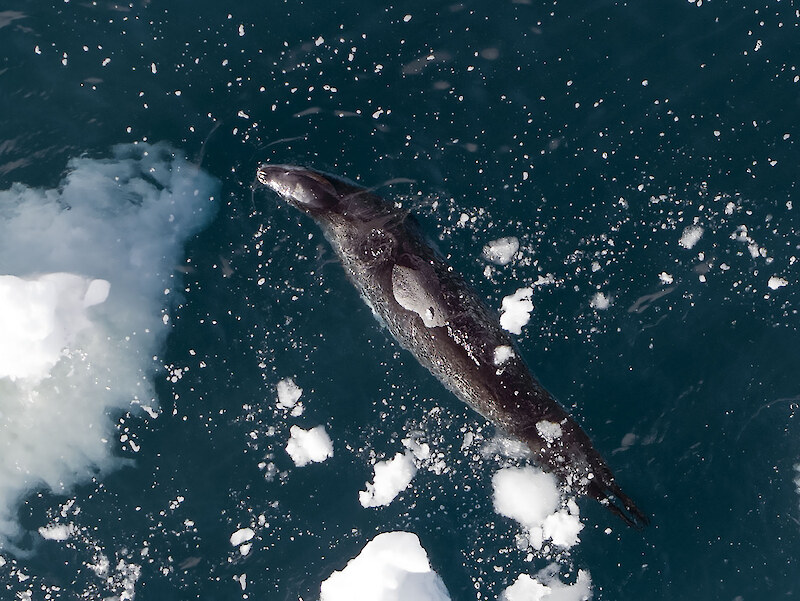
As soon as we step on the beach, we notice an ominous disturbance in the water travelling parallel to the shoreline. Three older penguin chicks just managed to scramble out of the water and onto an ice floe before a leopard seal could catch them. Although the seal circled the ice floe a few times, it had to give up in the end and the penguins escaped this time. © Dr Regina Eisert.Three older penguin chicks just managed to scramble out of the water and onto an ice floe before a leopard seal could catch them. Although the seal circled the ice floe a few times, it had to give up in the end and the penguins escaped this time. © Dr Regina Eisert.Three wide-eyed penguin chicks jump out onto a tiny ice floe with extreme haste, scrambling to get as far away from the water as possible. Seconds later, the reason for their haste lifts its reptilian head of the water: a leopard seal (Hydrurga leptonyx). The seal circles the ice floe a few times but when the penguins remain out of reach, it moves on. After a prudent amount of time, the penguins make their escape. A close call. From his drone, Colin detects a second leopard seal patrolling the coast. After having a good long look at the ship’s zodiacs, the seal meanders through the clear waters of the bay, casually mauling floating ice in its path, unaware that its antics are being filmed by humans. Perhaps a young leopard seal, or one that is well-fed and playful?

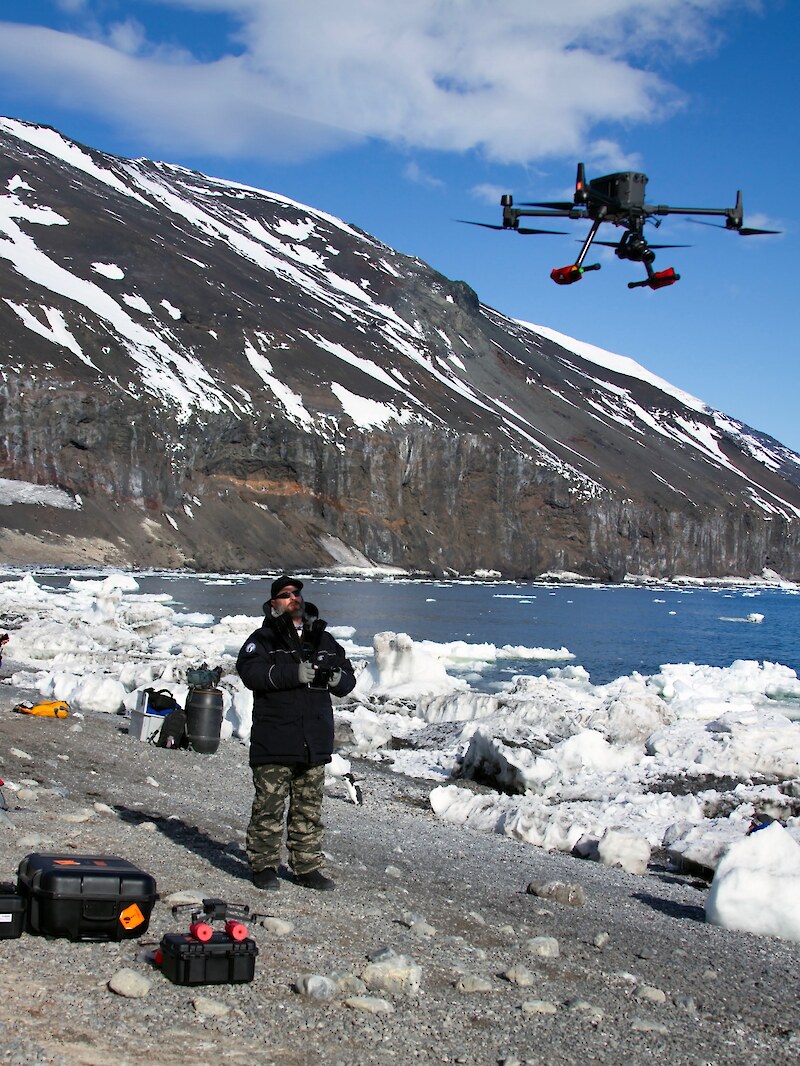
Our drone pilot Colin flying his Matrice 300 RTK. © Dr Regina Eisert.Our drone pilot Colin flying his Matrice 300 RTK. © Dr Regina Eisert.

A leopard seal is patrolling the bay at Cape Adare. Filmed using the drone pictured above. © Colin Aitchison.A leopard seal is patrolling the bay at Cape Adare. Filmed using the drone pictured above. © Colin Aitchison.

Small but feisty

Penguins are not safe on land, either. South polar skuas (Catharacta maccormicki) and southern giant petrels (Macronectes giganteus) glide low over the colony or sit watching from vantage points atop blocks of ice.

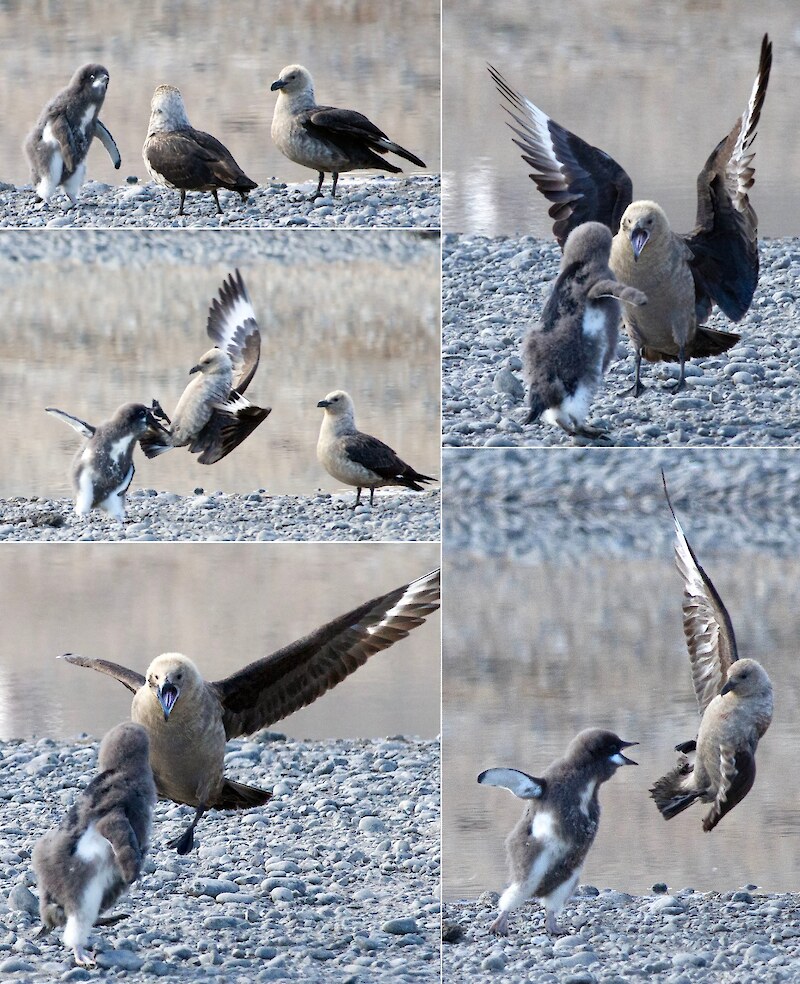
A fearless Adélie penguin chick fights off two South Polar skuas (above) and then takes shelter with humans (photo below). © Dr Regina Eisert.A fearless Adélie penguin chick fights off two South Polar skuas (above) and then takes shelter with humans (photo below). © Dr Regina Eisert.

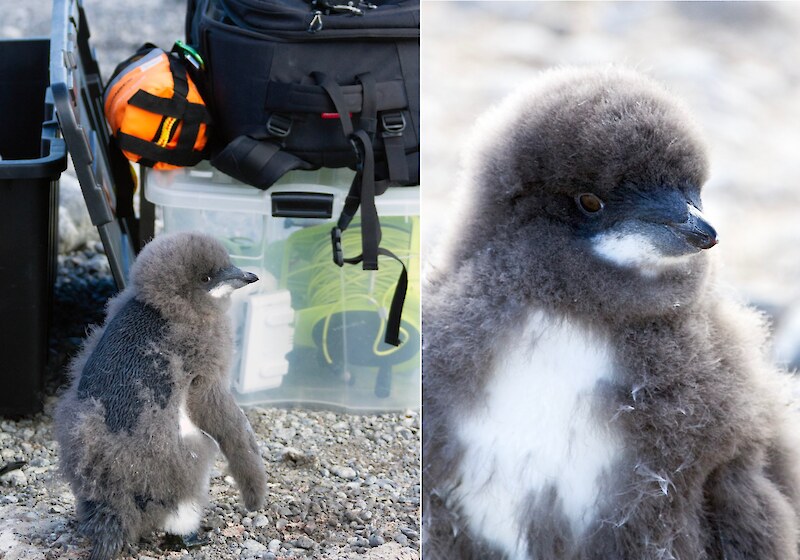
A chick still half-covered in down has wandered off from the other penguins and suddenly finds itself alone facing two skuas. After sizing each other up for a moment, one of the skuas launches itself talons first at the penguin chick. The second skua looks on, seemingly confident that the little penguin will shortly become a meal for two. To our surprise, the chick hits back hard at its would-be predator and repels the attack with a fierceness. The skua tries again, drawing up its wings to full height, but the chick is not the least bit intimidated and runs at the skua.The Ninja moves have paid off - safety among the humans! © Dr Regina Eisert.The Ninja moves have paid off - safety among the humans! © Dr Regina Eisert.

When its attacker retreats momentarily, the chick—cheered by human onlookers—makes a break for it and runs at full speed towards us. ‘Go Ninja Go’, the humans shout. The brave little penguin (a.k.a. Ninja) makes a beeline for us and takes shelter next to the crates of drone equipment. He knows the skuas will not follow him here. He is safe for now. His little face looks relieved and weary, all ferocity forgotten.

From the early days of Antarctic exploration, humans have been impressed the stubborn fearlessness of Adélie penguins that seems out of all proportion to their size and droll appearance. Their courage starts from a young age, matching the challenges inherent in growing up in one of the harshest places on Earth.

Posted: 28 February 2023
Parāoa Sighted in the Ross Sea Region Marine Protected Area

Story by Dr Regina Eisert, 10 February 2023

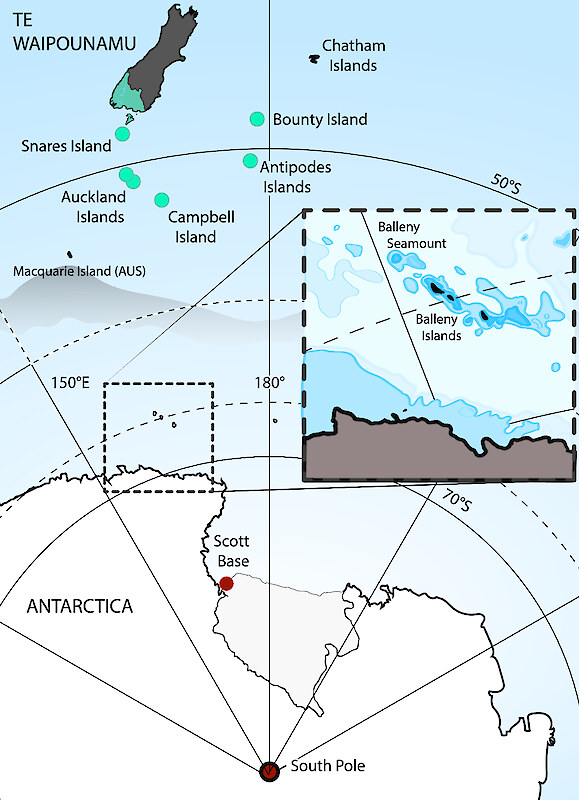
Today we are approaching the Balleny Islands. Located approximately 325 km north of the Antarctic Continent between 66° 15’S and 67° 10’S and 162° 15’E and 164° 45’E.

The Balleny Island Archipelago lies within the main Antarctic Circumpolar Current and attracts an exceptional abundance of wildlife. One of its islands has been designated as a Antarctic Specially Protected Area (ASPA) on the basis of its outstanding ecological value, and the entire archipelago is part of the Ross Sea Region Marine Protected Area.

Near the northern end of the archipelago lies the Balleny Seamount (see map below).The Balleny Seamount in relation to the Balleny Islands and the Antarctic Continent. © Dr Regina Eisert.The Balleny Seamount in relation to the Balleny Islands and the Antarctic Continent. © Dr Regina Eisert. It is this seamount that the ship is now approaching. We hope to spot whales that visit the area to take advantage of its exceptional marine productivity.

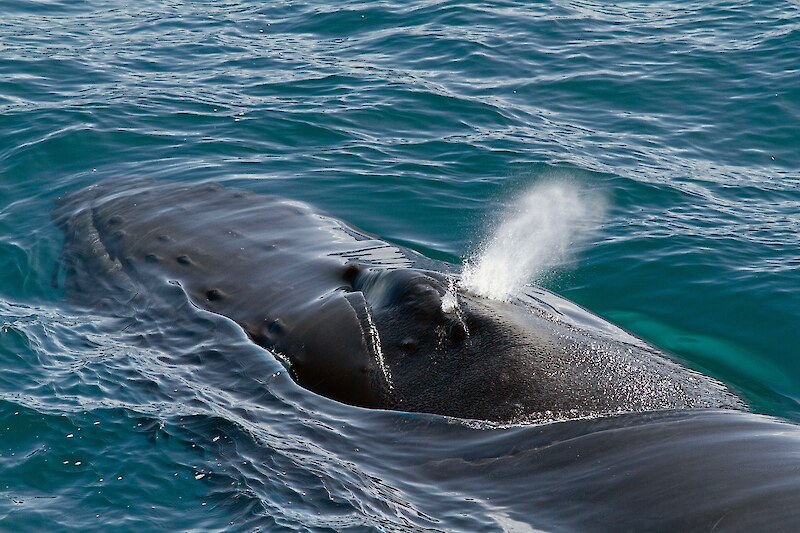
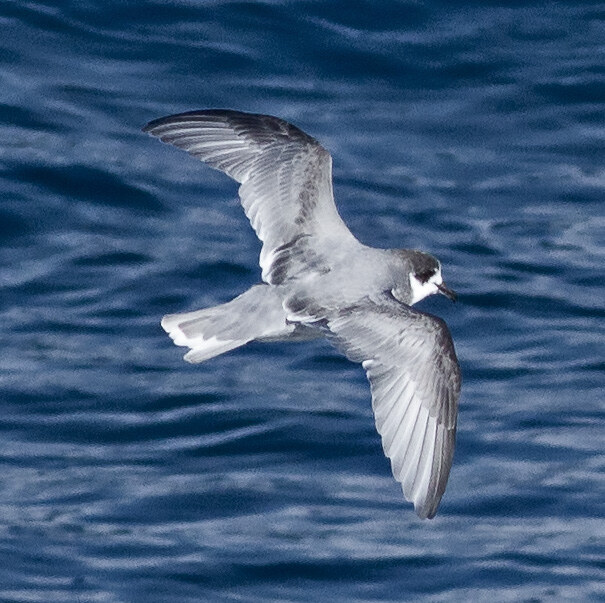
Right on cue, we see several groups of feeding paikea (humpback whales Megaptera novaeangliae) A close-up of a curious paikea (Megaptera novaeangliae) visiting our ship. As baleen whales, paikea have paired blowholes, whereas toothed whales (including parāoa and kākahi) breathe through a single blowhole. © Dr Regina Eisert.A close-up of a curious paikea (Megaptera novaeangliae) visiting our ship. As baleen whales, paikea have paired blowholes, whereas toothed whales (including parāoa and kākahi) breathe through a single blowhole. © Dr Regina Eisert.surrounded by cape petrels (Daption capense), blue petrelsA blue petrel (Halobaenus caeruleus), one of the many species of seabird found in the Southern Ocean. © Dr Regina Eisert.A blue petrel (Halobaenus caeruleus), one of the many species of seabird found in the Southern Ocean. © Dr Regina Eisert. (Halobaena caerulea), giant petrels (Macronectes giganteus), and tītī (Puffinus griseus), a surprising sight so far south. The Captain stops the engines. To our delight, curious paikea crowd around the ship, surfacing so close to us that we hear them breathe and see the barnacles that mark the skin of their backs.

Eagle-eyed Heritage Expedition staff Agnès and Kate spot a very special whale that is keeping its distance from the fray: a parāoa (sperm whale, Physeter macrocephalus), largest of the toothed whales. While it is common for large whale species in both hemispheres to migrate to polar regions for the summer to feed, among parāoa only mature males—who can reach up to 18 m in length—make the seasonal commute to the polar oceans. Female sperm whales, comparatively small at 9‑13 m mature length, remain at lower latitudes with their young, until the young males leave to join their brothers.

Whaling ships hunting parāoa and other whales came to New Zealand and the Ross Sea region first from America and Europe, and later from Japan and Russia. Parāoa were valued for their size and the spermaceti ‘oil’ (in fact a type of wax ester) extracted from their heads. Their populations were decimated like those of the other large whales.

Unlike paikea and other baleen whales, who are filter feeders and scoop up krill and small fish near the surface, parāoa can dive to great depth (>2,000 m) and hunt for giant squid and other deep-see creatures. The first specimens of Antarctic toothfish (Dissostichus mawsoni) were found in the stomach of parāoa by biologists working in the Soviet whaling fleet, suggesting that toothfish are an important prey item for these whales.

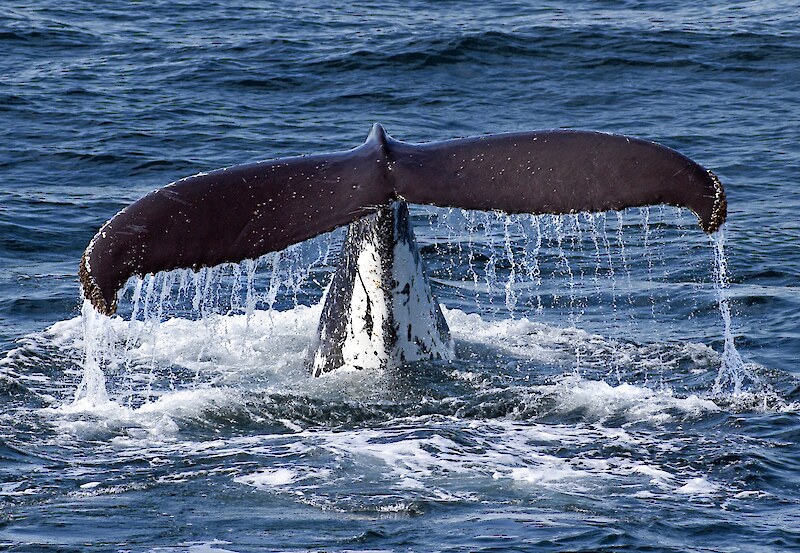
Male parāoa are frequently seen off the coast of Murihiku, to the west of Te Awa a Kiwa, around Jackson Bay on the West Coast, and of course at Kaikōura. In the Ross Sea region, male parāoa have been seen as far south as 72° S but most sightings are from the Balleny Islands and along the slope of the continental shelf that marks the border of the Ross Sea proper. It has been hypothesised that New Zealand parāoa travel to the Ross Sea region to feed in the summer, but there is no evidence to confirm this so far.The fluke of a paikea. Paikea have light bellies and the underside of their tail fluke is also pale, while parāoa are a uniform dark colour. © Dr Regina Eisert.The fluke of a paikea. Paikea have light bellies and the underside of their tail fluke is also pale, while parāoa are a uniform dark colour. © Dr Regina Eisert.

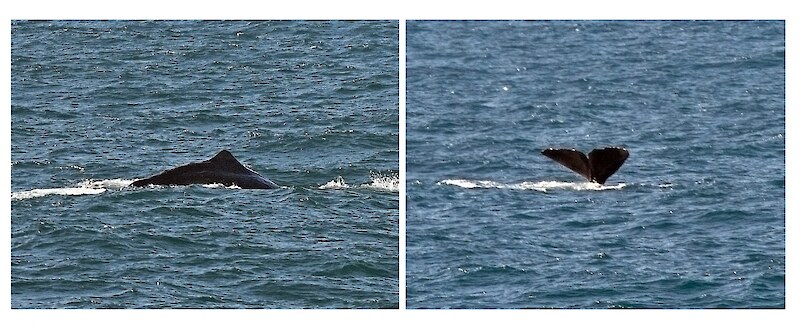
The question is, did the whale we saw today come here from Te Waipounamou? The images captured by Agnès and Kate can provide the answer. The overall shape of the fluke and in particular the pattern of notches in the trailing edge are unique to each whale and can be used to identify individuals, a method known as photo-identification or photo-ID for short. All we need to do is to compare the photo of our mystery whale from the Balleny Seamount with photos of parāoa taken in New Zealand. Or perhaps this whale came from even further afield? Something to figure out once we are back from our expedition.Left: The parāoa’s back showing the characteristic wrinkled skin, dorsal ridge, and small, triangular dorsal fin. © Kate Sutherland. Right: Parāoa show their tail fluke before diving. The shape and pattern of notches on the trailing edge of the fluke are unique and can be used to identify individual whales. This will allow us to track whales travelling between New Zealand and the Southern Ocean. © Agnès Brenière.Left: The parāoa’s back showing the characteristic wrinkled skin, dorsal ridge, and small, triangular dorsal fin. © Kate Sutherland. Right: Parāoa show their tail fluke before diving. The shape and pattern of notches on the trailing edge of the fluke are unique and can be used to identify individual whales. This will allow us to track whales travelling between New Zealand and the Southern Ocean. © Agnès Brenière.

Posted: 27 February 2023

Inaugural NZ Hydrogen Symposium (NZHS-1) He Hanoka Hauwai German-NZ Hydrogen Centre Announced

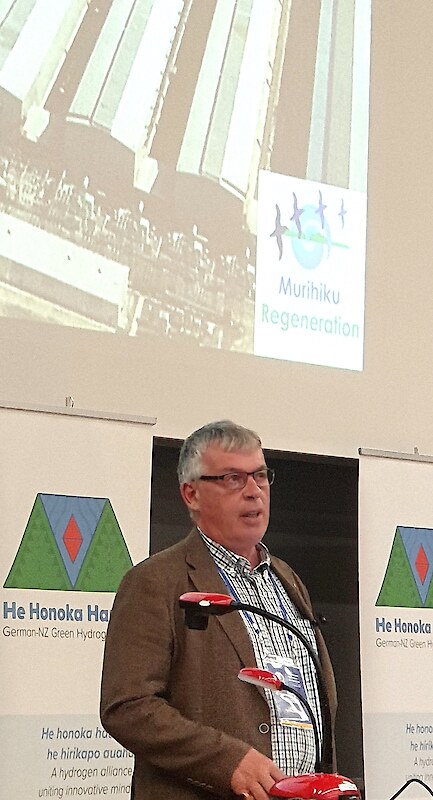
There was strong Ngāi Tahu presence at the inaugural research-focused New Zealand Hydrogen Symposium (NZHS-1), held in Dunedin, Ōtākou, 1-3 February 2023, hosted by the University of Otago and the newly announced He Hanoka Hauwai German-NZ Hydrogen Centre. It saw a great turnout from both around Aotearoa and many international partners interested in the emerging hydrogen economy in Aotearoa.Upoko Terry Nicholas presenting at the Inaugural New Zealand Hydrogen Symposium.Upoko Terry Nicholas presenting at the Inaugural New Zealand Hydrogen Symposium.

The co-chairs of this first of the annual conferences were Prof Sally Brooker, Dr Paul Jerabek and A/Prof Anna Garden; the two co-leaders of the German-NZ Green Hydrogen Centre He Honoka Hauwai and one of the principal grant researchers.

A gifting ceremony of the name and pou by Ōtākou Rūnanga representative Edward Ellison and Dr Hana O’Regan, presentations from Murihiku Upoko, Tā Tipene O’Regan and Terry Nicholas, described the need for green hydrogen as a part of the global energy transition.

Delegates were welcomed to the inaugural NZ Hydrogen Symposium by Tā Tipene O’Regan and challenged with the opportunities NZ has with regard to green hydrogen. View Tā Tipene’s opening speech here.

Terry Nicholas described the event as, “an opportunity to share with others the important work that Murihiku Regeneration is undertaking on behalf of Hapū, for successive generations and in the national interest”.

See here for a copy of the presentation.

Terry also notes that, “the relationship that Murihiku Regeneration is developing through its international partnerships, including with Germany, is important. Germany is a leading adopter of green hydrogen and we have much to learn. We have already had a delegation visiting Germany on green hydrogen, have the support of Dr Regina Eisert around science and innovation opportunities with Germany. We will also be looking to invite potential future German to the region to work alongside us on this mahi.”

Find out more about He Honoka Hauwai - German-NZ Green Hydrogen Centre.

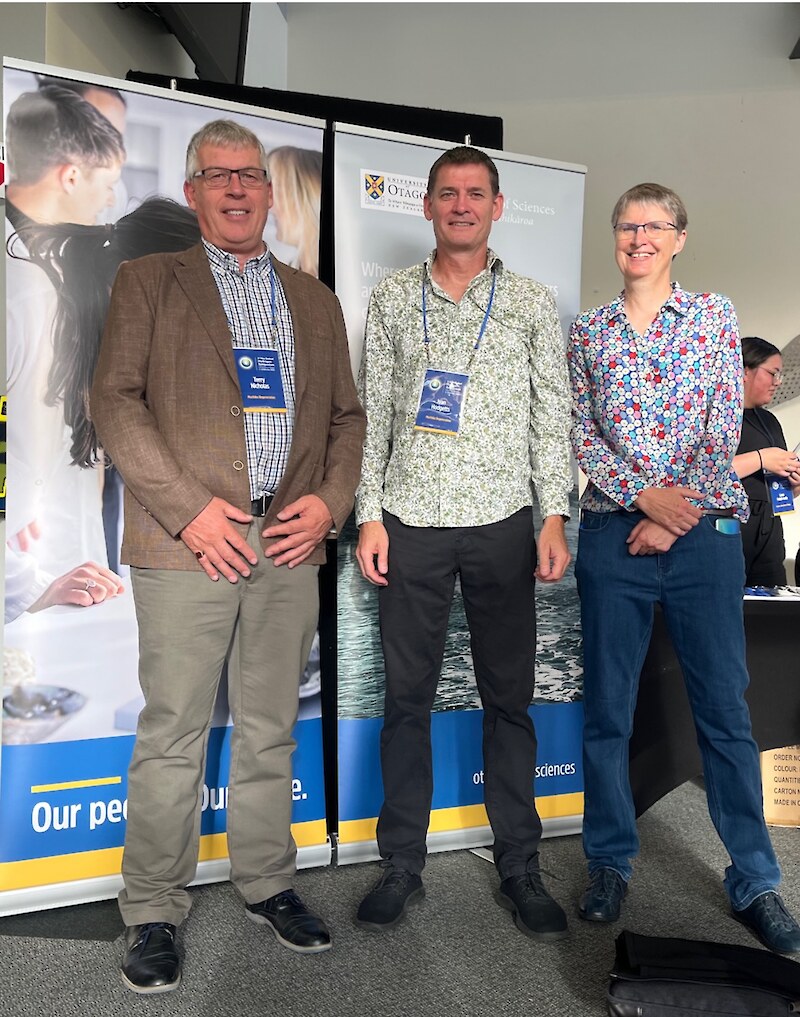
L-R: Murihiku Regeneration representatives Terry Nicholas and Ivan Hodgetts; Professor Sally Brooker from the University of Otago.L-R: Murihiku Regeneration representatives Terry Nicholas and Ivan Hodgetts; Professor Sally Brooker from the University of Otago.

Posted: 25 February 2023

Social Regeneration Plan Hui

A PROF-ound start to the year for the Murihiku Regeneration office!

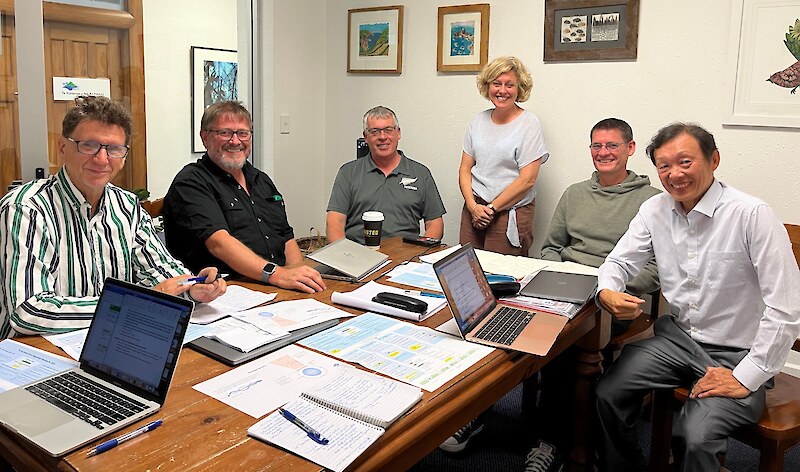
Social Regeneration Plan working group L-R: Prof Stuart Carr (UNESCO Chair - Sustainable Livelihoods; Massey University); Prof Darrin Hodgetts (Massey University); Terry Nicholas (Murihiku Regeneration); Associate Prof Vivienne Anderson (University of Otago); Ivan Hodgetts (Murihiku Regeneraion); Prof James Liu (Massey University).Social Regeneration Plan working group L-R: Prof Stuart Carr (UNESCO Chair - Sustainable Livelihoods; Massey University); Prof Darrin Hodgetts (Massey University); Terry Nicholas (Murihiku Regeneration); Associate Prof Vivienne Anderson (University of Otago); Ivan Hodgetts (Murihiku Regeneraion); Prof James Liu (Massey University).

On Tuesday 31 January 2023 Murihiku Regeneration began a process to develop a Social Regeneration Plan for Murihiku. Upoko, Terry Nicholas and Te Ara Aukati Kore programme leader, Ivan Hodgetts met with a group of Professors from Massey and Otago Universities:

  • Associate Prof Viv Anderson: Dean, Otago University School of Education
  • Professor Stuart Carr: UNESCO Chair in Sustainable Livelihoods
  • Professor James Liu: Cross cultural psychology, political psychology of change
  • Professor Darrin Hodgetts: Professor of Societal Psychology

We appreciate the willingness of these Professors to provide their time and expertise to support and enable our kaupapa.

The focus of discussion was on the scoping and initial framing for development of the plan. Our intention is to develop an evidence informed (credible global effective practice) social regeneration plan for the region out to 2040. It will locate any economic/industry development within a framing context of our medium to long term interests as people.

Ivan said “it was great to bring the Profs together and start this conversation. The shared expertise and insight will be invaluable to ensuring the action we take is well thought out and has a solid foundation for success”.

Thanks to our supporters

This work is being supported by the Ministry of Social Development and Woodside Energy who are in process of exploring Hydrogen Industry in Murihiku. Both organisations are important contributors to our work.

Posted: 1 February 2023

Prev page
Page 17 of 42
Next page

Also in this section

Pānui updates Photos
  • News
    • Pānui updates
    • Photos

© 2026 Hokonui Rūnanga • Website by RS

Facebook
  • Home
  • About us
    • Who we are
    • Murihiku Regeneration
      • Structure and context
      • Office of Upoko
    • Property assets
    • Find us
    • Job vacancies
  • Our history
    • Our whakapapa - a deep connection to this place
    • Wai and Whakapapa
    • The Battle of Waitaramea
    • Poupoutunoa and Kauwaewhakatoro
    • Two Rivers: Mataura (Mata Ura) and Clutha (Mata Au)
      • Mata Ura - Mataura River
      • Mata Au - Clutha River
  • Events & key dates
    • He Ao Hou - New Futures Murihiku Teacher PD Day
    • Energy and Innovation Wānanga 2024
    • Energy and Innovation Expo 2023
      • He Ao Hou - New Futures Murihiku 22 May
      • Live Streaming of Wānanga 23 and 24 May
      • Hosts and Key Speakers 23-24 May
      • Energy and Innovation presentations - 23 May
        • Opening Addresses
        • Global Session
        • Empowering partnerships: government's role in Aotearoa's energy transition
        • Climate Economics
        • Regional Infrastructure
        • Social regeneration and innovation
        • Regional Innovation
        • The importance of the Māori economy through this change
      • Energy and Innovation presentations - 24 May
        • Regional Leadership Panel
        • Regional Plans and Priorities
        • Southern Green Hydrogen
        • Tiwai Smelter Future
        • Southland Aquaculture
        • Regional Case Studies: Decarbonisation
        • Innovation and Bluff Re-imagining
        • Confirming Priorities: wrap-up and closing
    • Science and Innovation Wānanga 2021
    • Energy, Infrastructure and Opportunities Wānanga 2026
  • Education & training
    • Education - Hokonui Rohe Team
    • Te Ara Aukati Kore - Education, Training, and Capability
      • Kia Tū Pathway Planning Programme
        • Kia Tū in schools
        • Kia Tū Tertiary Pathway Programme
        • Meet Your Kaiako - SIT Campus
      • Anamata Māia: Bold, Confident Futures Service
        • Our Kaimahi - Staff
      • Penapena Ā Kura: School Attendance Service
      • Te Aka Whai Mahi: Find Your Path
      • He Ao Hou: New Futures Murihiku
    • Have your say!
  • Environment
    • Kaupapa Taiao - Hokonui Floriculture
    • Taonga Research
      • Kanakana Research
      • Our research partners
    • Southern Ocean - Murihiku ki te Tonga
    • Energy Transition Programme
      • Regional Energy Action Plan - Towards 2030
      • Energy Transition Plan for Murihiku-Southland
      • Hydrogen and Green Energy
      • Tiwai Point
    • Te Tapu o Tāne
    • Our Kaimahi - Staff
  • Health & wellbeing
    • Whānau Ora Navigators
    • Community youth worker and advocacy service
    • Hokonui Community-Led Health
    • Kaumatua Health Days
    • Te Kakano - Nurse-led Clinics
    • Our Kaimahi - Staff
    • Hokonui Takiwā Health and Wellbeing Village of Support
    • Referral form
    • COVID-19
  • News
    • Pānui updates
    • Photos
  • Contact us
    • Register
  • Facebook
  • Search...