Hokonui Rūnanga Register
  • About us
    • Who we are
    • Murihiku Regeneration
    • Property assets
    • Find us
    • Job vacancies
  • Our history
    • Our whakapapa - a deep connection to this place
    • Wai and Whakapapa
    • The Battle of Waitaramea
    • Poupoutunoa and Kauwaewhakatoro
    • Two Rivers: Mataura (Mata Ura) and Clutha (Mata Au)
  • Events & key dates
    • He Ao Hou - New Futures Murihiku Teacher PD Day
    • Energy and Innovation Wānanga 2024
    • Energy and Innovation Expo 2023
    • Science and Innovation Wānanga 2021
    • Energy, Infrastructure and Opportunities Wānanga 2026
  • Education & training
    • Education - Hokonui Rohe Team
    • Te Ara Aukati Kore - Education, Training, and Capability
    • Have your say!
  • Environment
    • Kaupapa Taiao - Hokonui Floriculture
    • Taonga Research
    • Southern Ocean - Murihiku ki te Tonga
    • Energy Transition Programme
    • Te Tapu o Tāne
    • Our Kaimahi - Staff
  • Health & wellbeing
    • Whānau Ora Navigators
    • Community youth worker and advocacy service
    • Hokonui Community-Led Health
    • Kaumatua Health Days
    • Te Kakano - Nurse-led Clinics
    • Our Kaimahi - Staff
    • Hokonui Takiwā Health and Wellbeing Village of Support
    • Referral form
    • COVID-19
  • News
    • Pānui updates
    • Photos
  • Contact us
    • Register
  1. Home
  2. News

News

Hokonui Rūnanga working with New Vale Coal Mine to protect the environment

By Libby Young
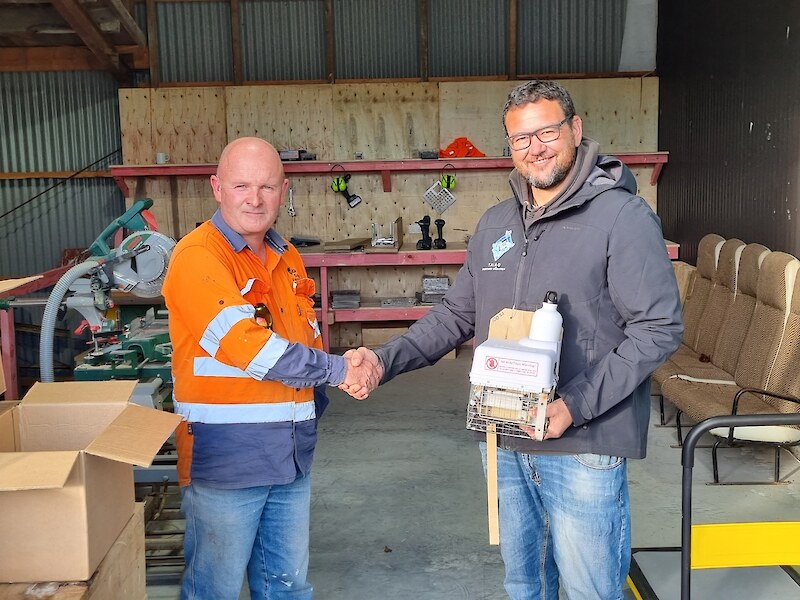
John Howe (from New Vale Coal) and Riki Parata (Kaiārihi Taiao - Environmental Lead).John Howe (from New Vale Coal) and Riki Parata (Kaiārihi Taiao - Environmental Lead).

Significance of the area

The New Vale Coal Mine and associated operations use approximately 100ha of land, among farmland in Waimumu, near Mataura. Within the vicinity of the coal mine are the tributaries of the Hedge hope stream, named Tatakura by Tūpuna (after the ancient name for a variety of ducks). Tatakura is located in Te Rā a Takitimu (The Southland Plains) which, according to tribal stories represents the sails of Takitimu, formed when the ancient waka capsized.

The Tatakura feeds into the Makarewa River, which in turn feeds into the Oreti River. The Oreti River is a Statutory Acknowledgement Area under the Ngāi Tahu Claims Settlement Act 1998. Since Ngai Tahu views the whole water system as an integrated whole, the management and restoration of Tatakura are needed to meet the requirements of the Settlement Act.

According to the NZ Freshwater Fish Database (NZFFD) within a 10km radius of the Hedgehope, aquatic life includes the Gollum Galaxias, Upland Bully, Common Bully, Longfin Eel, Brown Trout, and Kura. A vast majority of these are treasured and valued mahinga kai species. In recent decades, the declining numbers of longfin eels, which were once in abundance, have been particularly concerning for Māori. Thus, their presence in the stream is especially important. The same too can be said for the Gollum Galaxias which has been listed as a threatened and nationally vulnerable species. Moreover, it is important to acknowledge the stream as a habitat, for not only the taonga currently present, but also for the native life that was present before colonisation. Taonga and sources of mahinga kai found in this area in the past and present likely extend beyond those formally recognised by the NZFFD.

Economic background

The coal mine is a longstanding contributor to the local economy providing both employment opportunities and a critical energy source to the region since the 1940s. It employs approximately 28 staff and produces roughly 270,000 tonnes of lignite per year, as well as operating its own transport fleet which delivers coal to customers in Southland and Otago.

Our relationship with New Vale

The Hokonui Rūnanga and the New Vale Coal Mine, operated by Green Briar Limited are working together to ensure the proper management of the coal mine located in Waimumu. The good-faith relationship between the Hokonui Rūnanga and New Vale has formed through the mutual understanding that the New Vale Coal Mine is both culturally and socio-economically important. Although The Hokonui Rūnanga exercises Tino rangatiratanga where the coal mine is located, they acknowledge New Vale is a significant provider to the local economy and vice versa.

New Vale commitments and actions

Collaborative governance between both New Vale and the Hokonui Rūnanga has been a tale of success. The Hokonui Rūnanga has advised New Vale’s Site Restoration Plan and their initial focus on improving water quality and enhancing mahinga kai and indigenous biodiversity. In line with this, New Vale understands that Hokonui Rūnanga considers any discharge into waterbodies culturally offensive, as it strips the water body of its mauri. They are therefore working together to find alternative solutions for environmental and cultural impacts including wetland creation.Riparian vegetation planted by New Vale Coal.Riparian vegetation planted by New Vale Coal.
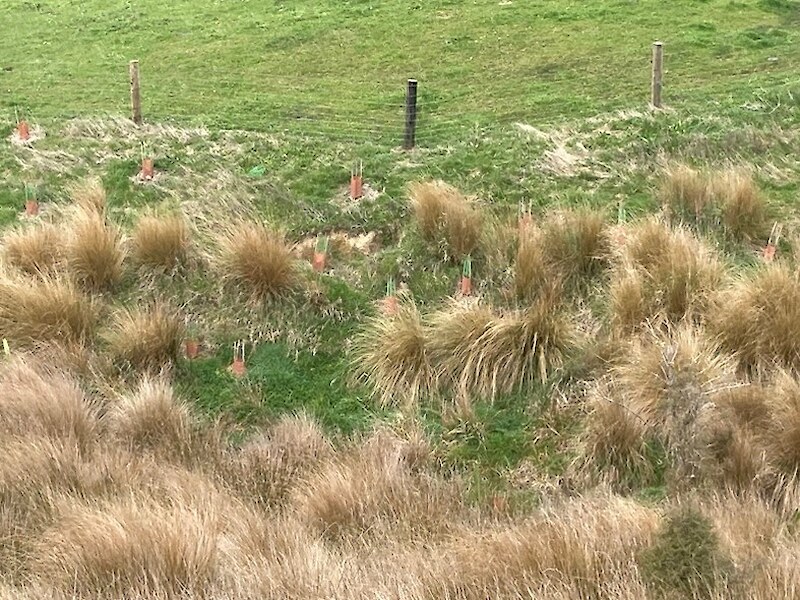
Furthermore, New Vale has started implementing their own Ecological Enhancement Programme. This includes a riparian programme that aims to plant extensive corridors of diverse riparian vegetation along banks. So far New Vale has implemented the first stages of its plan concerning riparian margins. They have planted over 3500 native plants, including Pittosporum tenuifolium, Makomako, Tarata, and at least another 17 other varieties. Going forward, New Vale aspires to increase this to thirty different varieties of native plants, nine of which are considered threatened.

Additionally, New Vale sought their own ecological impact assessment and has since confirmed the presence of the Galaxis Gollumoides. After this discovery, they established their own management plan for the native fish which strives to not only maintain but improve the current habitat for recolonization of the resident population. It will also require consistent monitoring of the current population to determine the impact of habitat improvements.

Other requirements of the Ecological Enhancement Plan include the provision of extensive fencing around riparian margins to exclude livestock, which in turn stops erosion of banks and siltation of waterways, as well as the alteration of a culvert at the end of mine life, to restrict trout passage upstream into the Gollum Galaxias Habitat.

Outside of their own activities in Waimumu, New Vale has also shown support for the wider activities and biodiversity goals of the Hokonui Rūnanga by sponsoring three self-resetting possum traps. In the future, the Hokonui Rūnanga aims to work with New Vale to ensure a plan is in place for when mining operations end. This will relate to future land use, future employment options, and assessing any of its impacts on local communities.

The relationship between New Vale and the Hokonui Rūnanga serves as a future example of how commercial, public and cultural interests can be successfully met through collaborative solutions.

Posted: 8 August 2022

Signing of MOU with Woodside Energy around potential green hydrogen project

A Memorandum of Understanding was signed on 29 July 2022 between Woodside Energy and Murihiku Regeneration to further discussions around a potential large-scale green hydrogen production project in Murihiku-Southland.Meg O’Neill, CEO Woodside Energy.Meg O’Neill, CEO Woodside Energy.

Signing for Woodside Energy, CEO Meg O’Neill acknowledged the importance and significance of having Murihiku Hapū and Ngāi Tahu as key collaborators in any future green hydrogen project.

“We are excited by the potential opportunity to develop a hydrogen facility in New Zealand and work alongside Te Rūnanga o Ngāi Tahu to enable the development.

“Woodside reiterates our recognition and respect for the principles of The Treaty of Waitangi, which will guide any future relationship with Te Rūnanga o Ngāi Tahu and its 18 Papatipu Rūnanga,” she said.

Signing for Murihiku Regeneration was Awarua Upoko Tā Tipene O’Regan and Hokonui Upoko Terry Nicholas, Upoko Hokonui Rūnanga and Murihiku Regeneration Programme Director.Terry Nicholas, Upoko Hokonui Rūnanga and Murihiku Regeneration Programme Director.Terry Nicholas, supported by CEO Arihia Bennett for Te Rūnanga o Ngāi Tahu.

Terry Nicholas said: “Woodside has come into the picture relatively late as a potential developer of a green hydrogen project, but they have impressed us with their commitment and willingness to listen and take on our feedback. We will want to make sure they are a developer that can work with us in the long term, building value for Southland, and supporting our aspirations for Hapū and the wider community.”

Woodside Energy is a leading Australian energy producer with a reputation for safe and reliable operations. Woodside Energy’s hydrocarbon business is complemented by a growing portfolio of hydrogen, ammonia, and solar opportunities in Australia and internationally. Woodside has participated in the Southern Green Hydrogen Request For Proposal process and has been placed as one of two shortlisted developers.

On 14-15 July, a Woodside Executive Team visited Murihiku-Southland; visiting and undertaking meetings at both Te Rau Aroha Marae and Hokonui Rūnanga to understand social and community perspectives around how an active relationship might develop, should a green hydrogen project proceed. This has laid the foundation for a strengthening relationship and for the signing of this MOU.

Over the coming weeks, the Murihiku Regeneration Energy Team will work closely with Woodside to determine suitability to be a preferred developer to move forward into the next stage of the commercial business case process.

We will keep you informed of the progress on this exciting potential project.

Posted: 3 August 2022

New iwi-led health service to open in Waihōpai

Article written by Louisa Steyl. Republished from Stuff.

A new iwi-led primary care service will be opening its doors in Waihōpai this week.

After months of planning, Te Hau o Te Ora (The Breath of New Life) – a 50/50 partnership between Awarua Rūnaka, Hokonui Rūnanga and the WellSouth primary health network – will be open for new enrolments and bookings on Monday.

It will bring relief to the city where thousands of residents are struggling to access a GP.

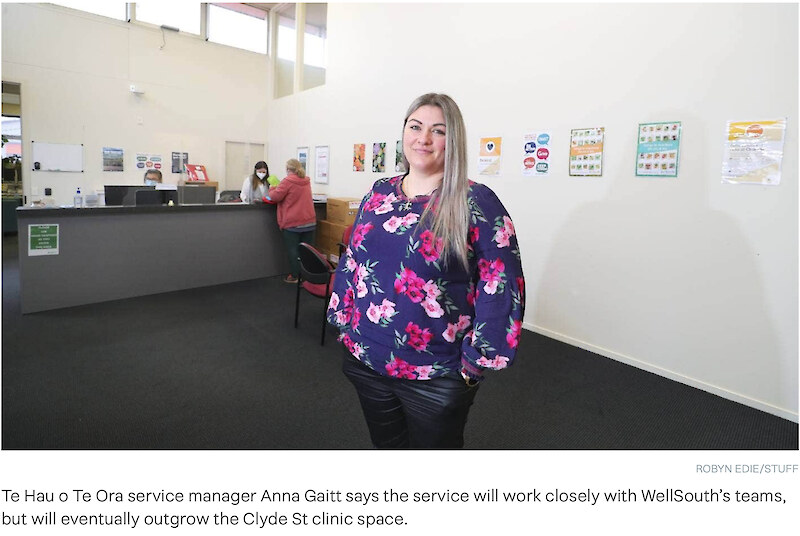
Te Hau o Te Ora service manager Anna Gaitt said the practice was an opportunity to create a new model of care that took a holistic approach to healthcare.

More than 300 patients have already pre-enrolled to join the practice; which will be staffed by one GP, two nurses and a health improvement practitioner.

Based on the service’s experience after taking over the Mataura Medical Centre, Gaitt believes they’ll be able to take on some 3200 patients.

“I’m hopeful that we’ll keep recruiting, and won’t have to put a cap on that” she said.

WellSouth first announced its intention to open a new primary care service in Invercargill in February 2021 to improve access to GPs, improve after-hours GP capacity, and reduce pressure on Southland Hospital’s overwhelmed emergency department.

Plans were delayed while the PHO struggled to recruit a GP and by June 2021, Hokonui Rūnanga, Waihōpai Rūnaka and Awarua Rūnaka announced their support for the project.

The parties signed an official partnership agreement and announced the service’s name in September 2021.

Another new practice, West Invercargill Health, also opens ons Monday, but Gaitt believed there would always be a need for more primary care services in the city.

Anecdotally, there were between 3000 and 8000 unenrolled patients in the city, depending on who you spoke to, she said.

And all newcomers to the city shared the experience of not being able to access a GP, Gaitt said, irrespective of who they were or where they came from.

New patients at the low-cost practice will undergo comprehensive health assessments and enrolments will only be open to people who don’t currently have a GP.

Gaitt said it would be important to spend extra time with people in the beginning because for many, it would be their first interaction with healthcare for a long time.

“For us, it’s about understanding what our patients need from us in their healthcare journey – and that won’t always be a GP.”

Staff would work with social service agencies to connect patients who needed support that wasn’t necessarily in the healthcare sphere.

This could be budgetary advice, for example, or housing support.

And as the practice got to know its new patients, it would learn more about what its patients needed and what services it could offer in-house, Gaitt said.

Te Hau o Te Ora will open after a whakawatea (cleansing ceremony) on Monday.

The practice will operate from WellSouth’s Clyde St premises initially, but there are plans to move into a purpose-built facility in the future.

Gaitt also hopes to one day open an urgent care facility which she said would be a “game-changer” considering the pressure on Southland Hospital’s emergency department.

Posted: 30 July 2022

Kids’ plea to Environment Select Committee: “Don’t forget our river”

Article written by Rachael Kelly. Republished from Stuff.

In what is thought to be a New Zealand first, school pupils have made a passionate plea to the Environment Select Committee, asking it to save the Waiau River that flows through their community.

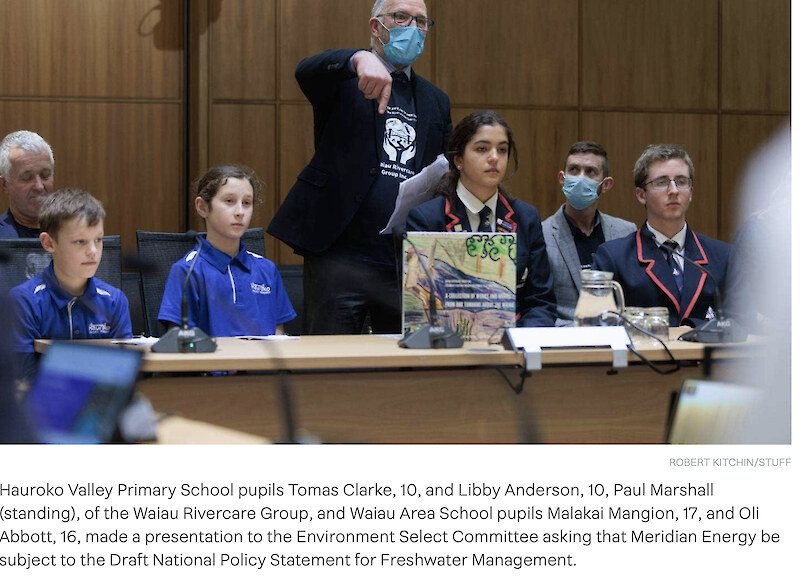
Pupils from of Hauroko Valley Primary School and Waiau Area School in rural Southland travelled to Wellington to present their Kaitiaki Project to the Select Committee, alongside members of the Waiau Rivercare Group.

The group’s presentation asked that the House of Representatives urge the Government to remove the exception for the Manapōuri Power Scheme from the Draft National Policy Statement for Freshwater Management.

They want Meridian Energy to increase water flows in the Waiau River, instead of diverting it to the power scheme, to stop algal blooms and return the river to a state of ecological health.

Libby Anderson, 10, Tomas Clarke, 10, and their teacher Jen Templeton, of Hauroko Valley Primary School, and, Malakai Mangion, 17, Oli Abbott, 16, and their teacher Richard Bennett, of Waiau Area School, presented the project, an ecological inquiry by more than 120 children and young people sharing their thoughts, feelings and values for their river.

Libby told the committee that their community all love the Waiau River “but we’ve lost it, but we want it back”.

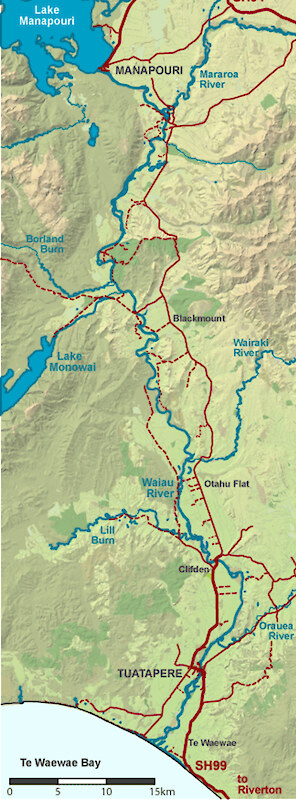
Malakai and Oli said the community all relied on the Waiau, but now the Waiau was relying on them.Map showing Waiau River - flowing from Lake Manapōuri to the coast (source: NZ Fishing).Map showing Waiau River - flowing from Lake Manapōuri to the coast (source: NZ Fishing).

“We, as the young people of the Waiau, cannot share the same carefree experiences that generations before us have. Today our relationship with the Waiau involves checking online for the swimmabilty rating of the river, reading didymo signage at the Tuatapere Domain, and smelling and seeing thick slimy sludge and other sign of bacteria suffocate the beating heart of our catchment,’’ they said.

Environment Select Committee chair Eugenie Sage thanked the group for the mahi that had gone into their Waiau taonga project, and their presentations, which she said were ‘’very compelling’’.

Under the Government’s package, the hydro-electric scheme, which generates power for the Tiwai Point aluminium smelter, would be exempt from freshwater management requirements to support renewable energy targets.

The Manapōuri Power Scheme, which is owned by Meridian Energy, removes water from the Waiau River catchment and discharges it to Deep Cove in Fiordland after it has been through the power scheme.

Earlier this month Waiau Rivercare Group co-chairman Paul Marshall said the power scheme takes 95% of the river’s flow, leaving the lower Waiau with 5% of what its flow used to be.

“The ongoing environmental, cultural and social effects are significant, and dire, and makes the Waiau unsafe to swim in. This exception removes our community’s voice for the Waiau River for the next 50 years. To be heard, hydro must not be exempt from the Policy Statement,’’ he said.

As well as presenting to the committee, the pupils had a private tour of parliament, seats in the public gallery, and use of the personal suite of the Speaker of the House, Trevor Mallard.

The group had to fundraise to get to Wellington, and also received a grant from the Parliamentary Travel Fund.

Posted: 30 July 2022

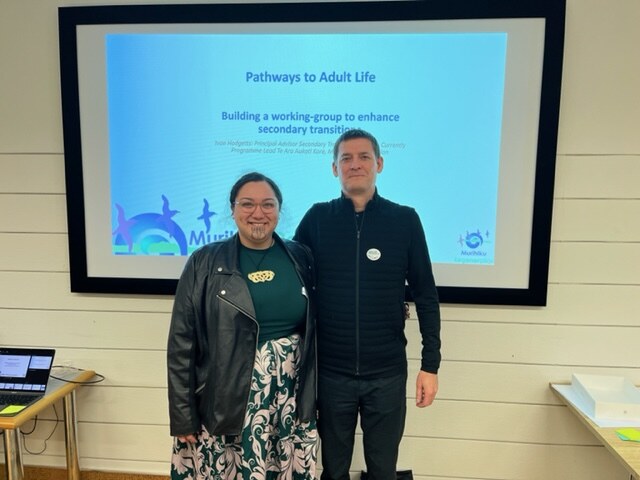
First Hui for Southland Secondary Transitions and Pathways Working Group

On Friday 22 July, Ivan Hodgetts (Programme Lead, Te Ara Aukati Kore) facilitated the first hui for the Southland Secondary Transitions and Pathways Working Group.

Mapihi Kahurangi Davis (Kaiarahi Hōtaka), also took the opportunity to present on the rangatahi skills hub she is developing. The rangatahi hub will be an important part of Murihiku Regeneration’s Anamata Maia: Confident Futures Service. Anamata Maia is the overarching name for our services to support young people’s transition to adult life, worker transitions and pathways for all ages.Ivan Hodgetts and Mapihi Kahurangi Davis facilitated and presented at the Southland Secondary Transitions and Pathways Working Group on Friday.Ivan Hodgetts and Mapihi Kahurangi Davis facilitated and presented at the Southland Secondary Transitions and Pathways Working Group on Friday.

Ivan said “The Secondary Transitions and Pathways Working Group is a vital element in what we want to achieve. We have a fantastic range of education and social service supports available in our community. To make the most of them we want to create a collaborative group”.

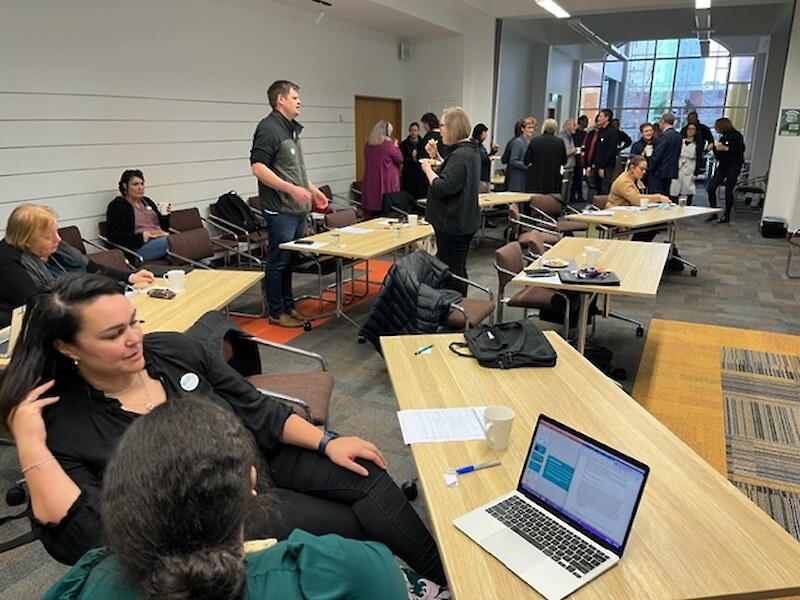
Despite the challenges of winter illness, COVID 19, and the fact that it was school holidays, 27 people attended the first hui. We have appreciated the positive engagement and feedback received. This feedback bodes well for our collective success. The intention is to create and open and inclusive forum where service practitioners have an active voice.

Murihiku Regeneration wants to avoid replicating existing services and focus on how we can collectively enhance what is available for rangatahi/young people. Experience from similar initiatives across the country shows us that a well-coordinated approach can greatly benefit our communities.

Should you want to find out more or be a part of this initiative, [Enable JavaScript to view protected content].The hui provided a great opportunity for collaboration and connection.The hui provided a great opportunity for collaboration and connection.

Posted: 27 July 2022

Prev page
Page 24 of 42
Next page

Also in this section

Pānui updates Photos
  • News
    • Pānui updates
    • Photos

© 2026 Hokonui Rūnanga • Website by RS

Facebook
  • Home
  • About us
    • Who we are
    • Murihiku Regeneration
      • Structure and context
      • Office of Upoko
    • Property assets
    • Find us
    • Job vacancies
  • Our history
    • Our whakapapa - a deep connection to this place
    • Wai and Whakapapa
    • The Battle of Waitaramea
    • Poupoutunoa and Kauwaewhakatoro
    • Two Rivers: Mataura (Mata Ura) and Clutha (Mata Au)
      • Mata Ura - Mataura River
      • Mata Au - Clutha River
  • Events & key dates
    • He Ao Hou - New Futures Murihiku Teacher PD Day
    • Energy and Innovation Wānanga 2024
    • Energy and Innovation Expo 2023
      • He Ao Hou - New Futures Murihiku 22 May
      • Live Streaming of Wānanga 23 and 24 May
      • Hosts and Key Speakers 23-24 May
      • Energy and Innovation presentations - 23 May
        • Opening Addresses
        • Global Session
        • Empowering partnerships: government's role in Aotearoa's energy transition
        • Climate Economics
        • Regional Infrastructure
        • Social regeneration and innovation
        • Regional Innovation
        • The importance of the Māori economy through this change
      • Energy and Innovation presentations - 24 May
        • Regional Leadership Panel
        • Regional Plans and Priorities
        • Southern Green Hydrogen
        • Tiwai Smelter Future
        • Southland Aquaculture
        • Regional Case Studies: Decarbonisation
        • Innovation and Bluff Re-imagining
        • Confirming Priorities: wrap-up and closing
    • Science and Innovation Wānanga 2021
    • Energy, Infrastructure and Opportunities Wānanga 2026
  • Education & training
    • Education - Hokonui Rohe Team
    • Te Ara Aukati Kore - Education, Training, and Capability
      • Kia Tū Pathway Planning Programme
        • Kia Tū in schools
        • Kia Tū Tertiary Pathway Programme
        • Meet Your Kaiako - SIT Campus
      • Anamata Māia: Bold, Confident Futures Service
        • Our Kaimahi - Staff
      • Penapena Ā Kura: School Attendance Service
      • Te Aka Whai Mahi: Find Your Path
      • He Ao Hou: New Futures Murihiku
    • Have your say!
  • Environment
    • Kaupapa Taiao - Hokonui Floriculture
    • Taonga Research
      • Kanakana Research
      • Our research partners
    • Southern Ocean - Murihiku ki te Tonga
    • Energy Transition Programme
      • Regional Energy Action Plan - Towards 2030
      • Energy Transition Plan for Murihiku-Southland
      • Hydrogen and Green Energy
      • Tiwai Point
    • Te Tapu o Tāne
    • Our Kaimahi - Staff
  • Health & wellbeing
    • Whānau Ora Navigators
    • Community youth worker and advocacy service
    • Hokonui Community-Led Health
    • Kaumatua Health Days
    • Te Kakano - Nurse-led Clinics
    • Our Kaimahi - Staff
    • Hokonui Takiwā Health and Wellbeing Village of Support
    • Referral form
    • COVID-19
  • News
    • Pānui updates
    • Photos
  • Contact us
    • Register
  • Facebook
  • Search...