Hokonui Rūnanga Register
  • About us
    • Who we are
    • Murihiku Regeneration
    • Property assets
    • Find us
    • Job vacancies
  • Our history
    • Our whakapapa - a deep connection to this place
    • Wai and Whakapapa
    • The Battle of Waitaramea
    • Poupoutunoa and Kauwaewhakatoro
    • Two Rivers: Mataura (Mata Ura) and Clutha (Mata Au)
  • Events & key dates
    • He Ao Hou - New Futures Murihiku Teacher PD Day
    • Energy and Innovation Wānanga 2024
    • Energy and Innovation Expo 2023
    • Science and Innovation Wānanga 2021
    • Energy, Infrastructure and Opportunities Wānanga 2026
  • Education & training
    • Education - Hokonui Rohe Team
    • Te Ara Aukati Kore - Education, Training, and Capability
    • Have your say!
  • Environment
    • Kaupapa Taiao - Hokonui Floriculture
    • Taonga Research
    • Southern Ocean - Murihiku ki te Tonga
    • Energy Transition Programme
    • Te Tapu o Tāne
    • Our Kaimahi - Staff
  • Health & wellbeing
    • Whānau Ora Navigators
    • Community youth worker and advocacy service
    • Hokonui Community-Led Health
    • Kaumatua Health Days
    • Te Kakano - Nurse-led Clinics
    • Our Kaimahi - Staff
    • Hokonui Takiwā Health and Wellbeing Village of Support
    • Referral form
    • COVID-19
  • News
    • Pānui updates
    • Photos
  • Contact us
    • Register
  1. Home
  2. News

News

How Hokonui Rūnanga are working to restore kanakana numbers

Article written by Louisa Steyl, reproduced from Stuff.

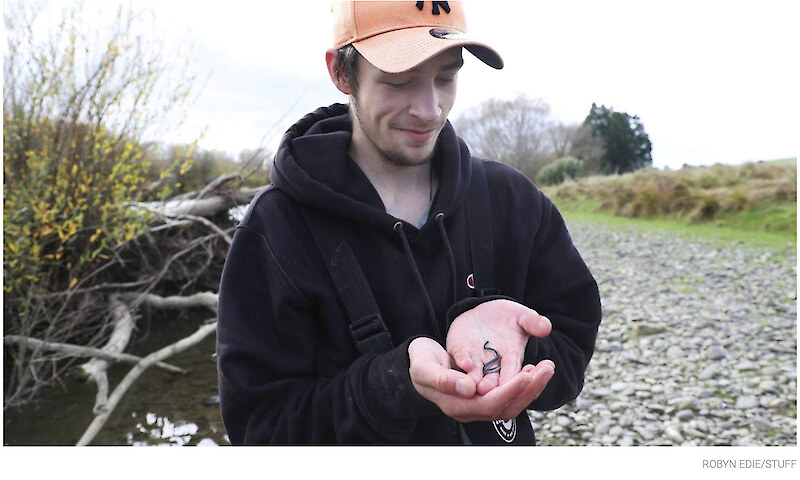
Cadet Josh Aitken was thrilled to find a Kanakana (pouched lamprey) during tuna eel monitoring on the Mataura River. The species is considered nationally vulnerable.Cadet Josh Aitken was thrilled to find a Kanakana (pouched lamprey) during tuna eel monitoring on the Mataura River. The species is considered nationally vulnerable.

“Look what I’ve caught,” young environmental cadet Josh Aitken shouts excitedly.

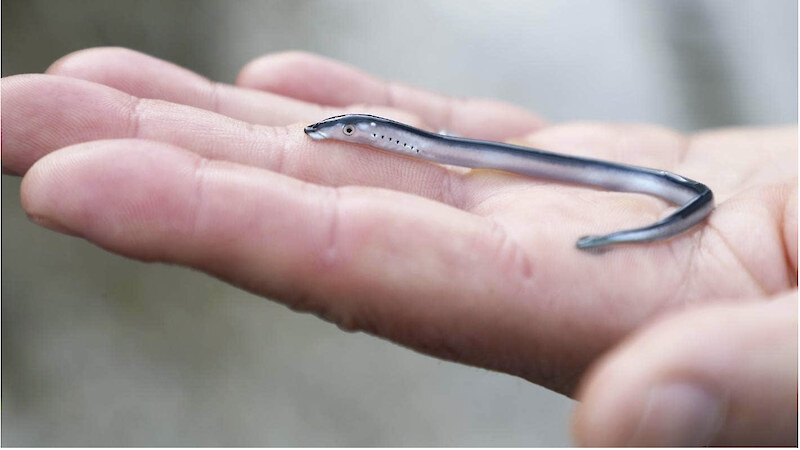
He is carrying out monitoring work on the Mataura River and has just caught a brilliant silver-blue juvenile kanakana (lamprey).

Freshwater ecologist Matt Dale beams as he inspects the tiny creature: “This is real special.”

He has never seen one upstream from Te Au-Nui (Mataura Falls) and says it means the work that Hokonui Rūnanga are doing to restore the river is working.

“It means they’re getting past the falls,” which look very different today, surrounded by industry.

The taonga species was once abundant throughout New Zealand and numbers were so great at the Mataura River, South Island Māori would travel from as far as Ōtautahi (Christchurch) come harvest time.

In the past, these pouched lamprey have been found as far north as Piano Flats – some 85km away from the falls.

But as the nutrient composition of the streams and tributaries they live in have changed and as habitats have been lost, kanakana have become a threatened species.Kanakana turn a silver-blue colour when they are ready to migrate out to sea where they live as parasites to marine mammals.Kanakana turn a silver-blue colour when they are ready to migrate out to sea where they live as parasites to marine mammals.

Hokonui Rūnanga Kaiārihi Taiao (Environmental Lead) Riki Parata could not say for sure that the mahi his team were doing was a direct contributor to the find.Hokonui Rūnanga Kaiārihi Taiao (Environmental Lead) Riki Parata says kanakana are one of those “secret species” that many people have not heard of. Scientists still have much to learn about them, he says.Hokonui Rūnanga Kaiārihi Taiao (Environmental Lead) Riki Parata says kanakana are one of those “secret species” that many people have not heard of. Scientists still have much to learn about them, he says.

“It’s an indication that we’re doing more intensive studies,” he said.

It has only been in the last few decades that numbers have dwindled, Parata said.

“I remember when I was a child, we used to catch sacks full.”

The Mataitai Reserve at Te Au-Nui was the first of its kind when it was established in 2006 and the rūnanga now have agreements with businesses either side of the falls to make sure the area is safe for kanakana.

The Taiao team are working with the National Institute of Water and Atmospheric Research and Alliance Group – which operates a plant on the river – to build a bridge for kanakana to help them move over the weir at the falls.

The species breed in freshwater, head out to sea as juveniles, and then return when it’s time to spawn.

Te Au-Nui used to be wide, but industry has narrowed the river at the falls, making it difficult for the kankana to get up.

In the meantime, Parata and some kaumātua have been going out physically plucking the lamprey off the falls and take them to the other side, he said.

“But we can’t be there all the time.”

For the past two years, it’s been trapping and transferring juvenile eels with the hope of having a permanent solution in place by next season.

In the next migration season, they will be tracking migrating tuna (eels) with microchips to see if they are going into the hydro turbines on the river – which will give the team an idea of the impact the weir is having on their migration patterns.

“They’re the ones that go out to sea to breed, and the babies come back up [the river] again. We’re involved in the whole cycle, trying to just maximise the numbers.”

The team have also been monitoring kanakana over the past two years.

Alliance Group general manager for manufacturing Willie Wiese said the group recognised that the Mataura River had significant cultural valued for Hokonui Rūnanga and Ngāi Tahu.

Monitoring the species in the river would help the group understand where it needed to focus efforts to reduce its impacts, he said.

“We have undertaken a significant amount of work with them in recent years, as well as the commencement of a Kaitiaki Plan to enable continued collaboration into the future,” Wiese said.

Posted: 23 May 2022
How Hokonui Rūnanga are working to restore kanakana numbers

Article written by Louisa Steyl, reproduced from Stuff.

“Look what I’ve caught,” young environmental cadet Josh Aitken shouts excitedly.Cadet Josh Aitken was thrilled to find a Kanakana (pouched lamprey) during tuna eel monitoring on the Mataura River. The species is considered nationally vulnerable.Cadet Josh Aitken was thrilled to find a Kanakana (pouched lamprey) during tuna eel monitoring on the Mataura River. The species is considered nationally vulnerable.

He is carrying out monitoring work on the Mataura River and has just caught a brilliant silver-blue juvenile kanakana (lamprey).

Freshwater ecologist Matt Dale beams as he inspects the tiny creature: “This is real special.”

He has never seen one upstream from Te Au-Nui (Mataura Falls) and says it means the work that Hokonui Rūnanga are doing to restore the river is working.

“It means they’re getting past the falls,” which look very different today, surrounded by industry.

The taonga species was once abundant throughout New Zealand and numbers were so great at the Mataura River, South Island Māori would travel from as far as Ōtautahi (Christchurch) come harvest time.

In the past, these pouched lamprey have been found as far north as Piano Flats – some 85km away from the falls.

But as the nutrient composition of the streams and tributaries they live in have changed and as habitats have been lost, kanakana have become a threatened species.Kanakana turn a silver-blue colour when they are ready to migrate out to sea where they live as parasites to marine mammals.Kanakana turn a silver-blue colour when they are ready to migrate out to sea where they live as parasites to marine mammals.

Hokonui Rūnanga Kaiārihi Taiao (Environmental Lead) Riki Parata could not say for sure that the mahi his team were doing was a direct contributor to the find.Hokonui Rūnanga Kaiārihi Taiao (Environmental Lead) Riki Parata says kanakana are one of those “secret species” that many people have not heard of. Scientists still have much to learn about them, he says.Hokonui Rūnanga Kaiārihi Taiao (Environmental Lead) Riki Parata says kanakana are one of those “secret species” that many people have not heard of. Scientists still have much to learn about them, he says.

“It’s an indication that we’re doing more intensive studies,” he said.

It has only been in the last few decades that numbers have dwindled, Parata said.

“I remember when I was a child, we used to catch sacks full.”

The Mataitai Reserve at Te Au-Nui was the first of its kind when it was established in 2006 and the rūnanga now have agreements with businesses either side of the falls to make sure the area is safe for kanakana.

The Taiao team are working with the National Institute of Water and Atmospheric Research and Alliance Group – which operates a plant on the river – to build a bridge for kanakana to help them move over the weir at the falls.

The species breed in freshwater, head out to sea as juveniles, and then return when it’s time to spawn.

Te Au-Nui used to be wide, but industry has narrowed the river at the falls, making it difficult for the kankana to get up.

In the meantime, Parata and some kaumātua have been going out physically plucking the lamprey off the falls and take them to the other side, he said.

“But we can’t be there all the time.”

For the past two years, it’s been trapping and transferring juvenile eels with the hope of having a permanent solution in place by next season.

In the next migration season, they will be tracking migrating tuna (eels) with microchips to see if they are going into the hydro turbines on the river – which will give the team an idea of the impact the weir is having on their migration patterns.

“They’re the ones that go out to sea to breed, and the babies come back up [the river] again. We’re involved in the whole cycle, trying to just maximise the numbers.”

The team have also been monitoring kanakana over the past two years.

Alliance Group general manager for manufacturing Willie Wiese said the group recognised that the Mataura River had significant cultural valued for Hokonui Rūnanga and Ngāi Tahu.

Monitoring the species in the river would help the group understand where it needed to focus efforts to reduce its impacts, he said.

“We have undertaken a significant amount of work with them in recent years, as well as the commencement of a Kaitiaki Plan to enable continued collaboration into the future,” Wiese said.

Posted: 23 May 2022
Te Tapu o Tāne to kickstart 100,000 tree planting project

On 16 May 2022 the Government announced its commitment to planting 100,000 trees around Aotearoa, in a new partnership with Project Crimson.

Project Crimson, the charitable trust responsible for nationwide planting project Trees that Count, recently hit the funding milestone of one million trees. In the month since, they raised enough for another 185,000.

Projects will be supported from the top of the North Island to the bottom of the South.

Leading the way will be Te Tapu o Tāne in Murihiku.

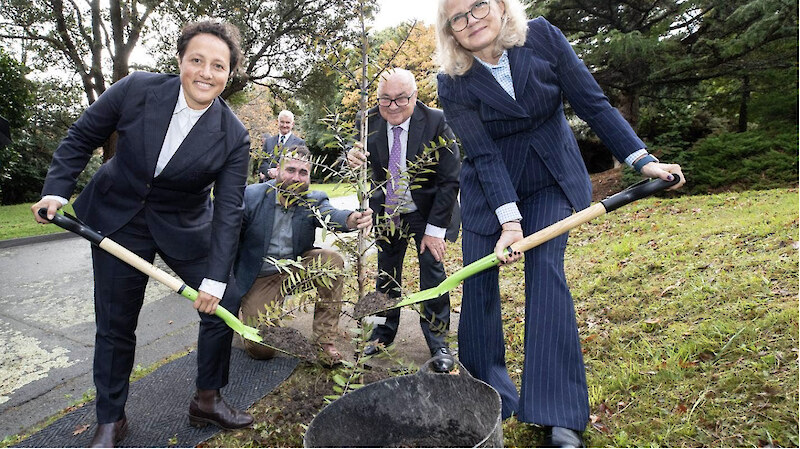
The Commemoration of the Queen’s Platinum Jubilee is marked at Government House with a ceremonial planting of a kauri tree by Minister of Conservation Kiri Allan, left, chief executive of Te Tapu o Tāne Jana Davis, Project Crimson chairman Joris De Bres and Chief Justice Helen Winkelmann on behalf of the Governor-General.The Commemoration of the Queen’s Platinum Jubilee is marked at Government House with a ceremonial planting of a kauri tree by Minister of Conservation Kiri Allan, left, chief executive of Te Tapu o Tāne Jana Davis, Project Crimson chairman Joris De Bres and Chief Justice Helen Winkelmann on behalf of the Governor-General.

Conservation Minister Kiri Allan said this planting would cover areas from “the tips of mountain tops, into urban areas and down through riparian planting – and that’s just in one small area”. Other projects include native trees being planted anywhere from farm land to existing forest landscapes.

Project Crimson chairperson Joris De Bres said the group particularly valued its relationships with iwi and community groups – those on the ground, with knowledge of the land, who were best placed to carry out the work. “We can’t plant them from here,” he said.

Find out more from Stuff.

Posted: 20 May 2022

Te Tapu o Tāne to kickstart 100,000 tree planting project

On 16 May 2022 the Government announced its commitment to planting 100,000 trees around Aotearoa, in a new partnership with Project Crimson.

Project Crimson, the charitable trust responsible for nationwide planting project Trees that Count, recently hit the funding milestone of one million trees. In the month since, they raised enough for another 185,000.

Projects will be supported from the top of the North Island to the bottom of the South.

Leading the way will be Te Tapu o Tāne in Murihiku.

The Commemoration of the Queen’s Platinum Jubilee is marked at Government House with a ceremonial planting of a kauri tree by Minister of Conservation Kiri Allan, left, chief executive of Te Tapu o Tāne Jana Davis, Project Crimson chairman Joris De Bres and Chief Justice Helen Winkelmann on behalf of the Governor-General.The Commemoration of the Queen’s Platinum Jubilee is marked at Government House with a ceremonial planting of a kauri tree by Minister of Conservation Kiri Allan, left, chief executive of Te Tapu o Tāne Jana Davis, Project Crimson chairman Joris De Bres and Chief Justice Helen Winkelmann on behalf of the Governor-General.

Conservation Minister Kiri Allan said this planting would cover areas from “the tips of mountain tops, into urban areas and down through riparian planting – and that’s just in one small area”. Other projects include native trees being planted anywhere from farm land to existing forest landscapes.

Project Crimson chairperson Joris De Bres said the group particularly valued its relationships with iwi and community groups – those on the ground, with knowledge of the land, who were best placed to carry out the work. “We can’t plant them from here,” he said.

Find out more from Stuff.

Posted: 20 May 2022

LEARNZ online field trip

By Tegan Ramage

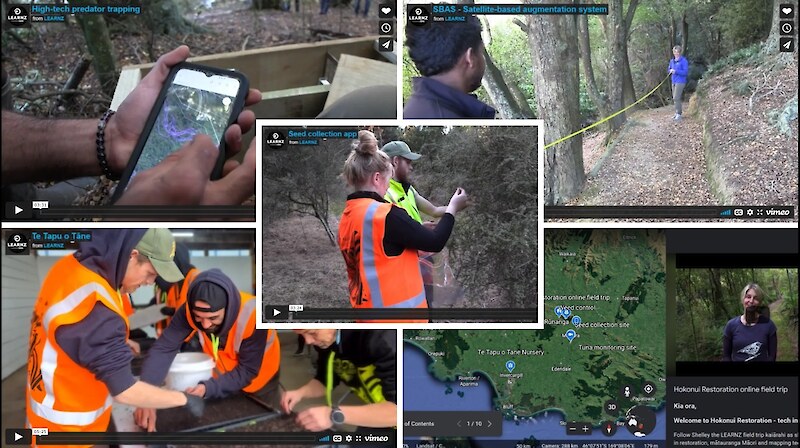
Hokonui Rūnanga Taiao team, along with Toitu te Whenua – Land Information New Zealand, Longford Intermediate, Te Tapu o Tāne, and our Kaitiaki tauira have been very privileged to be part of the latest video additions to the LEARNZ online field trips website, about the Hokonui restoration: Tech in te Taiao.

This filming opportunity allowed Kaiārihi Taiao Environmental Lead, Riki Parata to give an overview of what the Hokonui Rūnanga Kaupapa Taiao programme aim to achieve alongside their partnership with Toitu te Whenua – Land Information New Zealand. This involves current project activities like pest control, restoration planting increasing the ngahere, seed collection, and monitoring of taonga species. Paired alongside new location-based apps created by Toitu te Whenua (LINZ) that help locate, identify, and collate data for pest control, seed collecting and weed control projects.

LEARNZ powered by CORE Education filming crew Shelley Hersey (LEARNZ Kaiārihi) and Andrew Penny (LEARNZ videographer) spent three days in our takiwā uncovering what the Hokonui Rūnanga Kaupapa Taiao programme has to offer.

Find about more about LEARNZ Hokonui Restoration: Tech in Te Taiao and how your kura can get involved!

Check out the field trip videos here.

Day 1

Filming began in the Hokonui Rūnanga Wetlands, where footage was taken of the Longford Intermediate ākonga, who have participated in the Wetland Restoration project to restore native plants that can be found within the Mataura/Gore takiwā.

The ākonga explained the process of planting, how protective barriers are used to shield plant life until maturity and the importance of weeding to encourage future growth.

Ravi Pitchika GIS Analyst for Toitu te Whenua (LINZ) offered a walkthrough of the weed control app. This technology has outdated the pen to paper method by allowing real time data input of invasive species, chemicals used, control methods, and the ‘track me’ button that pinpoints the areas that have been controlled. This data keeps time and date logs, allowing data to be sent to a web-based viewer where the data is stored, viewed, and collated.

We later made our way to the Mataura Falls where the kaitiaki tauira demonstrated the process of setting and releasing hīnaki.

Day 2

Riki Parata explained the significance of the Mataura falls to mana whenua and how Hokonui Rūnanga Taiao are working with the Industry to restore this area. This involves Tuna (eel) surveying and Elver trap, track, and transfer, Kanakana (lamprey) monitoring, and the possibility of a bridge being built that can assist Kanakana making it over the falls.

The tauira then gathered the hīnaki set from the previous day, showing their capture of a longfin eel, which is an endangered taonga species. They measured and weighed the tuna, whilst Riki talked about the 8km stretch of Mataura Mātaitai reserve where tuna surveying will be carried out by our tauira, indicating tuna present within and outside of the Mātaitai.

Later in the day, tauira team leader Raniera Smyth discussed the importance of pest control, and how this mahi can protect our native plant life and native species. He mentioned how the Field Maps app created by Toitu te Whenua (LINZ) was helpful for him and fellow tauira while doing pest control in the Hokonui Hills. The app allows the tauira to track lines, mark hazard points, mark trap placements, and image taking of traps and hazards. This data is then synced to all other tauira devices, providing an easy way to share and keep records of trapping data and more.

Ravi added to this, by mentioning Toitu te Whenua partnership with GIS Australia, with their joint project SBAS – Satellite-based augmentation system. Here they are working on improving location-based apps to improve the location accuracy which currently stands at a 5-10 metre radius and aim to improve this by narrowing down the radius to 1 metre or under.

Mollie Lyders Kaitiaki Taiao (Environmental Assistant) explained the process of seed collection, how the seed collecting app created by Toitu te Whenua is utilised to track seeds via GPS. Once seeds are matured and sold, the owner can trace the plant back to its origins, the species name and who collected them and at what time. She explains the importance of eco-sourcing, which provides the owner with information about which specific areas native species can thrive, and areas where they may be considered an invasive plant. Through seed collecting, Mollie mentions the large seed bank which has been collected, processed, and will be passed onto Te Tapu o Tāne the nursery project.

Day 3

Jana Davis, Chief Executive of Te Tapu o Tāne nursery, gave an overview of their goals they aim to achieve, like regenerating our whenua, working with communities, providing pathway for rangatahi, to name but a few.

Jana went on to explain the importance of eco-sourcing, as he states, “plants thrive better when they go back to where they come from”.

The Hokonui Rūnanga Seed Collecting crew send seeds to the nursery where Te Tapu o Tāne will log, catalogue and on occasion clean seeds that need further cleaning before processing them. It is important to track these batch numbers, the area the seeds were collected, serial numbers, species type and its taonga, common and Latin names, which is where technology plays a huge role with its web-based viewer. Jana voiced how he would like the App to be able to be interactive, so the community can log in online and see where the plant has come from, who has collected them, and who has grown them.

He finished the day off with his closing remarks by encouraging future generations to educate themselves, absorb the knowledge in order to give back to and improve our whenua.

Posted: 19 May 2022

Prev page
Page 27 of 42
Next page

Also in this section

Pānui updates Photos
  • News
    • Pānui updates
    • Photos

© 2026 Hokonui Rūnanga • Website by RS

Facebook
  • Home
  • About us
    • Who we are
    • Murihiku Regeneration
      • Structure and context
      • Office of Upoko
    • Property assets
    • Find us
    • Job vacancies
  • Our history
    • Our whakapapa - a deep connection to this place
    • Wai and Whakapapa
    • The Battle of Waitaramea
    • Poupoutunoa and Kauwaewhakatoro
    • Two Rivers: Mataura (Mata Ura) and Clutha (Mata Au)
      • Mata Ura - Mataura River
      • Mata Au - Clutha River
  • Events & key dates
    • He Ao Hou - New Futures Murihiku Teacher PD Day
    • Energy and Innovation Wānanga 2024
    • Energy and Innovation Expo 2023
      • He Ao Hou - New Futures Murihiku 22 May
      • Live Streaming of Wānanga 23 and 24 May
      • Hosts and Key Speakers 23-24 May
      • Energy and Innovation presentations - 23 May
        • Opening Addresses
        • Global Session
        • Empowering partnerships: government's role in Aotearoa's energy transition
        • Climate Economics
        • Regional Infrastructure
        • Social regeneration and innovation
        • Regional Innovation
        • The importance of the Māori economy through this change
      • Energy and Innovation presentations - 24 May
        • Regional Leadership Panel
        • Regional Plans and Priorities
        • Southern Green Hydrogen
        • Tiwai Smelter Future
        • Southland Aquaculture
        • Regional Case Studies: Decarbonisation
        • Innovation and Bluff Re-imagining
        • Confirming Priorities: wrap-up and closing
    • Science and Innovation Wānanga 2021
    • Energy, Infrastructure and Opportunities Wānanga 2026
  • Education & training
    • Education - Hokonui Rohe Team
    • Te Ara Aukati Kore - Education, Training, and Capability
      • Kia Tū Pathway Planning Programme
        • Kia Tū in schools
        • Kia Tū Tertiary Pathway Programme
        • Meet Your Kaiako - SIT Campus
      • Anamata Māia: Bold, Confident Futures Service
        • Our Kaimahi - Staff
      • Penapena Ā Kura: School Attendance Service
      • Te Aka Whai Mahi: Find Your Path
      • He Ao Hou: New Futures Murihiku
    • Have your say!
  • Environment
    • Kaupapa Taiao - Hokonui Floriculture
    • Taonga Research
      • Kanakana Research
      • Our research partners
    • Southern Ocean - Murihiku ki te Tonga
    • Energy Transition Programme
      • Regional Energy Action Plan - Towards 2030
      • Energy Transition Plan for Murihiku-Southland
      • Hydrogen and Green Energy
      • Tiwai Point
    • Te Tapu o Tāne
    • Our Kaimahi - Staff
  • Health & wellbeing
    • Whānau Ora Navigators
    • Community youth worker and advocacy service
    • Hokonui Community-Led Health
    • Kaumatua Health Days
    • Te Kakano - Nurse-led Clinics
    • Our Kaimahi - Staff
    • Hokonui Takiwā Health and Wellbeing Village of Support
    • Referral form
    • COVID-19
  • News
    • Pānui updates
    • Photos
  • Contact us
    • Register
  • Facebook
  • Search...