Hokonui Rūnanga Register
  • About us
    • Who we are
    • Murihiku Regeneration
    • Property assets
    • Find us
    • Job vacancies
  • Our history
    • Our whakapapa - a deep connection to this place
    • Wai and Whakapapa
    • The Battle of Waitaramea
    • Poupoutunoa and Kauwaewhakatoro
    • Two Rivers: Mataura (Mata Ura) and Clutha (Mata Au)
  • Events & key dates
    • He Ao Hou - New Futures Murihiku Teacher PD Day
    • Energy and Innovation Wānanga 2024
    • Energy and Innovation Expo 2023
    • Science and Innovation Wānanga 2021
    • Energy, Infrastructure and Opportunities Wānanga 2026
  • Education & training
    • Education - Hokonui Rohe Team
    • Te Ara Aukati Kore - Education, Training, and Capability
    • Have your say!
  • Environment
    • Kaupapa Taiao - Hokonui Floriculture
    • Taonga Research
    • Southern Ocean - Murihiku ki te Tonga
    • Energy Transition Programme
    • Te Tapu o Tāne
    • Our Kaimahi - Staff
  • Health & wellbeing
    • Whānau Ora Navigators
    • Community youth worker and advocacy service
    • Hokonui Community-Led Health
    • Kaumatua Health Days
    • Te Kakano - Nurse-led Clinics
    • Our Kaimahi - Staff
    • Hokonui Takiwā Health and Wellbeing Village of Support
    • Referral form
    • COVID-19
  • News
    • Pānui updates
    • Photos
  • Contact us
    • Register
  1. Home
  2. News

News

Murihiku rangatahi experience a green energy future

As a part of the Science and Innovation Wānanga, Murihiku Regeneration alongside Hyundai Motors New Zealand (Southland Dealer GWD), and Professor Sally Brooker and Dr David Warren of Otago University gave Murihiku/Southland youth a view of the future.
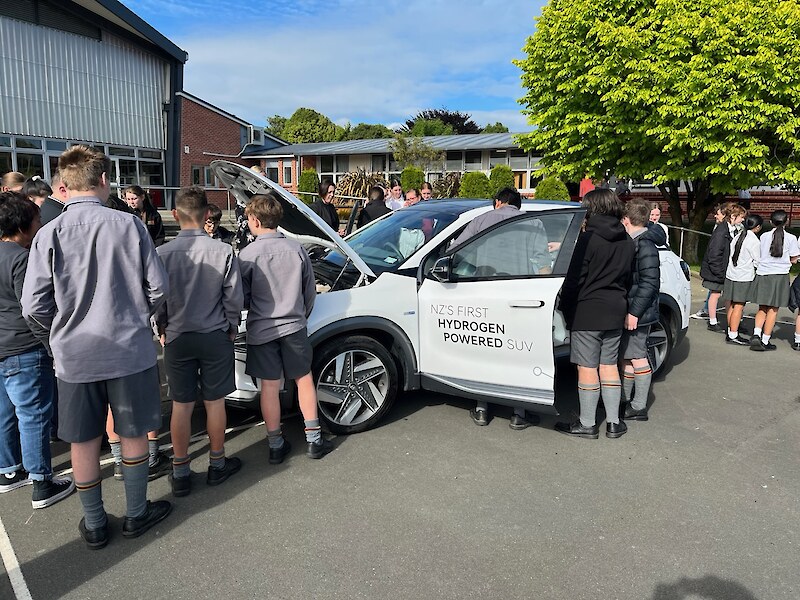
James Hargest Junior students got to have a good look at the Hyundai Nexo SUV on Tuesday 23 November.James Hargest Junior students got to have a good look at the Hyundai Nexo SUV on Tuesday 23 November.On Tuesday 23 November, the visits began with James Hargest College, Southland Girls’ High, Southland Boys’ High and Verdon College, as well as the Southern Institute of Technology. Today we visited Aurora College and Te Wharekura o Arowhenua. We took Hyundai Motor’s new Hydrogen Nexo SUV to show off what they could soon be seen on Murihiku/Southland roads in the near future.

We expect Hydrogen to be a big part of Murihiku/Southland new future, providing a platform for a long term, sustainable economy. The enthusiasm these young people demonstrated while exploring the Hyundai Nexo and while watching a demonstration of an hydrogen electrolyser producing hydrogen from water and then being used in a fuel cell, was great to see.
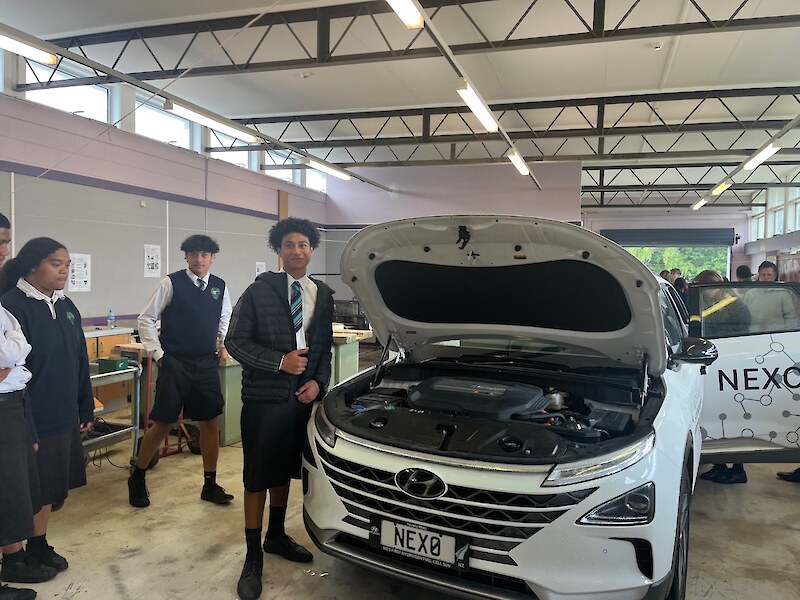
Te Wharekura o Arowhenua ākonga enjoying exploring hydrogen technology.Te Wharekura o Arowhenua ākonga enjoying exploring hydrogen technology.

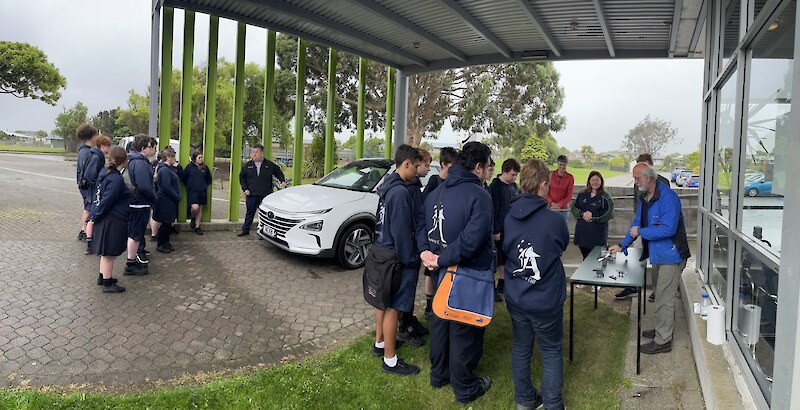
We are planning more events for the New Year as we work to build an awareness of the opportunities that green energy and a decarbonised economy can provide for our youth. Aurora College was the last stop for the Hydrogen Nexo SUV.Aurora College was the last stop for the Hydrogen Nexo SUV.
Posted: 26 November 2021
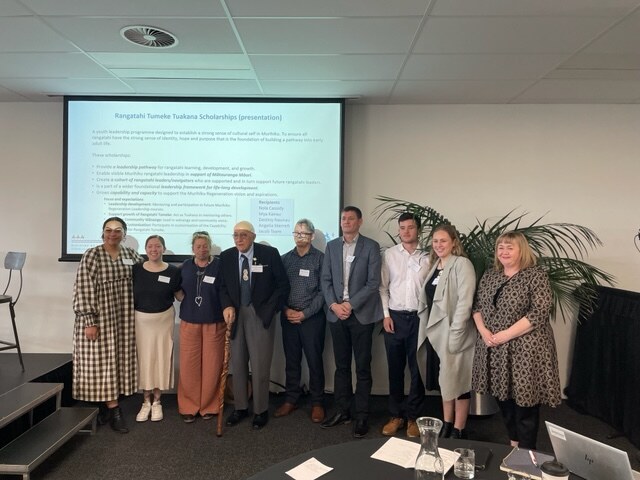
Rangatahi Tumeke Tuakana Scholarships

A big congratulations to the recipients of the Rangatahi Tumeke Tuakana Scholarship, presented by Tā Tipene O’Regan, Dean Whaanga, and Steph Blair, and attended by the Hon Dr Megan Woods, Minister for Energy and Resources, at today’s Murihiku Regeneration Science and Innovation Wānanga.

The recipients are:

  • Nola Cassidy
  • Mya Kairau
  • Destiny Naunau
  • Angelia Skerrett
  • Jacob Taare

Rangatahi Tumeke is a youth leadership programme designed to establish a strong sense of cultural self in Murihiku. The purpose of the programme is to ensure all rangatahi have a strong sense of hope and purpose, that is the foundation of building a pathway into early adult life.

The programme has been designed to:

  • Provide a leadership pathway for rangatahi learning, development and growth.
  • Enable visible Murihiku rangatahi leadership, supporting Mātauraunga Māori and opportunities for Ngāi Tahu whānau.
  • Create a cohort of rangatahi leader/navigators who are supported, and in turn support future rangatahi leaders.
  • Be part of a wider foundational leadership framework for life long development.
  • Grow capability and capacity to support the Murihiku Regeneration vision and aspirations.

Posted: 24 November 2021

Planning for Delta at a community level

Discussions for whānau, hapū, marae, and kura.

Written by Tina Ngata

Read the article below or see article Planning for Delta at a Community Level in The Spinoff.

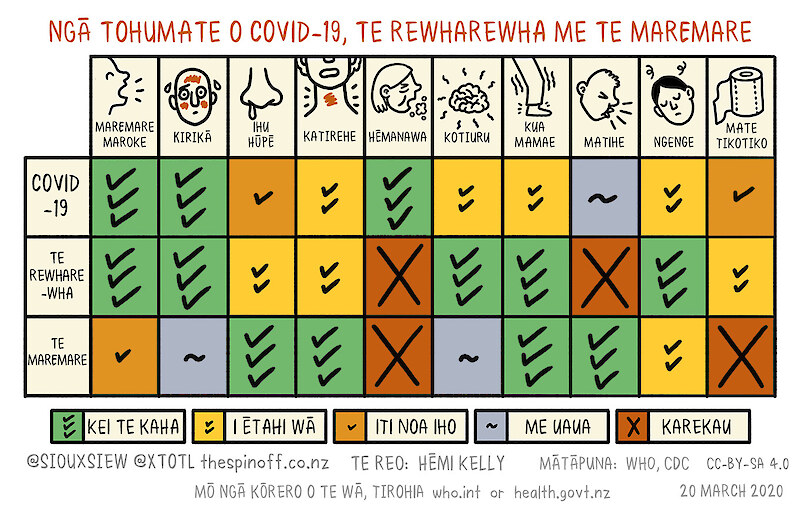
For more information about COVID-19 see the Hokonui Rūnanga website.


Content warning: These are taumaha (heavy) discussions. For some they might be fearful, but they are important. For many others, they are discussions that bring some level of comfort because they enable us to prepare.

We have a new traffic light vaccine target system, which will replace alert levels once each DHB in Aotearoa reaches a 90% vaccination rate. Until we reach those levels, and even once we do, we must accept that Covid in our communities is possible. Māori vaccination rates aren’t yet what they need to be, and while quite a few communities (like ours) are pulling out all stops to do what we can to raise the vaccination rates, in the meantime, there are some urgent discussions and plans that we need to carry out, at a community level.

I’ve been getting a lot of requests from different sectors asking me what we should be considering, and it appears there is little guidance out there. Just to remind people: I am not a Covid-19 expert. But I am a researcher, and have a valued network of qualified, independent experts who I trust. We are holding some of these discussions at a community level right now, and so I’m going to share with you what some of these discussions look like.

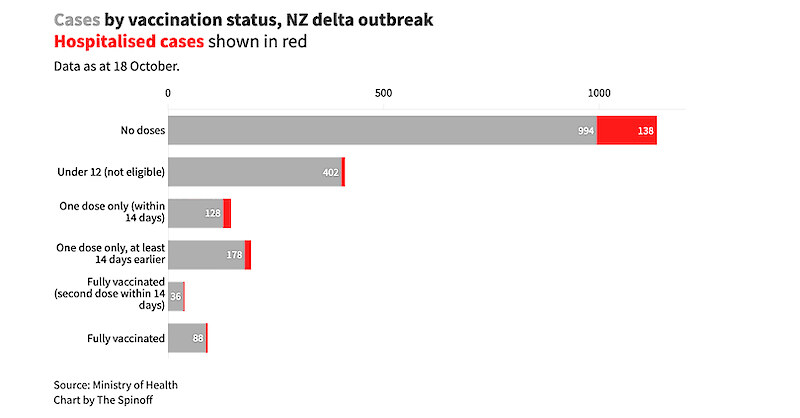
I’m going to mention the word vaccinate often. That’s because the absolute best prevention measure is to vaccinate. The proof of that is quite simple: it’s in the percentage of positive cases that are unvaccinated:

The most heartbreaking of those lines, for me, is the “under 12” line who did not have a choice whether to vaccinate or not. Every time somebody says it’s about personal choice, I think about them.

Whānau planning

1. Vaccinate

2. Protect. If you have children in your household that are too young to vaccinate, or whānau who are not able to vaccinate for medical reasons, then consider how you need to protect them.

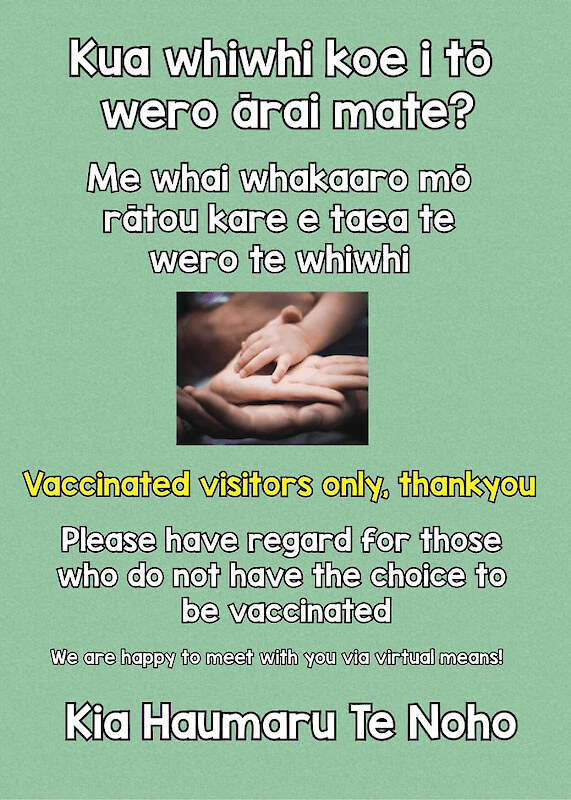
You might want to consider letting people around you know that you have people in your household who do not have the choice, and because the best way to protect them is to ensure everyone around them is vaccinated, then you are only accepting vaccinated visitors.

3. Plan for Covid care. If you have unvaccinated whānau in your household, or in the rare instance of a “breakthrough” infection, it is likely you will have to isolate at home.

You should have a plan ready that can be actioned as soon as one of you tests positive. You should be ready to isolate immediately, ideally have the positive person isolate from the rest of the household, and the rest of the household will need to be tested.

If you are lucky enough to have not had it transmitted inside your household, then you can prevent it by having one person only tend to the Covid patient’s needs.

You might want to consider the following:

  • What kind of care does a Covid patient require? Consider addiction needs, appropriate dietary needs, hydration, countertop medicine that can help to relieve some of the symptoms like fever.
  • Do you have a space where they can safely isolate at home away from the rest of the household?
  • What childcare arrangements will you need to make if a primary parent falls ill with Covid?
  • Do you have reliable access to clean drinking water?
  • Is your home/the isolation space well ventilated, dry and warm? Ventilation is important – it is better to have a ventilated room with blankets and warm clothes than an unventilated room.
  • Try to keep your surroundings to a standard that would help anyone get better from the flu (ie minimise condensation, damp and mould).
  • Consider investing in an air purifier with a HEPA filter. These can be expensive – if you are on a benefit then you might want to consider talking with your doctor about a referral for your case manager. Especially if you have unvaccinated children or are on a health and disability benefit. Consider contacting a benefit advisory/advocacy service like BAIS who can advocate on your behalf or advise you on accessing these. If you can’t afford an air purifier then having the windows open and a fan that points out of the window could be an affordable alternative.

Do you have reliable access to a support person if you urgently need something purchased and delivered?

4. Support. If a member of your whānau/household is a minitā/tohunga, a pou kōrero/pou karanga, undertaker or in a role to do with caring for tūpāpaku or supporting grieving whānau, how might you support them for the increased level of work that may be ahead of them? People in these positions often have a “N-yes” tendency (they wind up saying yes even when they want to say no).

Can you nominate someone to monitor the demands on their time and energy, and step in when necessary? Do they need a checklist of Covid safety requirements to keep themselves safe in carrying out their duties?

What are the safety precautions they need to take when coming home from their mahi, in order to keep the household safe? Can anyone else be trained to share the load?

Hapū planning

1. Vaccinate.

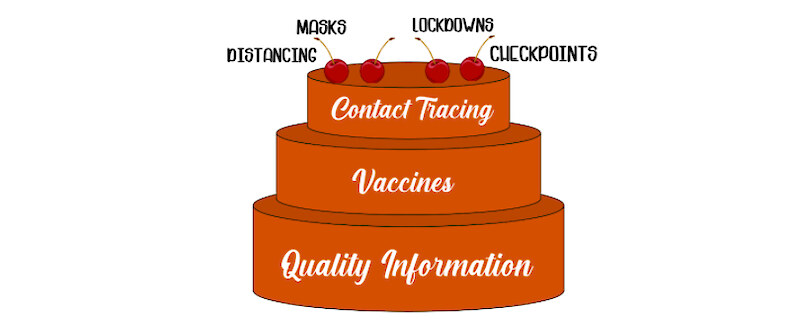
2. Tools. Vaccinations and quality information are vital tools in combatting Covid at a community level, but the best strategy is a “whole of cake”:

The safest community is a community that is well informed, well vaccinated, and well masked. None of these tools are as effective as all of these tools together. (Note: contact tracing may be getting phased out as the positive case numbers get out of hand, but it’s still a good idea to ask people locally if they have been to a location or region of interest).

3. How will you deal with the pouri of mass loss in your community? What are the provisions available to you to deal with whānau in distress, or indeed numerous whānau in distress, or an entire community in distress over a sustained period? Do you have access to quality kaiawhina in this area? What role could pure, karakia, waiata, māramataka, kōrero pūrākau play in the healing of the mamae ahead?

4. What are your plans for your marae? Will you stay closed? Will you have conditions for how to operate when open?

Rapid antigen and saliva tests are popular Covid suppression tools overseas with some restaurants having rapid antigen test rest areas outside of venues and restaurants and customers arriving 20 minutes early to get tested before they can go inside. Many households overseas have now normalised testing and test themselves at home a couple of times a week.

Rapid antigen tests are now approved for use in Aotearoa. Is a rapid antigen test area something your marae may want to consider? (note: rapid antigen tests help with suppression, they are not 100% effective because they do not pick up low levels of the virus. While they are convenient and accessible, they should be used in combination with masks, distancing and other rules like telling people to stay home if they are sick).

5. Urupā and tangihanga planning.

  • Pray for the best, but be prepared for the worst.
  • Do you have a plan for high mortality rates?
  • Here are the Ministry of Health guidelines for dealing with tūpāpāku and funeral services.
  • How might you support social distancing at tangihanga?
  • Do you have supplies of masks and contact tracing resources?
  • What is your urupā capacity? How might you be able to cope with an increased mortality rate?
  • How can you manaaki/tiaki your pou kōrero, pou karanga, and others involved in the care of tūpākaku and whānau pani?
  • How will you handle hākari? Should hākari meals be offered in takeaway containers? Should hākari be cancelled? If you have hākari on your marae, what are the ventilation and covid requirements?6 Communications strategy. Good public health information is a crucial factor in community health. How will you communicate vital information out to your hapū? Via social media? Do you have someone who can print information out and leave in letterboxes/PO boxes for whānau who are not on social media?

6. Who are your trusted sources of information?

Here are some excellent links for relevant, reliable Covid advice:
Te Roopu Whakakaupapa Urutā – The National Māori Pandemic Group has excellent resources and advice on a wide range of Covid issues, made relevant to Māori.
Protect Our Whakapapa – Simple, powerful, on point resources for whānau to protect our whakapapa from Covid.
Dr Rawiri Taonui consistently and tirelessly analyses Covid for te ao Māori.
Dr Morgan Edwards has an easy-to-follow, comprehensive instagram page with quality covid information.

Kura planning

1. Vaccinate.

2. The government has mandated vaccination for all school staff (teaching and non-teaching). While that reduces the risk, it does not eliminate it. Every kaiako and staff member at our kura is vaccinated, but we are keeping our taonga home because we do not know if all of the households of other students (especially under 12s) are vaccinated.

While we know that young children often recover well, those who have required hospitalisation or have suffered from long Covid or severe covid have been children with underlying health problems, in particular underlying respiratory problems.

Overwhelmingly, in Aotearoa, that will be Māori and Pasifika children. Here is a very good general article by the incomparable Dr Jin Russell who outlines a gold standard plan for safely reopening.

  • What provisions will the kura have for parents who need to keep their children home for safety reasons, until they are vaccinated?
  • How will the kura protect young children from unvaccinated parents who may be dropping off or picking up children?
  • Soon the Pfizer vaccine might be available for 5-11 year-olds. Should the kura be considering (if it hasn’t already) kura vaccine clinics so the vaccine is readily available to students and their whānau? Do the whānau need a wānanga on vaccines first, with some trusted information sources?
  • How will you, as a kura, work to protect our pēpi under five?

Important info for parents of under five: For newborns best protection comes by mother being vaccinated in pregnancy, breastmilk tops up protection and the natural sugars in milk help baby to develop a strong immune system through gut bacteria. Vaccination in pregnancy protects mother during pregnancy and postpartum when she is at high risk from Covid-19. For older infants, mothers being vaccinated while breastfeeding is likely to have some benefits to reduce risk of transmission and some antibody transfer, but only temporarily (some studies suggest four weeks). For toddlers, their own immune system is more developed than infants and are currently less likely to get sick from Covid.

For all babies, their best protection comes from everyone around them being vaccinated and staying away when sick. Other studies on vaccinations for pregnant and lactating māmā are here and here.

  • Will classrooms be well ventilated? Here is an excellent article on the importance of ventilation for classrooms. Here is another link to a study carried out by Otago University that outlines the importance of ventilation, HEPA air filters, and CO2 monitors for classrooms.
  • What education resources are available for your kura on Covid, vaccines, and misinformation?

As more resources or important considerations come to hand, I will add them to my website. Again, these aren’t easy discussions, but they are important. It is equally important that you hold these kōrero with aroha, couched in karakia, and to consider the important processes of pure and tuku in order to release the weight of the discussion afterwards.

Indeed, reading this may leave you feeling taumaha. I invite you to tuku. Turn off the device, sit quietly for a moment with the weight of what you have read. Acknowledge it. Commit to taking an action (it might be discussion with your GP, it might be creating a resource, it might be a phone call to learn about services, it might be doing more research, it might be calling a hui) in relation to it.

Bless the weight, and release it to the universe, while retaining your commitment to action. Remember, we have come through this before as a people, and while it’s important to prepare, it’s also important, and possible, to both prepare while holding hope and faith. Offer a brief karakia to emerge back into Te Ao Marama.

Unuhia, unuhia, unuhia
Unuhia ki te uru tapu nui
Kia wātea, kia māmā, te ngākau, te tinana, te wairua i te ara takatā
Koia rā e Rongo, whakairia ake ki runga, kia tina, tina.
Hui e, taiki e.

This article was originally published on TinaNgata.com.

Posted: 26 October 2021

Environment Southland won’t release independent monitoring report for Tiwai Point

Article from: Stuff 18 October 2021. Report by Rachael Kelly, Southland Reporter.

Environment Southland won’t publicly release an independent report about its monitoring at the Tiwai Point smelter, saying releasing it may prejudice any investigation and detection of offences.

In February, Environment Minister David Parker allocated $300,000 in funding to the regional council to increase testing and monitoring at Tiwai Point to determine what environmental remediation will be required when the smelter closes.

Regional council chief executive Rob Phillips hired Aurecon, an engineering, design, and advisory company, to provide specialist technical expertise at the site.

The company had produced a report, but Environment Southland acting compliance manager Glen McMurdo said: ‘’the Aurecon report is unable to be released at this stage, as releasing it may prejudice any investigation and detection of offences.’’

The Ministry for the Environment has confirmed it has not received that report.

Environment Southland has also engaged EHS Support, an environmental consulting company with international experience in smelter closures, to review a Detailed Site Investigation report, which was released by New Zealand Aluminium Smelters (NZAS) on Friday.

NZAS said that report, which included smelter site contamination results, “might cause concern to people”.

The aluminium producer engaged GHD Limited to complete the Detailed Site Investigation as part of studies to ensure the site was remediated to the required level when it closed.

Samples were gathered across 238 locations, mostly at levels 10cm to 1m below the surface, and were assessed against a range of criteria as per the Ministry for the Environment Contaminated Land Management Guidelines based on potential future land use: industrial or recreational.

In total, GHD found 83 per cent of groundwater samples exceeded guidelines within the New Zealand Drinking Water Standards and Environment Southland groundwater rules.

In July 2020, Rio Tinto announced it would wind down operations at the smelter, which employs more than 1000 people, by August 2021 because of high energy and transmission costs. However, after it reached an agreement on a new electricity agreement with Meridian Energy, operations were to continue until December 31, 2024.

The owner of the smelter, Rio Tinto, has confirmed that it will remove all spent cell lining, a hazardous by-product produced the aluminium smelting process, from Tiwai Point near Bluff.

However, documents released under the Official Information Act show that up until a recent meeting with Government ministers, Rio Tinto were unwilling to make the commitment, citing the fact it did not have a full understanding of the condition of the smelter site.

Posted: 19 October 2021

Murihiku Regeneration and E tū union collaboration

Murihiku Regeneration and E tū trade union have signed a formal collaboration agreement to further the objectives of recognising, protecting, and furthering the interests of the hapū in the Murihiku region.

The co-chairs and local representatives of E tū met with Murihiku Regeneration at Hokonui Rūnanga, Gore, on Thursday 14 October, 2021 for this significant occasion.

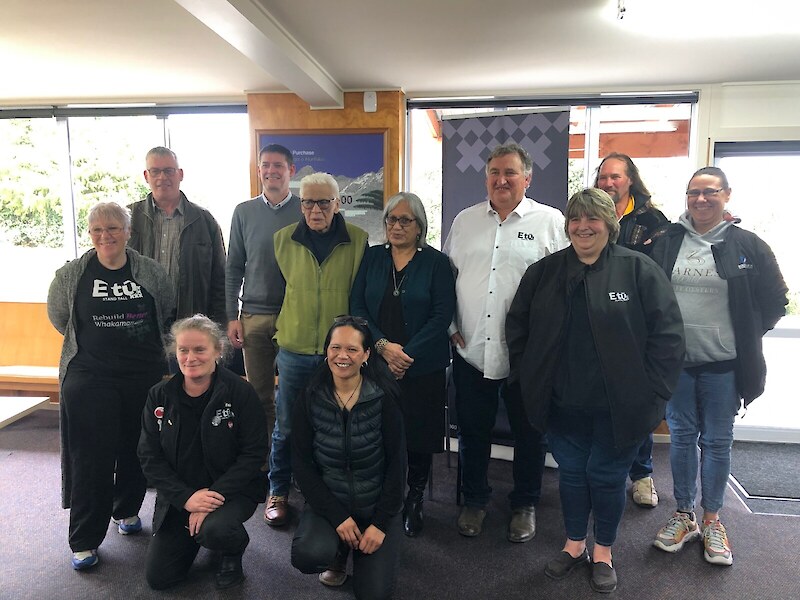
E tū is the largest private sector union in New Zealand with over 50,000 members.Left To Right: Jeannine Meander ( Southland E Tū Leader), Terry Nicholas (Hokonui Rūnanga; Murihiku Regeneration), Karena Kelland (E Tū Public and Commercial Industry Councillor) , Ivan Hodgetts (Ministry of Education, Murihiku Regeneration), Taare Bradshaw (Hokonui Rūnanga), Shintelle Wikeepa (E Tū National Women’s Committee Member), Muriel Tunoho (E Tū National Co-president), Don Pryde (E Tū National Co-president), Karen Brown (E Tū National Women’s Committee Member), Martin Nepia (Southland E Tū Rūnunga Rep), Adri Styn (Southland E Tū Leader ). Missing from photo: Anna Huffstutler (E Tū Organiser).Left To Right: Jeannine Meander ( Southland E Tū Leader), Terry Nicholas (Hokonui Rūnanga; Murihiku Regeneration), Karena Kelland (E Tū Public and Commercial Industry Councillor) , Ivan Hodgetts (Ministry of Education, Murihiku Regeneration), Taare Bradshaw (Hokonui Rūnanga), Shintelle Wikeepa (E Tū National Women’s Committee Member), Muriel Tunoho (E Tū National Co-president), Don Pryde (E Tū National Co-president), Karen Brown (E Tū National Women’s Committee Member), Martin Nepia (Southland E Tū Rūnunga Rep), Adri Styn (Southland E Tū Leader ). Missing from photo: Anna Huffstutler (E Tū Organiser).

Murihiku Regeneration and E tū have a shared interest in ensuring whānau have the capability needed to make the most of the opportunities for work and life in Murihiku. Both parties have a shared interest in developing opportunities that reflect the principles of whānau-centric practice and the concept of decent life affirming work or Mahi Tūturu: good work with dignity for the worker, their whānau, and community.

Decent work is central to ensuring Murihiku is a region in which whānau can live their lives well. There is a need for active effort to move beyond (and avoid a regression to) low-skill, low wage and precarious employment and the inequities that people in such employment face.

Murihiku Regeneration and E tū are responding to this context by moving beyond a one size fits all policy ‘solution’, to an authentically whānau-centric approach to capability development. Capability development must also be met with work to ensure that the labour market and societal context fairly rewards people for their contribution.

The intent is to ensure that whānau are self-determining (rangatiratanga) in the identification of aspirations and forming their path. The role of this collaboration is to advocate for, and provide, a systematic approach to support and guidance for whānau.

Posted: 16 October 2021

Prev page
Page 37 of 42
Next page

Also in this section

Pānui updates Photos
  • News
    • Pānui updates
    • Photos

© 2026 Hokonui Rūnanga • Website by RS

Facebook
  • Home
  • About us
    • Who we are
    • Murihiku Regeneration
      • Structure and context
      • Office of Upoko
    • Property assets
    • Find us
    • Job vacancies
  • Our history
    • Our whakapapa - a deep connection to this place
    • Wai and Whakapapa
    • The Battle of Waitaramea
    • Poupoutunoa and Kauwaewhakatoro
    • Two Rivers: Mataura (Mata Ura) and Clutha (Mata Au)
      • Mata Ura - Mataura River
      • Mata Au - Clutha River
  • Events & key dates
    • He Ao Hou - New Futures Murihiku Teacher PD Day
    • Energy and Innovation Wānanga 2024
    • Energy and Innovation Expo 2023
      • He Ao Hou - New Futures Murihiku 22 May
      • Live Streaming of Wānanga 23 and 24 May
      • Hosts and Key Speakers 23-24 May
      • Energy and Innovation presentations - 23 May
        • Opening Addresses
        • Global Session
        • Empowering partnerships: government's role in Aotearoa's energy transition
        • Climate Economics
        • Regional Infrastructure
        • Social regeneration and innovation
        • Regional Innovation
        • The importance of the Māori economy through this change
      • Energy and Innovation presentations - 24 May
        • Regional Leadership Panel
        • Regional Plans and Priorities
        • Southern Green Hydrogen
        • Tiwai Smelter Future
        • Southland Aquaculture
        • Regional Case Studies: Decarbonisation
        • Innovation and Bluff Re-imagining
        • Confirming Priorities: wrap-up and closing
    • Science and Innovation Wānanga 2021
    • Energy, Infrastructure and Opportunities Wānanga 2026
  • Education & training
    • Education - Hokonui Rohe Team
    • Te Ara Aukati Kore - Education, Training, and Capability
      • Kia Tū Pathway Planning Programme
        • Kia Tū in schools
        • Kia Tū Tertiary Pathway Programme
        • Meet Your Kaiako - SIT Campus
      • Anamata Māia: Bold, Confident Futures Service
        • Our Kaimahi - Staff
      • Penapena Ā Kura: School Attendance Service
      • Te Aka Whai Mahi: Find Your Path
      • He Ao Hou: New Futures Murihiku
    • Have your say!
  • Environment
    • Kaupapa Taiao - Hokonui Floriculture
    • Taonga Research
      • Kanakana Research
      • Our research partners
    • Southern Ocean - Murihiku ki te Tonga
    • Energy Transition Programme
      • Regional Energy Action Plan - Towards 2030
      • Energy Transition Plan for Murihiku-Southland
      • Hydrogen and Green Energy
      • Tiwai Point
    • Te Tapu o Tāne
    • Our Kaimahi - Staff
  • Health & wellbeing
    • Whānau Ora Navigators
    • Community youth worker and advocacy service
    • Hokonui Community-Led Health
    • Kaumatua Health Days
    • Te Kakano - Nurse-led Clinics
    • Our Kaimahi - Staff
    • Hokonui Takiwā Health and Wellbeing Village of Support
    • Referral form
    • COVID-19
  • News
    • Pānui updates
    • Photos
  • Contact us
    • Register
  • Facebook
  • Search...