Hokonui Rūnanga Register
  • About us
    • Who we are
    • Murihiku Regeneration
    • Property assets
    • Find us
    • Job vacancies
  • Our history
    • Our whakapapa - a deep connection to this place
    • Wai and Whakapapa
    • The Battle of Waitaramea
    • Poupoutunoa and Kauwaewhakatoro
    • Two Rivers: Mataura (Mata Ura) and Clutha (Mata Au)
  • Events & key dates
    • He Ao Hou - New Futures Murihiku Teacher PD Day
    • Energy and Innovation Wānanga 2024
    • Energy and Innovation Expo 2023
    • Science and Innovation Wānanga 2021
    • Energy, Infrastructure and Opportunities Wānanga 2026
  • Education & training
    • Education - Hokonui Rohe Team
    • Te Ara Aukati Kore - Education, Training, and Capability
    • Have your say!
  • Environment
    • Kaupapa Taiao - Hokonui Floriculture
    • Taonga Research
    • Southern Ocean - Murihiku ki te Tonga
    • Energy Transition Programme
    • Te Tapu o Tāne
    • Our Kaimahi - Staff
  • Health & wellbeing
    • Whānau Ora Navigators
    • Community youth worker and advocacy service
    • Hokonui Community-Led Health
    • Kaumatua Health Days
    • Te Kakano - Nurse-led Clinics
    • Our Kaimahi - Staff
    • Hokonui Takiwā Health and Wellbeing Village of Support
    • Referral form
    • COVID-19
  • News
    • Pānui updates
    • Photos
  • Contact us
    • Register
  1. Home
  2. News

News

Tiwai Point decision and Clean Energy – can Murihiku do both?

On Tuesday 8 February Rio Tinto announced it wants to delay the closure of the Tiwai Point Aluminium Smelter. This was just 6 days after the Just Transition workplan for Murihiku was released, in response to the previously indicated closure of the smelter in late 2024.

Despite yesterday’s announcement by Rio Tinto, Minister of Energy and Resources Megan Woods said her vision for the future had not changed.

“Developing new industries, creating new jobs, improving the community’s ability to manage economic shocks, setting Southland up for the future - these give Southlanders options that are not dependent on one large employer,” Woods said when the Just Transition workplan was announced. Read more here.

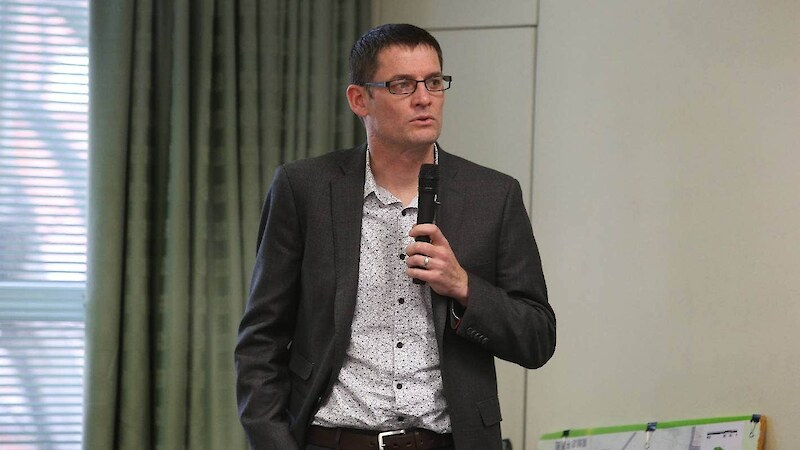
Terry Nicholas, Programme Director for Murihiku Regeneration also stated that Rio Tinto’s announcement will not affect the kaupapa of Murihiku Regeneration.Terry Nicholas: Programme Director for Murihiku Regeneration, Hokonui Rūnanga Manager, and Te Rūnanga O Ngāi Tahu representative.Terry Nicholas: Programme Director for Murihiku Regeneration, Hokonui Rūnanga Manager, and Te Rūnanga O Ngāi Tahu representative.
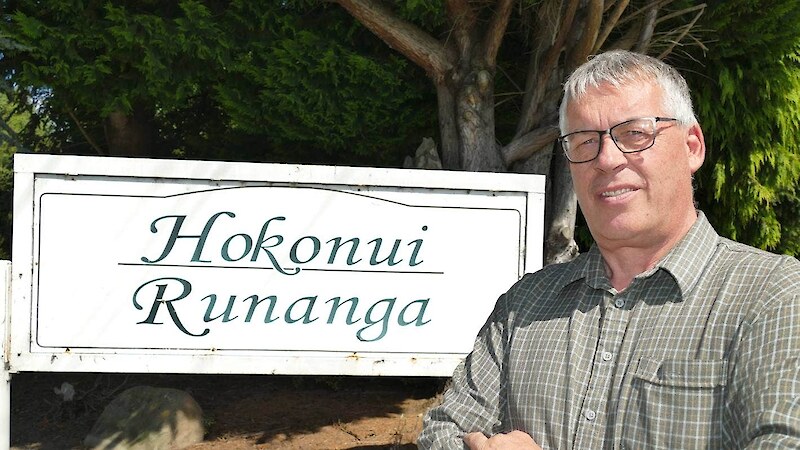
“We remain focused on the work before us – and will work constructively with all of the key players. Nothing has changed with the comments over the last few days”

Murihiku Regeneration in line with Government’s policies and plans for 2022

Key to the Just Transition process in Murihiku is the Clean Energy workstream, which is led by Murihiku Regeneration. The importance of moving to a low carbon economy was highlighted by Prime Minister Jacinda Arden in her statement to Parliament yesterday, outlining the Government’s policies and plans for 2022.

When referring to the government’s economic plan moving forward, the Prime Minister stated:

“That’s why our economic plan is to build a high wage, low carbon economy that provides economic security in good times and bad.

  • It is focussed on increasing the value of our exports and developing new markets
  • Investing in skills and new technology
  • Modernising infrastructure, and
  • Research and innovation to drive productivity, reduce emissions and increase wages.

Climate change and economy

Jacinda Arden stated:

“Our economy cannot afford to return to business as usual, because the status quo is unsustainable.

That’s why tackling climate change will be a core part of our economic strategy.

Climate change must not overwhelm us, in fact, it is our greatest opportunity for new jobs and higher wages.

For a country already earning a premium from our clean, green and innovative image, there is an opportunity to use that natural advantage to create new jobs in new industries. It will also reduce New Zealand’s reliance on global energy prices.

Other countries are moving to compete for and seize these opportunities. New Zealand cannot afford to be left behind. Not economically or morally. Not when the future growth of our exports will be built on a credible plan to bend our emissions curve and meet our targets.

Mr Speaker, this year our first Emissions Reduction Plan will put innovation and clean technology at the heart of our economic transition.”

Education and training

Murihiku Regeneration’s Te Ara Aukati Kore (pathways without barriers) education and training programme is also aligned with the Government’s agenda for 2022. In particular, the Prime Minister stated:

“Mr Speaker, as a Labour government, building skills and training opportunities is a key part of our agenda.

It not only links in to our wider plans on infrastructure, it also underpins and enables a productive, high wage and innovative economy.”

Read the full speech here.

Clean energy – the way of the future

In summary, Murihiku Regeneration will continue with its kaupapa and strategic direction for a better more resilient Murihiku irrespective of the business decisions made by Rio Tinto. What is the future of clean energy in Murihiku? Watch this space ….

Posted: 9 February 2022
Educational change is coming for Murihiku rangatahi

Article reproduced from Stuff.

See also: Ministry of Education support for Te Ara Aukati Kore posted on 14 December 2021.


Research shows Murihiku rangatahi are some of the most disadvantaged in New Zealand, but that’s slowly starting to change as iwi and other organisations work to create a more inclusive education system. Louisa Steyl reports.

When Te Rourou, Vodafone Aotearoa Foundation asked Murihiku rangatahi last year about the challenges they faced, their responses were difficult to read.

“The girl from Windsor got all this support. The South City girl just sat there. She put her hand up, but the teacher just walked right past her. Teachers don’t see us as equals,” one young Māori Southlander said.

“I think that the ‘you’re not going to get anywhere’ mindset is one of the big goals for us to overcome,” said another.

“I was young, Māori, brown-faced, pregnant and they [my school] were like, ‘you’ve got to go’. And then there was this young Pākehā Year 9 student, and she was heavily pregnant, and she was all good to stay there,” said another.

But multiple initiatives launched last year hope to build environments where learners of all ages can thrive, rather than just survive.

The quotes were collected by Te Rourou as part of its “Thriving Murihiku” research that looked at opportunities to make a tangible difference to the lives of Invercargill youth.

Using Statistics New Zealand data from 2018 to 2020, the foundation found in May, 2021 that 2550 – or 29 per cent – of young people in the city experience exclusion or disadvantage – the highest rate for any city in New Zealand.

The foundation worked with Invercargill Student Support Network, Aurora College: Te Mūranga a Rangi, Awarua Whānau Services, Murihiku Young Parents Learning Centre, Te Wharekura o Arowhenua and Ngā Kete Mātauranga Pounamu Charitable Trust to ask rangatahi what they needed to thrive.

The resulting report will act as a compass to guide the foundation as it builds a plan to half the number of youth experiencing exclusion in the city, before rolling out the plan to other parts of the country.

Head of the foundation Lani Evans said “the ultimate component of any strategy for success is to make rangatahi the leader in designing their own future. Keep their voices alive in any future mahi in Invercargill.”

With Murihiku going through an economic shift as the closure of the New Zealand Aluminium Smelter draws nearer, Murihiku Regeneration has partnered with the Ministry of Education to make sure rangatahi will have the skills and expertise they’ll need to participate in the new economy.

The ministry’s secondary transitions principal advisor Ivan Hodgetts is leading Te Ara Aukati Kore (pathways without barriers).Te Ara Aukati Kore programme lead Ivan Hodgetts says the project will look for ways to make the education system work for rangatahi.Te Ara Aukati Kore programme lead Ivan Hodgetts says the project will look for ways to make the education system work for rangatahi.

The idea is to understand future workforce demands and the aspirations of the community and then partner with tertiary institutions like the Southern Institute of Technology to make sure the training that’s needed is easily available in a way that makes it easy for people of all ages to train.

The programme will also raise awareness about career options, giving youth the opportunity to explore careers they may not have considered.

Māori students from the Southern Institute of Technology also helped guide the changes Te Pūkenga, the new Crown entity set up to manage polytechnics, will implement after compiling its “Te Rito – Insights from learners” report this year.

In Southland, students felt they needed help choosing the best course for them and more help to find work after they had qualified, while many faced financial constraints.

The project aims to take a whānau-centred approach to building equitable career pathways for rangatahi and smoother career transitions for pakeke (adults).

“Education is more than just skills for jobs. It’s turning young people into thriving adults. Education builds capability,” Hodgetts said.

The programme’s model recognised that not all 15-year-olds knew what that wanted to do with their lives and that their identities were shaped by their lived experiences, he said.

The students identified support and advice from tutors, being able to find information easily on an institution’s website, and placement opportunities as factors that would help them succeed.

Hokonui Rūnanga kaitoko matāuranga Jo Brand said the insights captured in the report mirrored what she was hearing from not only tertiary-level students but high schoolers as well.

“It’s on the money,” she said, adding the report was comprehensive and showed that Māori students had been actively heard.

Brand was also pleased that the report highlighted efforts already under way to address the barriers to success for students.

As mana whenua, Hokonui Rūnanga is also playing a supportive role in the roll-out of the Ministry of Education-led Te Hurihanganui initiative.

The three-year pilot, launched in January last year, and the eight schools in the Lower Mataura Valley Kahui Ako (Community of Learning) are already making valuable changes.

Edendale Primary School, for example, is allowing wider whānau support people, like grandparents, to attend parent-teacher interviews for the first time.

This initial stage was about adults taking a step back and analysing the barriers to ākonga Māori learning, Brand said.

“It’s just about taking the time to reflect,” she said, which unfortunately included some difficult conversations about systemic racism.

Using the example of only parents attending school meetings, Brand said Māori family units were sometimes larger than just parents and children, and since school time took up very little of a child’s time, it was important to get the whole family on board.

Edendale’s policy meant “all the people involved in this future are at the table if they want to be”, she said.

Parents appreciated being asked their opinions and suggestion for how the education system could better serve their children, Brand said.

For teachers, the pilot was about understanding the Māori worldview, so they could teach it, she said.

Different schools are looking at different work streams.

Glenham School has been adding a Māori lens to day-to-day lessons.

Principal Cheryl White said teachers were making sure tikanga and te reo Māori were part of daily activities to create a multicultural environment.

She believed the initiative would benefit all children because the holistic Māori world view puts children at the centre of learning.

Edendale Primary principal David McKenzie said the school was surveying its teachers, students, and parent community before formulating its next steps.

“Te Hurihanganui has been able to provide seeding funds for projects which has really helped,” he said.

It neatly coincided with a “Creatives in Schools” Ministry of Education-funded project where nationally-recognised artist Sharne Parkinson was teaching children kapa haka and toi Māori (Māori arts), McKenzie said.

Posted: 5 February 2022

Southland Reimagining its Economic Future

Southland is traveling in a new direction following today’s release of the region’s Just Transition Work Plan, sign-posting the region’s economic path beyond the closure of the New Zealand Aluminium Smelter (NZAS).

The Work Plan is the first milestone in the Government’s commitment to support a just transition for Southland. The region faces significant job losses and flow-on impacts on local businesses as a result of the planned closure of NZAS in 2024. The goal is to build the region’s economic, environmental and social resilience, securing its future prosperity.

Southland just transition Enduring Oversight Group co-chairs, Aimee Kaio and Neil McAra said the release represents nearly a year of work between Southland iwi, regional leaders and central government, with a strong focus on managing the impacts of the planned closure.

This plan is the first steps toward building a new future for our region. We’ve identified the direction of travel. The next stage is to work together to deliver the jobs and opportunities to make this plan a reality.”

“With the support of Government, our community came together to understand the current and real challenges and advantages of our region. Like all regions there are many opportunities, we need to be strategic and open to the long term sustainable possibilities. Just transitions is a vehicle to ensure everyone in Murihiku/Southland comes with us on the journey.” Said Aimee Kaio.

The plan aims to enable Southland to create a future that has diversity and depth in existing industries and is primed to capitalise on new industries.

Neil McAra, said “Southland as long been a province which just gets on and does it. While there are many opportunities within Southland, the need to have a more robust and diverse economy has never been more important. With the support of government through just transitions we are developing plans for the future. It’s vital all Southlanders work together to ensure success.”

The work plan is broken into seven work streams which each have local leads assigned:

  1. Clean energy – Murihiku Regeneration
  2. Land use – Thriving Southland
  3. Aquaculture – Southland Aquaculture Working Group
  4. Business transitions – Southland Chamber of Commerce
  5. Worker transitions – Murihiku Regeneration
  6. Long-term planning – Great South
  7. Community capability building – Invercargill City Council.

The work plan is very clear that under each of the work streams more work must be done to develop the detail on how to deliver, what is needed to make it happen, and when it is likely.

The Enduring Oversight Group will receive feedback on each of the work streams in August. The group will work with central government to develop the next stage of the plan to support the region to deliver on agreed actions prior to NZAS’ announced closure date.

What is a just transition?

In general terms, a just transition is a strategy to help a region lead its own planning and ensure the impacts and opportunities arising from the transition are evenly distributed. A just transition process recognises there are many communities and perspectives in a region. There are also lots of different views on what a “successful” transition looks like. Working in partnership with key pou (or groups) can balance the ambitions of diverse parties, including those who may not always be included in regional planning.

The just transition partnership in Southland includes:

  • Iwi
  • Local government
  • Education providers
  • Business representatives
  • Workers (represented by unions)
  • Community organisations
  • Central government
  • The primary sector.

Posted: 2 February 2022

Just Transition Work Plan for Southland released

A new plan outlining how the Government plans to boost the Southland economy as the Tiwai smelter closure looms has been unveiled.

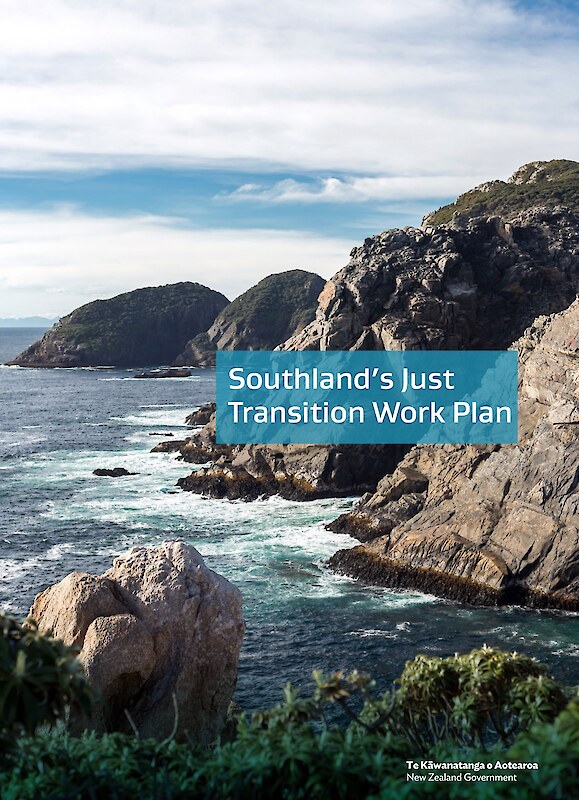
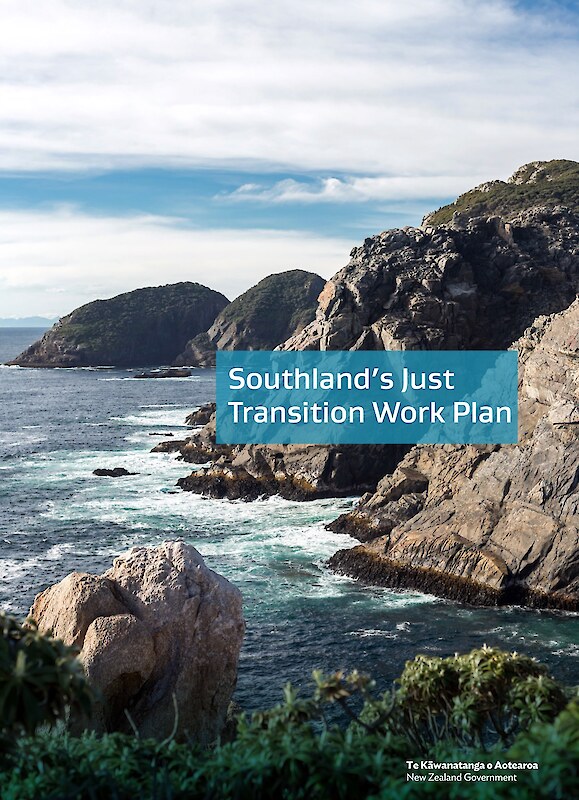
On Wednesday, Minister of Energy and Resources and Minister of Research, Science and Innovation Megan Woods released the Southland Just Transition Work Plan, detailing three themes to focus on – creating new industries and employment, transitioning workers and skills, and long-term planning. Read the release letter by Hon Dr Megan Woods here.

“The Southland Just Transition Work Plan is a big step towards certainty for Southland’s economic future, it gives clarity on the direction of travel, incorporates the strengths of the region, and is about putting Southlanders back in the driving seat,” Woods said.

About 18 months ago, Rio Tinto announced it would wind up operations at the New Zealand Aluminium Smelter at Tiwai Point.

The closure represented an exciting opportunity to shape the jobs and future of Southland, Woods said.

Despite the closure date being pushed to 2024, a transition was an important opportunity to build a fairer, more sustainable and resilient local economy, she said.

The first part of the plan was the aim of creating new industries and employment through clean energy, land use and aquaculture.

Those sectors had been identified as holding the greatest potential to diversify the region’s economy while providing good new jobs.

The second was supporting workers and businesses to take advantage of new opportunities and build Southland’s economic, social and environment resilience.

Lastly, the plan aimed to achieve good planning to build resilience up to and through the planned closure of the smelter.

Woods believed developing new industries, creating new jobs, improving the community’s ability to manage economic shocks, setting Southland up for the future would give Southlanders options that were not dependent on one large employer.

“The partnership we see here today is the result of many months of work by Iwi, regional leaders, and the local community, and shows how a region can work together, understand its unique needs, and partner with government to put together an ambitious plan.

“I look forward to the next step of the journey when all of the work streams that are part of the plan provide their reports on the next stage of delivery,” Woods said.

Article republished from Stuff.

Posted: 2 February 2022

Kaitiaki Taiao Tauira Programme Induction Week

The Hokonui Rūnanga Kaitiaki Taiao Tauira Programme induction week ran from Monday 24 to Friday 28 January 2022.

The kaupapa for the week was been busy but productive, it was a time to get to know and work with the tauira. It kicked off on Monday the 24th of January 2022 with a pōwhiri being overseen by Matu Coleman (Cultural Advisor) at O Te Ika Rama Marae. This saw whānau and tauira come together to learn a little more about the kaupapa and the future vision for the programme, which was delivered by Te Kaiārihi Taiao (Environmental Lead) Riki Parata.

Matu Coleman overseeing the proceedings of the pōwhiri.Matu Coleman overseeing the proceedings of the pōwhiri.

Toitū te Whenua/Land information New Zealand (LINZ) made this kaupapa possible through its Jobs for Nature programme funding, that seeks to restore native plants and animal life across Southlands Hokonui Hills, by expanding a native seed bank and nursery and carrying out horticulture and ranger training. Furthermore, this programme aims to develop skills that will result in long-term gains for the environment, wildlife and community. This is made possible through the holistic iwi approach to the environment and its inclusion with people and health.

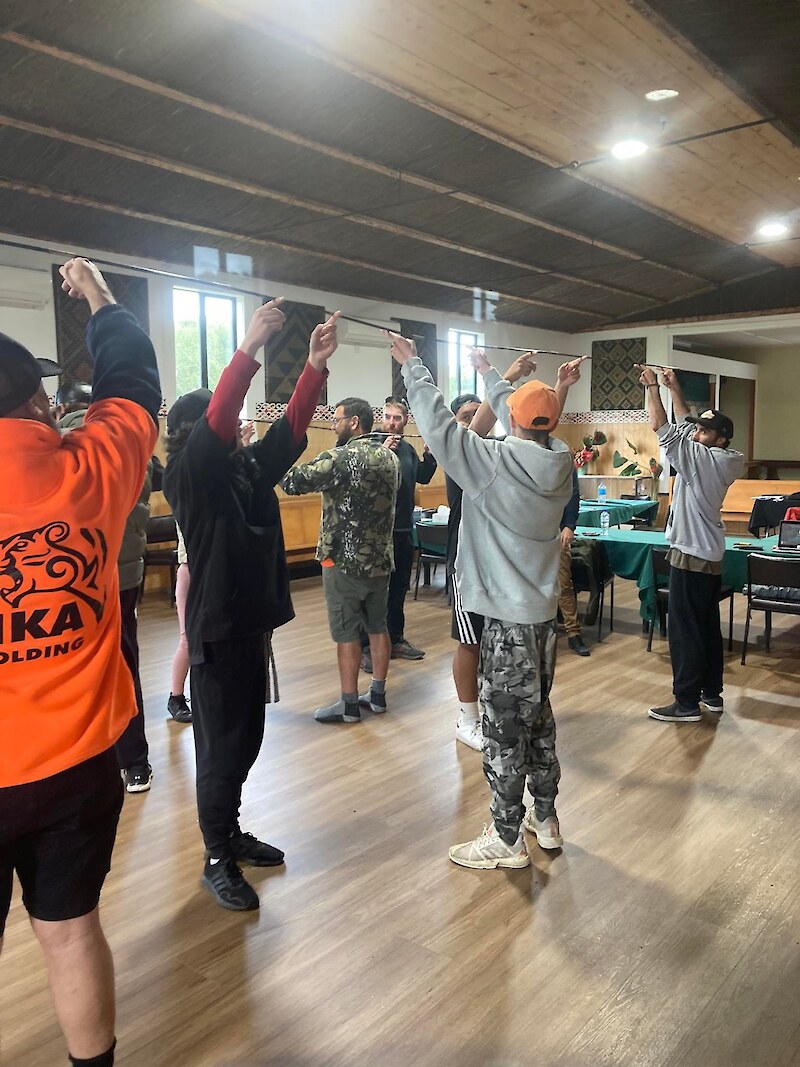
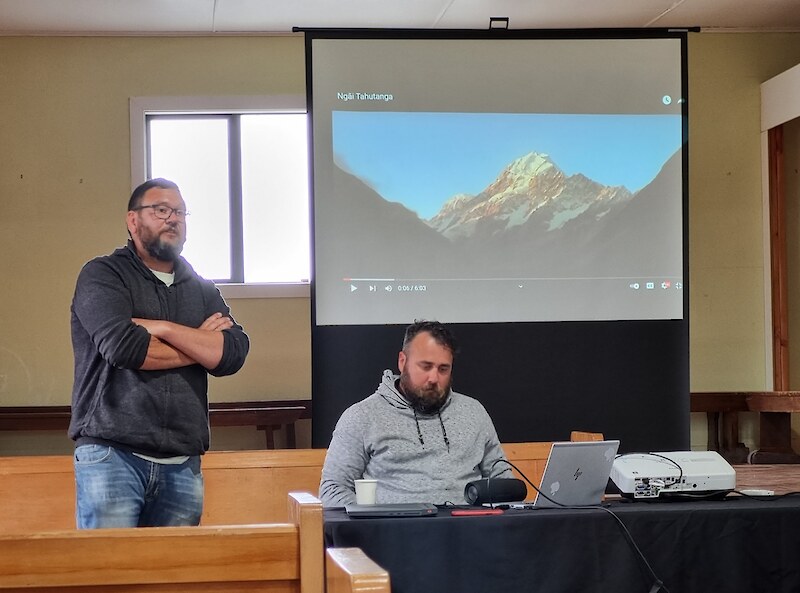
Jana Davis, the CEO of Te Tapu o Tāne, which is the nursery venture by the four Papatipu Rūnanga o Murihiku, and his team also joined us for the week, and while with us delivered a presentation on how Te Tapu o Tāne supports the capability and regeneration of the environment, which also strongly supports the kaupapa taking place at the Hokonui Rūnanga.Team building exercises with Taiao Tauira and Te Tapu o Tāne.Team building exercises with Taiao Tauira and Te Tapu o Tāne.Riki Parata (left) Jana Davis (right) presenting.Riki Parata (left) Jana Davis (right) presenting.

Some of the highlights for the week have been tauira involvement in First Aid, which was led by Debbie Rewi and Candace Carroll, who offered scenarios, practical experiences, and their expertise. Also, Frontline tutors John Pfeifer and Oliver Todd delivered the Health and Safety, and team building exercises, which had important information, relevant to kaupapa and a chance to connect with each other. They also assessed the tauira and their Literacy and Numeracy skills.

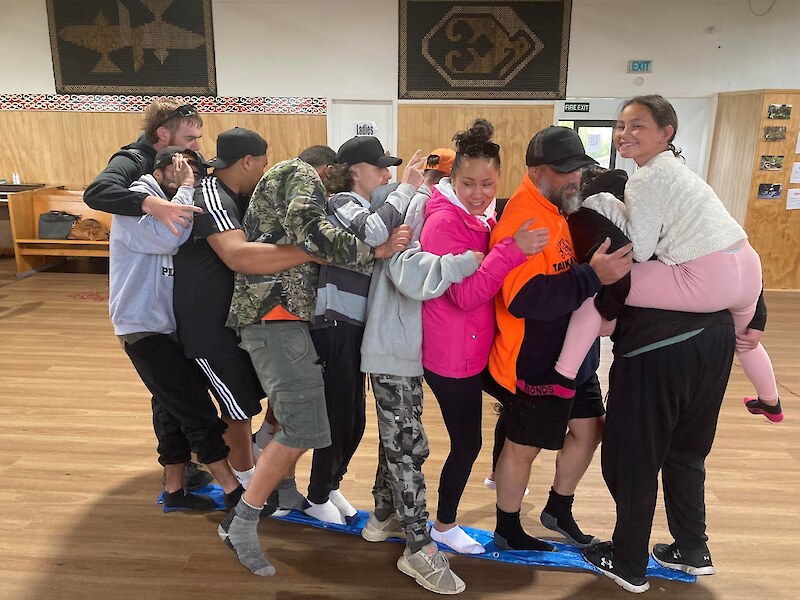
The week ended with a Hākari at O Te Ika Rama Marae and was a great way to bring our induction week to an end.Team building exercises with Taiao Tauira and Te Tapu o Tāne.Team building exercises with Taiao Tauira and Te Tapu o Tāne.

Posted: 1 February 2022

Prev page
Page 35 of 42
Next page

Also in this section

Pānui updates Photos
  • News
    • Pānui updates
    • Photos

© 2026 Hokonui Rūnanga • Website by RS

Facebook
  • Home
  • About us
    • Who we are
    • Murihiku Regeneration
      • Structure and context
      • Office of Upoko
    • Property assets
    • Find us
    • Job vacancies
  • Our history
    • Our whakapapa - a deep connection to this place
    • Wai and Whakapapa
    • The Battle of Waitaramea
    • Poupoutunoa and Kauwaewhakatoro
    • Two Rivers: Mataura (Mata Ura) and Clutha (Mata Au)
      • Mata Ura - Mataura River
      • Mata Au - Clutha River
  • Events & key dates
    • He Ao Hou - New Futures Murihiku Teacher PD Day
    • Energy and Innovation Wānanga 2024
    • Energy and Innovation Expo 2023
      • He Ao Hou - New Futures Murihiku 22 May
      • Live Streaming of Wānanga 23 and 24 May
      • Hosts and Key Speakers 23-24 May
      • Energy and Innovation presentations - 23 May
        • Opening Addresses
        • Global Session
        • Empowering partnerships: government's role in Aotearoa's energy transition
        • Climate Economics
        • Regional Infrastructure
        • Social regeneration and innovation
        • Regional Innovation
        • The importance of the Māori economy through this change
      • Energy and Innovation presentations - 24 May
        • Regional Leadership Panel
        • Regional Plans and Priorities
        • Southern Green Hydrogen
        • Tiwai Smelter Future
        • Southland Aquaculture
        • Regional Case Studies: Decarbonisation
        • Innovation and Bluff Re-imagining
        • Confirming Priorities: wrap-up and closing
    • Science and Innovation Wānanga 2021
    • Energy, Infrastructure and Opportunities Wānanga 2026
  • Education & training
    • Education - Hokonui Rohe Team
    • Te Ara Aukati Kore - Education, Training, and Capability
      • Kia Tū Pathway Planning Programme
        • Kia Tū in schools
        • Kia Tū Tertiary Pathway Programme
        • Meet Your Kaiako - SIT Campus
      • Anamata Māia: Bold, Confident Futures Service
        • Our Kaimahi - Staff
      • Penapena Ā Kura: School Attendance Service
      • Te Aka Whai Mahi: Find Your Path
      • He Ao Hou: New Futures Murihiku
    • Have your say!
  • Environment
    • Kaupapa Taiao - Hokonui Floriculture
    • Taonga Research
      • Kanakana Research
      • Our research partners
    • Southern Ocean - Murihiku ki te Tonga
    • Energy Transition Programme
      • Regional Energy Action Plan - Towards 2030
      • Energy Transition Plan for Murihiku-Southland
      • Hydrogen and Green Energy
      • Tiwai Point
    • Te Tapu o Tāne
    • Our Kaimahi - Staff
  • Health & wellbeing
    • Whānau Ora Navigators
    • Community youth worker and advocacy service
    • Hokonui Community-Led Health
    • Kaumatua Health Days
    • Te Kakano - Nurse-led Clinics
    • Our Kaimahi - Staff
    • Hokonui Takiwā Health and Wellbeing Village of Support
    • Referral form
    • COVID-19
  • News
    • Pānui updates
    • Photos
  • Contact us
    • Register
  • Facebook
  • Search...