Hokonui Rūnanga Register
  • About us
    • Who we are
    • Murihiku Regeneration
    • Property assets
    • Find us
    • Job vacancies
  • Our history
    • Our whakapapa - a deep connection to this place
    • Wai and Whakapapa
    • The Battle of Waitaramea
    • Poupoutunoa and Kauwaewhakatoro
    • Two Rivers: Mataura (Mata Ura) and Clutha (Mata Au)
  • Events & key dates
    • He Ao Hou - New Futures Murihiku Teacher PD Day
    • Energy and Innovation Wānanga 2024
    • Energy and Innovation Expo 2023
    • Science and Innovation Wānanga 2021
    • Energy, Infrastructure and Opportunities Wānanga 2026
  • Education & training
    • Education - Hokonui Rohe Team
    • Te Ara Aukati Kore - Education, Training, and Capability
    • Have your say!
  • Environment
    • Kaupapa Taiao - Hokonui Floriculture
    • Taonga Research
    • Southern Ocean - Murihiku ki te Tonga
    • Energy Transition Programme
    • Te Tapu o Tāne
    • Our Kaimahi - Staff
  • Health & wellbeing
    • Whānau Ora Navigators
    • Community youth worker and advocacy service
    • Hokonui Community-Led Health
    • Kaumatua Health Days
    • Te Kakano - Nurse-led Clinics
    • Our Kaimahi - Staff
    • Hokonui Takiwā Health and Wellbeing Village of Support
    • Referral form
    • COVID-19
  • News
    • Pānui updates
    • Photos
  • Contact us
    • Register
  1. Home
  2. News

News

Murihiku Regeneration presented at the E Tū Union – Decent Work Summit

Representatives from Murihiku Regeneration attended the online E Tū Union Decent Work Summit Mauri Tū, Mauri Ora! on Saturday 19 February 2022.

With over 200 participants online, the summit brought together E tū member leaders and community allies, business, and academics to discuss Decent Work and plan for the future. Speakers included union members, government ministers, community leaders, and academics, all working together to help shape the future of Decent Work.

Murihiku Regeneration’s Terry Nicholas and Ivan Hodgetts presented as part of the panel discussion on Just Transition and descent work. This provided an opportunity for Terry to describe the Murihiku Regeneration kaupapa and achievements to date. Ivan provided an overview of the Te Ara Aukati Kore Education and Training programme, and how this aligns with a decent life affirming work focus. Ivan stated that:

“This summit was a great opportunity to hear more about E tū’s vision for decent work. It’s great to be able to work with E tū and draw on the network of expertise, insight and vision for a future in which everyone is valued and rewarded for the work they do”.
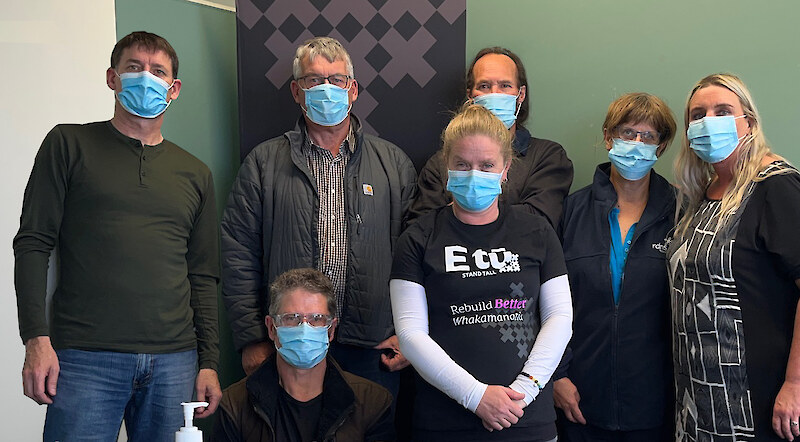
Southland attendees. Back row left to right: Ivan Hodgetts, Terry Nicholas, Martin Nepia, Pam King. Front row: Gideon van Vuuren, Karena Kelland, Anna Huffstutler.Southland attendees. Back row left to right: Ivan Hodgetts, Terry Nicholas, Martin Nepia, Pam King. Front row: Gideon van Vuuren, Karena Kelland, Anna Huffstutler.

E tū has identified four key pillars that underpin our Decent Work thinking:

A decent income

  • A minimum of a Living Wage for directly employed and contracted workers employed on a regular and ongoing basis
  • Pay rates reflective of skills and responsibility
  • Leave provisions, for holidays, sickness, bereavement, and parental leave recognised in employment agreements
  • Equal pay

Secure work

  • Provision for stable work, including social insurance
  • Processes for restructuring and redundancy that mean workers are no worse off
  • Options for training and development
  • Guaranteed work hours
  • Family-friendly approach to hours and location of work

A quality work environment

  • Safe and healthy work, with the elimination of physical and psychological harm, and an end to violence, harassment, and discrimination
  • Reasonable and managed time pressures, with the elimination of excessive hours, unmanageable deadlines or excessively intensive work
  • Opportunities to learn, including on-the-job training
  • Healthy workplace culture, including appropriate tikanga, recognition of diversity, good planning, and work organisation

Workers’ voice

  • Promotion of collective bargaining and union representation
  • Recognised structures for ongoing engagement with workers and union representatives
  • Ability to genuinely influence decisions in the workplace, company, and industry

E tū Decent Work Charter

“Decent work sums up the aspirations of people in their working lives. It involves opportunities for work that is productive and delivers a fair income, security in the workplace and social protection for families, better prospects for personal development and social integration, freedom for people to express their concerns, organise and participate in the decisions that affect their lives and equality of opportunity and treatment for all women and men.”

International Labour Organisation

Posted: 22 February 2022
New financial support for businesses affected by Omicron

A new targeted COVID Support Payment will be made available for businesses struggling with revenue during the Omicron outbreak.

“As I said back in October when we announced the traffic light system, the Government has been monitoring the impact of the COVID Protection Framework on businesses and the economy,” Grant Robertson said.

“With the settings of the framework most businesses can open and operate relatively normally, even at red. We can see that the majority of the economy is operating close to normal, but in some sectors, like hospitality and events, there has been a significant drop-off in business. There are a range of reasons for this, but it is clear that the impact is putting a number of viable businesses at risk of not being able to operate.

Each COVID Support Payment will be $4000 per business plus $400 per full-time employee, capped at 50 FTEs or $24,000, this is the same rate as the most recent Transition Payment.

Applications for the first payment open on February 28, with payments starting from March 1.

“It will be available on a fortnightly basis for six weeks – so three payments in total. This reflects the international experience that the peak of the Omicron outbreak should pass after about six weeks. We will continue to closely monitor the situation and have the option to extend the payment if this if necessary.

“We have set a higher threshold in terms of revenue loss than previous support in order to target those most affected. Firms must show a 40 percent drop in seven consecutive days within the six weeks prior to the shift to Phase 2 of the Omicron response on February 15, compared to seven days after that date.

“We looked closely at whether we could offer sector specific packages but the definition of who is in what sector, and the need for cashflow to be provided quickly meant that was not a feasible option to reach the most affected,” Grant Robertson said.

Revenue Minister David Parker said changes were also being made to the Small Business Cashflow Loans Scheme to increase the amount of funding available to eligible businesses through the introduction of a ‘top up’ loan.

“The top up loan will allow those firms that have already accessed a loan to draw down an additional $10,000 with a new repayment period of five years and the first two years being interest free.

“Cabinet has also agreed to remove the first two years of accrued base interest from all borrowers who have, or will, take out a loan under the scheme. This change will mean interest will only start accruing at the beginning of year three.

“We are also extending the Commissioner of Inland Revenue’s ability to apply flexibility for tax payment dates and terms to assist firms with cashflow pressures,” David Parker said.

Any businesses struggling to pay tax because of the impacts of COVID should log on to myIR to see if they can delay starting payments to a later date, or if any part of the tax could be written off. IR can help with both GST and provisional tax due.

Posted: 22 February 2022

GP crisis in Waihopai in the spotlight again

The GP crisis in Waihopai/Invercargill is back in the spotlight.

According to Stuff at least 3,000 people in Invercargill currently do not have a doctor. New residents are on waiting lists, and some are even making the five-hour round trip from Invercargill to Dunedin to see a GP. Further, even people with a GP are waiting up to three weeks to get an appointment.

There are currently 60 doctors in 13 practices across Invercargill, none of which are currently taking on new patients.

Stuff sent questions to Prime Minister Jacinda Ardern asking if she felt the GP shortage was acceptable in Invercargill and what the government might do about it. A response was provided by the Minister of Health Andrew Little. Little said the shortage of GPs was a concern.

“People shouldn’t have to wait long to see a doctor. Primary health care is critical to the future of New Zealand’s health system, and one of the major reasons for our reforms,” he said.

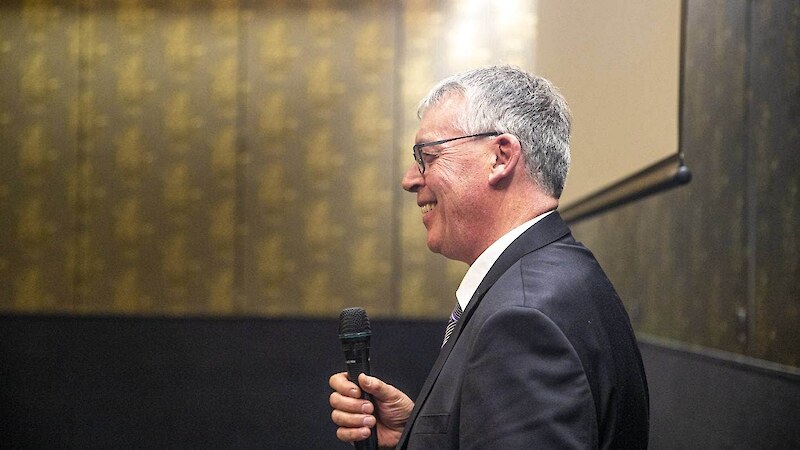
He also noted the partnership between WellSouth, Awarua Rūnaka and Hokonui Rūnanga to develop Te Hau o Te Ora - a whānau-centred primary care service in Invercargill, saying: “This is exactly the sort of initiative our health reforms are about.”Hokonui Rūnanga Manager Terry Nicholas speaking at the launch of Te Hau o Te Ora in September 2021.Hokonui Rūnanga Manager Terry Nicholas speaking at the launch of Te Hau o Te Ora in September 2021.

However, even this new and much needed service has been put on hold until a doctor is found to run it.

Andrew Swanson-Dobbs, CEO of WellSouth stated that: “We see this partnership as something that is both needed and helpful for our community. As a priority right now , we will be proactively working to ensure we can bring in additional general practice support for our community.”

In September 2021 Te Hau o Te Ora (The Breath of New Life) was launched in Invercargill.

A partnership between Awarua Rūnaka, Hokonui Rūnanga and the WellSouth primary health network, Te Hau o Te Ora will offer a Māori model of primary care.

This partnership is a new, from the ground-up initiative that addresses the needs of the Invercargill community, with a focus on making real change that will result in improved equity of access and equity of health outcomes. The recent Covid-19 vaccination campaign has highlighted the existing issue that a number of Invercargill residents are unenrolled in a general practice. Māori health providers have reported that many of the people they provided services for remained unenrolled and unable to access primary care services, funded screening programmes and long-term conditions support. Māori and Pacific residents are disproportionately affected and miss out on preventative and ongoing health care and other social services.

Find out more about Te Hau o Te Ora (The Breath of New Life).

Posted: 19 February 2022

Partners shortlisted for world’s largest green hydrogen project in Southland

Four potential development partners have been shortlisted for the Southern Green Hydrogen project, a joint venture between Meridian Energy and Contact Energy to build the world’s first large-scale green hydrogen plant in Southland.

The shortlist comprises:

  • a Japanese consortium of Mitsui & Co., Ltd., one of Japan’s largest trading and investment companies, and ENEOS, one of Japan’s leading integrated energy companies focused on the manufacturing and sale of petroleum products;

  • leading gases and engineering company BOC, a Linde company. Linde is a global leader in the production, processing, storage and distribution of hydrogen.

  • Fortescue Future Industries (FFI), a subsidiary of Australian Fortescue Metals Group, a global green energy company committed to producing zero-carbon green hydrogen from 100 per cent renewable sources.

  • Woodside Energy Limited, Australia’s leading natural gas producer, committed to providing sustainable energy solutions.

Meridian Chief Executive Neal Barclay says the shortlist is a major step forward in the commercialisation of Southland’s green hydrogen opportunity.

“These shortlisted counterparties all have strong hydrogen supply chain capability and a willingness to invest in the opportunity.

“Their involvement demonstrates that markets for green hydrogen are imminent and that Aotearoa’s renewable energy resources have substantial potential to help decarbonise our domestic economy and increase export earnings,” Barclay said.

The counterparties are now engaged in a request for proposal (RFP) process to identify ‘early stage’ business plans and cases for a 600MW production facility in Southland. Ongoing discussions and workshops are under way and final RFP responses are due by mid-April.

Contact CEO Mike Fuge said Southern Green Hydrogen was one of the most advanced large-scale projects in the world in terms of its progress to market. “It’s good to see things moving forward with the RFP and bring the project closer to fruition.”

Alongside the RFP, the Southern Green Hydrogen team is continuing New Zealand-based development activities including water access, land use and consenting.

The next stage of the process will potentially involve parties who registered as “service and equipment” providers during last year’s Registration of Interest phase.

“There has been a massive amount of interest from leading engineering firms involved with green hydrogen,” Fuge said. “Some of these companies are from New Zealand, which is particularly exciting.”

Once the RFP responses have been evaluated, the Southern Green Hydrogen team will determine whether there is a clear partner (or partners) to work with on detailed development, or whether additional steps are required.

Ngāi Tahu and Murihiku Regeneration have an important role in the development process and have been kept informed of progress. Southern Green Hydrogen will also support “Southland’s Just Transitions Work Plan” released in early February.

Southern Green Hydrogen is aiming to announce a partnership and/or consortium by the middle of 2022, so development activities can commence in the second half of the year.

Posted: 16 February 2022

Murihiku Regeneration and the Southern Institute of Technology, joining forces to build a brighter future for Southland

Murihiku Regeneration has signed a collaboration agreement with the Southern Institute of Technology (SIT).

The agreement will ensure that the Murihiku Regeneration’s Te Ara Aukati Kore (pathways without barriers) approach to building capability across our four pou (social, economic, cultural and environment) is realised.

Project lead for Te Ara Aukati Kore, Ivan Hodgetts said,

“With SIT’s help we will build opportunities to develop capability that are responsive, and aligned to the aspirations of our people.”

“This is an exciting step in our work to build a community in which everyone has an opportunity and the support needed to both see a bright future, and have equitable access to the education and training they need.”

The agreement is the first step in the burgeoning relationship between Murihiku Regeneration and SIT, with both continuing to fine tune how they will deliver better education and training pathways for Southland.

Over the next few months, the focus will be on enhancing the secondary tertiary partnerships that support the transition of rangatahi from school for further education and training. In addition, there will be a strong focus on the needs of adults in our community, and how to better enable lifelong learning.

Terry Nicholas, Murihiku Regeneration Programme Director said,

“This is another example of Murihiku Regeneration building and strengthening relationships in the community. I am proud of the work done by Ivan and the team and want to thank SIT for their support in our continuing work to break down barriers for our rangatahi”.

Posted: 11 February 2022

Prev page
Page 34 of 42
Next page

Also in this section

Pānui updates Photos
  • News
    • Pānui updates
    • Photos

© 2026 Hokonui Rūnanga • Website by RS

Facebook
  • Home
  • About us
    • Who we are
    • Murihiku Regeneration
      • Structure and context
      • Office of Upoko
    • Property assets
    • Find us
    • Job vacancies
  • Our history
    • Our whakapapa - a deep connection to this place
    • Wai and Whakapapa
    • The Battle of Waitaramea
    • Poupoutunoa and Kauwaewhakatoro
    • Two Rivers: Mataura (Mata Ura) and Clutha (Mata Au)
      • Mata Ura - Mataura River
      • Mata Au - Clutha River
  • Events & key dates
    • He Ao Hou - New Futures Murihiku Teacher PD Day
    • Energy and Innovation Wānanga 2024
    • Energy and Innovation Expo 2023
      • He Ao Hou - New Futures Murihiku 22 May
      • Live Streaming of Wānanga 23 and 24 May
      • Hosts and Key Speakers 23-24 May
      • Energy and Innovation presentations - 23 May
        • Opening Addresses
        • Global Session
        • Empowering partnerships: government's role in Aotearoa's energy transition
        • Climate Economics
        • Regional Infrastructure
        • Social regeneration and innovation
        • Regional Innovation
        • The importance of the Māori economy through this change
      • Energy and Innovation presentations - 24 May
        • Regional Leadership Panel
        • Regional Plans and Priorities
        • Southern Green Hydrogen
        • Tiwai Smelter Future
        • Southland Aquaculture
        • Regional Case Studies: Decarbonisation
        • Innovation and Bluff Re-imagining
        • Confirming Priorities: wrap-up and closing
    • Science and Innovation Wānanga 2021
    • Energy, Infrastructure and Opportunities Wānanga 2026
  • Education & training
    • Education - Hokonui Rohe Team
    • Te Ara Aukati Kore - Education, Training, and Capability
      • Kia Tū Pathway Planning Programme
        • Kia Tū in schools
        • Kia Tū Tertiary Pathway Programme
        • Meet Your Kaiako - SIT Campus
      • Anamata Māia: Bold, Confident Futures Service
        • Our Kaimahi - Staff
      • Penapena Ā Kura: School Attendance Service
      • Te Aka Whai Mahi: Find Your Path
      • He Ao Hou: New Futures Murihiku
    • Have your say!
  • Environment
    • Kaupapa Taiao - Hokonui Floriculture
    • Taonga Research
      • Kanakana Research
      • Our research partners
    • Southern Ocean - Murihiku ki te Tonga
    • Energy Transition Programme
      • Regional Energy Action Plan - Towards 2030
      • Energy Transition Plan for Murihiku-Southland
      • Hydrogen and Green Energy
      • Tiwai Point
    • Te Tapu o Tāne
    • Our Kaimahi - Staff
  • Health & wellbeing
    • Whānau Ora Navigators
    • Community youth worker and advocacy service
    • Hokonui Community-Led Health
    • Kaumatua Health Days
    • Te Kakano - Nurse-led Clinics
    • Our Kaimahi - Staff
    • Hokonui Takiwā Health and Wellbeing Village of Support
    • Referral form
    • COVID-19
  • News
    • Pānui updates
    • Photos
  • Contact us
    • Register
  • Facebook
  • Search...