Hokonui Rūnanga Register
  • About us
    • Who we are
    • Murihiku Regeneration
    • Property assets
    • Find us
    • Job vacancies
  • Our history
    • Our whakapapa - a deep connection to this place
    • Wai and Whakapapa
    • The Battle of Waitaramea
    • Poupoutunoa and Kauwaewhakatoro
    • Two Rivers: Mataura (Mata Ura) and Clutha (Mata Au)
  • Events & key dates
    • He Ao Hou - New Futures Murihiku Teacher PD Day
    • Energy and Innovation Wānanga 2024
    • Energy and Innovation Expo 2023
    • Science and Innovation Wānanga 2021
    • Energy, Infrastructure and Opportunities Wānanga 2026
  • Education & training
    • Education - Hokonui Rohe Team
    • Te Ara Aukati Kore - Education, Training, and Capability
    • Have your say!
  • Environment
    • Kaupapa Taiao - Hokonui Floriculture
    • Taonga Research
    • Southern Ocean - Murihiku ki te Tonga
    • Energy Transition Programme
    • Te Tapu o Tāne
    • Our Kaimahi - Staff
  • Health & wellbeing
    • Whānau Ora Navigators
    • Community youth worker and advocacy service
    • Hokonui Community-Led Health
    • Kaumatua Health Days
    • Te Kakano - Nurse-led Clinics
    • Our Kaimahi - Staff
    • Hokonui Takiwā Health and Wellbeing Village of Support
    • Referral form
    • COVID-19
  • News
    • Pānui updates
    • Photos
  • Contact us
    • Register
  1. Home
  2. News

News

Climate Change Commission’s advice released

The Government has released the Climate Change Commission’s final advice on the first three emissions budgets.

The Government now has until the end of the year to publish its Emissions Reduction Plan, which takes the advice given by the Commission and lays out a plan to hit the five year carbon budgets.

The Commission identifies critical outcomes New Zealand will need to achieve:

  • Expanding native forests to build a long-term carbon sink.
  • Increasing the number of people who walk, cycle, use public transport and emerging low emissions options like e-scooters and e-bikes rather than petrol cars.
  • Accelerating EV uptake and phasing out light ICE engine vehicle imports sometime between 2030-2035 – consistent with the phase out dates being set by a growing number of countries – and importing more efficient ICE vehicles, including conventional hybrids, while the EV supply grows.
  • Improving the efficiency of heavy transport and freight, including through freight optimisation, and increasing the share of rail and coastal shipping.
  • Scaling up low emissions fuels like biofuels or hydrogen-derived synthetic fuels. Biofuels are particularly useful in decarbonising the current vehicle fleet.
  • Increasing energy efficiency in homes, commercial and public buildings.
  • Phasing out new fossil gas connections and switching existing fossil gas appliances to low emissions fuels.
  • Eliminating coal use in commercial and public buildings by 2030, and for food processing before 2040.
  • Expanding the electricity system in a timely, reliable, and affordable way, while managing the opposing risks of under- or over-investing in the system. Over-investment risks increasing the delivered cost of electricity or stranded assets, which would disincentivise electrification. Under-investment risks delaying progress on wider decarbonisation efforts in transport, industry, and buildings.
  • Adopting farm management practices that will reduce biogenic methane and nitrous oxide emissions.
  • Developing and deploying new technologies that could reduce biogenic methane emissions from agriculture.
  • Opening up opportunities for more conversion to lower emissions production systems and land uses, including horticulture.
  • Increasing the availability of low-waste and low emissions options for businesses and consumers when purchasing and disposing of goods.

Posted: 10 June 2021
Iwi join forces with WellSouth to offer GP services in Invercargill

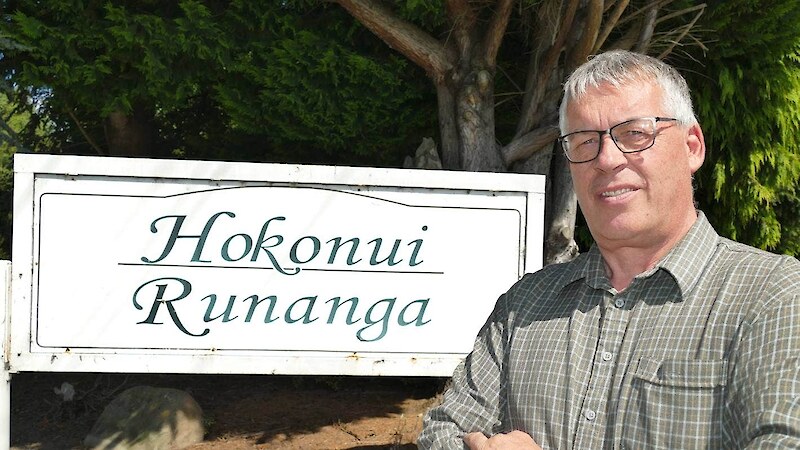
Hokonui Rūnanga manager Terry Nicholas says about 2500 people in Invercargill have no access to GPs.

“That’s not humane, is it? Somebody’s got to try and improve that quality of life and care.”

The Hokonui Rūnanga, Waihōpai Rūnaka and Awarua Rūnaka have joined forces with WellSouth to open a new general practice, after-hours service and medical centre in Invercargill for unenrolled patients.

The practice will be set up at the WellSouth office in Clyde St in the coming months, while a plan for a purpose-built facility, offering the gamut of health services, is developed.

Preventative health care was vitally important to help whānau avoid getting so sick they needed hospital care, Nicholas said.

And providing access to quality health care was part of iwi’s responsibility under its partnership with the crown, he said.

Nicholas envisioned the future medical centre offering complementary health services like dentistry, podiatry, physiotherapy, and oral health care, alongside Whānau Ora services.

While the nuts and bolts of the partnership, including the shareholder agreement, needed to be worked out, Nicholas said the practice could be up and running within a month – although WellSouth has indicated that finding staff was a challenge.

The next challenge would be working out the investment deck and finding a suitable location to build the new health centre.Terry NicholasTerry Nicholas

“It’s a challenge, but it’s exciting,” Nicholas said.

The project had the potential to offer a training platform to attract doctors south, and the opportunity to develop a new model of care, he said.

“If it’s successful, there’s no reason why we can’t offer quality healthcare across our areas and support other medical fraternities.”

The three rūnaka had always considered offering a GP service, Nicholas said, and his team were already offering GP and oral health assessments to members – including some from Invercargill – in a purpose-built facility.

WellSouth chief executive Andrew Swanson-Dobbs said iwi contacted the WellSouth board to help solve the GP shortage problem in Invercargill just one day after Government announced it would establish a Māori Health Authority.

The primary health organisation was already developing a general practice for the city, but the partnership brought new ideas and expectations to the table and meant the future medical centre could offer more services than initially intended, he said.

Invercargill’s GP shortage was thrust into the spotlight in December when it was floated as one of the reasons why Southland Hospital’s emergency department was being inundated.

In a report to the Southern District Health Board’s Community and Public Health Advisory Committee last week, Swanson-Dobbs said Southland had only 58 GPs per 100,000 patients, while Coastal Otago had 64 and Central Otago had 73.

Differences in the way data was captured across the health system made it difficult to pinpoint exactly how many people were unenrolled, he said, but around 3665 Māori patients in Southland and Otago were not registered at a practice.

“This represents what we see as the future in healthcare: partnerships, collaboration and community connections – using our respective strengths and skills to provide the best care possible for our patients and whānau,” Swanson-Dobbs said.

Awarua Whānau Services chairwoman and Te Rūnaka o Awarua Charitable Trust trustee Louise Fowler said the partnership provided an opportunity to “not only pursue the aspirations and moemoeā of our tāua and kuia – both past and present – but support all our community in accessing and achieving hauora, for them and their whānau”.

Posted: 8 June 2021

Rio Tinto ‘sorry’ for its environmental failings

Rio Tinto’s global chief executive flew to Wellington earlier this month to apologise to the Government for its handling of waste from the Tiwai Point aluminium smelter and to make commitments around the clean-up task.

Environment Minister David Parker yesterday published a letter that Rio Tinto’s chief executive, Jakob Stausholm, sent to Prime Minister Jacinda Ardern, which formalised the apology and set out clean-up plans.

“We understand that we have to be better at listening to the communities in which we operate,” Stausholm wrote in the letter, dated yesterday.

“In New Zealand, we did not do a good job of listening to our community regarding the ouvea premix waste especially the material stored in Mataura and again I apologise for that. It did not belong to us, and we did not put it there, but it originally came from our operation and we should have done the right thing by removing the risk it presented to the community.” Early in 2020, hundreds of residents of Mataura in Southland were forced to evacuate amid fears flooding would come into contact with the 9500 tonnes of ouvea premix from Tiwai, which contractors had stored in the town’s former paper mill.

Some of the waste remains at Mataura, although Stausholm’s letter spelled out a plan for its removal one of a series of cleanup commitments, including promises to remove waste from Tiwai Point and the results from the testing of the ground at the site.

This included taking over the Crown’s costs for removing the ouvea premix from Mataura, and later from other buildings in Southland, making other changes to its processes to reduce cyanide emissions from Tiwai Point and sharing ground samples with the Government, the Ministry for the Environment and Ngai Tahu.

“I will continue to closely monitor progress in NZ to ensure that we fully re-align the efforts and engagement to address your concerns,” Stausholm wrote.

“I am committed to rebuilding an ongoing collaborative and positive working relationship with the New Zealand Government.” The Government welcomed the move.

“It’s taken a long time to get to this point, but we welcome this commitment and the more conciliatory and open stance NZAS (New Zealand’s Aluminium Smelter) has taken in recent months,” Parker said.

“We also welcome the acknowledgment by NZAS of its responsibilities and how its environmental performance disappointed the Government and the community of Southland. With the smelter expected to close by the end of 2024, it’s important to ensure these commitments are followed up by action to get the environmental outcomes for Southlanders and the region.” In a statement, a spokeswoman for Rio Tinto confirmed it would remove the material from around Southland and meet the cost of doing so. “The material came from our operation and we will take responsibility for it, because it is the right thing to do,” the spokeswoman said.

Ngai Tahu welcomed the news. “Our local jobs and economy are dependent on our environment and environmental degradation would be a long-term threat to employment and incomes in our region,” Ngai Tahu spokesman Terry Nicholas said.

“We look forward to Rio Tinto keeping their word.”

Posted: 31 May 2021

Green Energy for Murihiku

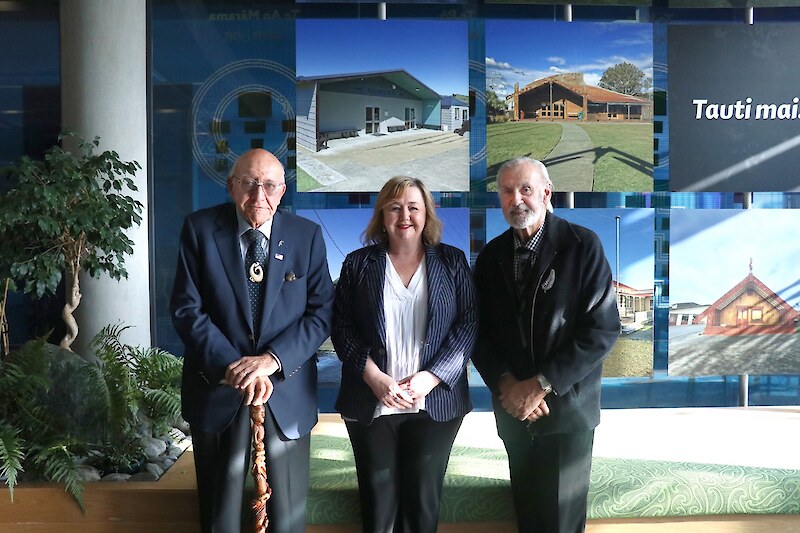
Tā Tipene O’Regan (Ūpoko o Awarua) and Michael Skerrett (Ūpoko o Waihōpai) have met with Hon Dr. Megan Woods, Minister of Energy and Resources. They discussed the future of energy in New Zealand, starting with the opportunity to develop green energy and green hydrogen in Murihiku.

Posted: 28 May 2021

Govt welcomes Tiwai clean up undertakings

The Government has today welcomed confirmation of waste remediation actions from Tiwai smelter owner Rio Tinto, including the removal of aluminium dross in Southland to the Tiwai site and paying the costs of doing so.

That also involves taking on the $4 million in funding commitments of the Government, councils and landowners in relation to the dross stored in the former paper mill in Mataura.

In a letter to Prime Minister Jacinda Ardern, Deputy Prime Minister Grant Robertson, Energy Minister Megan Woods and Environment Minister David Parker, Rio Tinto Chief Executive Jakob Stausholm said the company would make right its environmental performance at New Zealand Aluminium Smelters (NZAS).

The undertakings follow a face-to-face discussion between Jacinda Ardern and Jakob Stausholm in Wellington in early May and an earlier meeting betweenGrant Robertson, Megan Woods, David Parker and Aluminium Group Chief Executive Ivan Vella and the general manager of NZAS Stew Hamilton.

“It has taken a long time to get to this point, but we welcome this commitment and the more conciliatory and open stance that NZAS has taken in recent months,” David Parker said.

“We also welcome the acknowledgment by NZAS of its responsibilities and how its environmental performance had disappointed the Government and the community of Southland.”

“We appreciate Mr Strausholm’s efforts to rebuild an ongoing collaborative and positive working relationship. With the smelter expected to close by the end of 2024, it is important to ensure these commitments are followed up by action to get the environmental outcomes for Southlanders and the region,” Mr Parker said.

“We acknowledge and thank Ngāi Tahu for their role in highlighting the importance of environmental remediation and continue to encourage Rio Tinto to work with Ngāi Tahu,” Grant Robertson said.

The new undertakings go beyond the removal of the dross, and are to:

  • Relocate the Taha Ouvea from all other Invercargill locations as the space at Tiwai allows. Once the Mataura material has been moved we will begin the relocation of material from other buildings in Invercargill, with an initial 2000 tonnes expected in the second half of 2021. Further relocation will occur when material from Tiwai has been processed.
  • Fund the shortfall in processing costs for Taha Ouvea. It is estimated that there is a current funding shortfall of $2 million to enable the full 23,000 tonnes of material to be processed.
  • Take full funding responsibility for the Taha Ouvea and in doing so, assume the current funding commitments of NZAS, The Ministry for the Environment, Invercargill City Council, Environment Southland, Gore District Council and building owners ($4 million).
  • Provide an undertaking to remove and process the buried Haysom’s dross on site. This dross was relocated from Bluff approximately 20 years ago and has a government indemnity in place.
  • Work with Ngāi Tahu, MfE and Environment Southland and government officials to identify other processing options for Ouvea and Spent Cathode Linings (SCL).
  • Implement, by Q4 this year, new technology that enables the elimination of washing shells of reduction cells with water. This will significantly reduce cyanide emissions to the coastal marine environment. NZAS’ emissions are already better than consent levels, and the change will take the emissions to very low, and certainly world class levels.
  • Share soil contamination data, as part of our closure study process, in Q3 with Ngāi Tahu, Environment Southland and MfE.

They add to earlier undertakings to:

  • To relocate the Mataura Ouvea to Tiwai point. As of 17 May, 3000 tonnes of material remain stored at Mataura. Progress will continue over the next few weeks until approximately 1500 tonne remain. We will then await the arrival of the remaining shipping containers (coming from China) in mid-June to complete the removal. Shipping container availability has been very tight globally.
  • To remove all SCL from the Tiwai peninsula at closure.
  • To share 20 years of ground water monitoring results from the SCL pad and landfill – this is now completed.
  • To share the sampling plan for soil contamination on site – this is now completed.
  • To work with Environment Southland and Ngāi Tahu to develop further sampling plan requirements and assess options to address the outcomes of the sampling.
  • To commit to collaborating with Environment Southland officials allowing them access to site and to working closely with Ngāi Tahu to ensure our standards reflect the cultural significance of Tiwai Point.

Posted: 28 May 2021

Prev page
Page 40 of 42
Next page

Also in this section

Pānui updates Photos
  • News
    • Pānui updates
    • Photos

© 2026 Hokonui Rūnanga • Website by RS

Facebook
  • Home
  • About us
    • Who we are
    • Murihiku Regeneration
      • Structure and context
      • Office of Upoko
    • Property assets
    • Find us
    • Job vacancies
  • Our history
    • Our whakapapa - a deep connection to this place
    • Wai and Whakapapa
    • The Battle of Waitaramea
    • Poupoutunoa and Kauwaewhakatoro
    • Two Rivers: Mataura (Mata Ura) and Clutha (Mata Au)
      • Mata Ura - Mataura River
      • Mata Au - Clutha River
  • Events & key dates
    • He Ao Hou - New Futures Murihiku Teacher PD Day
    • Energy and Innovation Wānanga 2024
    • Energy and Innovation Expo 2023
      • He Ao Hou - New Futures Murihiku 22 May
      • Live Streaming of Wānanga 23 and 24 May
      • Hosts and Key Speakers 23-24 May
      • Energy and Innovation presentations - 23 May
        • Opening Addresses
        • Global Session
        • Empowering partnerships: government's role in Aotearoa's energy transition
        • Climate Economics
        • Regional Infrastructure
        • Social regeneration and innovation
        • Regional Innovation
        • The importance of the Māori economy through this change
      • Energy and Innovation presentations - 24 May
        • Regional Leadership Panel
        • Regional Plans and Priorities
        • Southern Green Hydrogen
        • Tiwai Smelter Future
        • Southland Aquaculture
        • Regional Case Studies: Decarbonisation
        • Innovation and Bluff Re-imagining
        • Confirming Priorities: wrap-up and closing
    • Science and Innovation Wānanga 2021
    • Energy, Infrastructure and Opportunities Wānanga 2026
  • Education & training
    • Education - Hokonui Rohe Team
    • Te Ara Aukati Kore - Education, Training, and Capability
      • Kia Tū Pathway Planning Programme
        • Kia Tū in schools
        • Kia Tū Tertiary Pathway Programme
        • Meet Your Kaiako - SIT Campus
      • Anamata Māia: Bold, Confident Futures Service
        • Our Kaimahi - Staff
      • Penapena Ā Kura: School Attendance Service
      • Te Aka Whai Mahi: Find Your Path
      • He Ao Hou: New Futures Murihiku
    • Have your say!
  • Environment
    • Kaupapa Taiao - Hokonui Floriculture
    • Taonga Research
      • Kanakana Research
      • Our research partners
    • Southern Ocean - Murihiku ki te Tonga
    • Energy Transition Programme
      • Regional Energy Action Plan - Towards 2030
      • Energy Transition Plan for Murihiku-Southland
      • Hydrogen and Green Energy
      • Tiwai Point
    • Te Tapu o Tāne
    • Our Kaimahi - Staff
  • Health & wellbeing
    • Whānau Ora Navigators
    • Community youth worker and advocacy service
    • Hokonui Community-Led Health
    • Kaumatua Health Days
    • Te Kakano - Nurse-led Clinics
    • Our Kaimahi - Staff
    • Hokonui Takiwā Health and Wellbeing Village of Support
    • Referral form
    • COVID-19
  • News
    • Pānui updates
    • Photos
  • Contact us
    • Register
  • Facebook
  • Search...