Hokonui Rūnanga Register
  • About us
    • Who we are
    • Murihiku Regeneration
    • Property assets
    • Find us
    • Job vacancies
  • Our history
    • Our whakapapa - a deep connection to this place
    • Wai and Whakapapa
    • The Battle of Waitaramea
    • Poupoutunoa and Kauwaewhakatoro
    • Two Rivers: Mataura (Mata Ura) and Clutha (Mata Au)
  • Events & key dates
    • He Ao Hou - New Futures Murihiku Teacher PD Day
    • Energy and Innovation Wānanga 2024
    • Energy and Innovation Expo 2023
    • Science and Innovation Wānanga 2021
    • Energy, Infrastructure and Opportunities Wānanga 2026
  • Education & training
    • Education - Hokonui Rohe Team
    • Te Ara Aukati Kore - Education, Training, and Capability
    • Have your say!
  • Environment
    • Kaupapa Taiao - Hokonui Floriculture
    • Taonga Research
    • Southern Ocean - Murihiku ki te Tonga
    • Energy Transition Programme
    • Te Tapu o Tāne
    • Our Kaimahi - Staff
  • Health & wellbeing
    • Whānau Ora Navigators
    • Community youth worker and advocacy service
    • Hokonui Community-Led Health
    • Kaumatua Health Days
    • Te Kakano - Nurse-led Clinics
    • Our Kaimahi - Staff
    • Hokonui Takiwā Health and Wellbeing Village of Support
    • Referral form
    • COVID-19
  • News
    • Pānui updates
    • Photos
  • Contact us
    • Register
  1. Home
  2. News

News

Gangsta Bats! – Hokonui Rūnanga Pekapeka camp

By Tegan Ramage

Pekapeka camp at Tawanui was amazing!

Such an experience for the Kaitiaki Tauira and those from the Taiao Team.

We were very lucky to have Ian Davison-Watts (Ecologist), Matt Dale (Freshwater Ecologist) and to have both Kelsi Hayes (2nd year Environmental management at S.I.T.) and Luka Finn (3rd year Environmental management at S.I.T.) from the seed collecting team to come along.
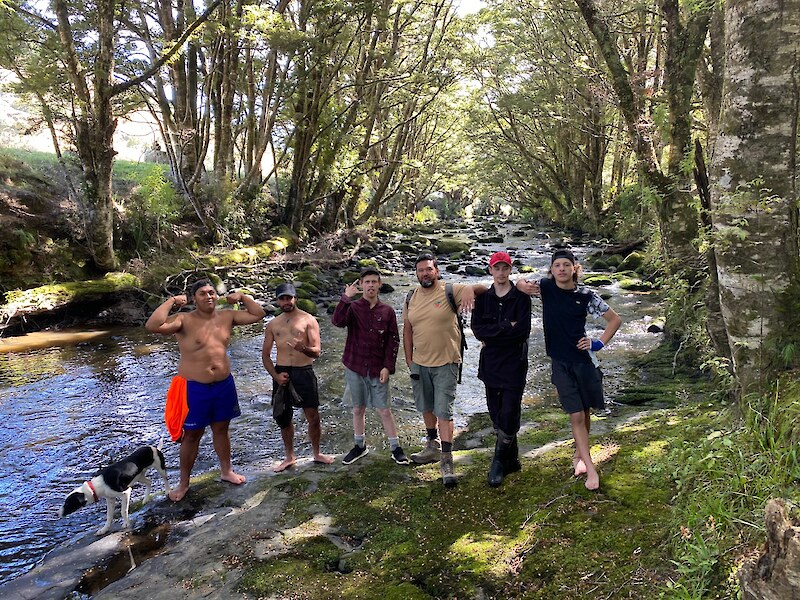
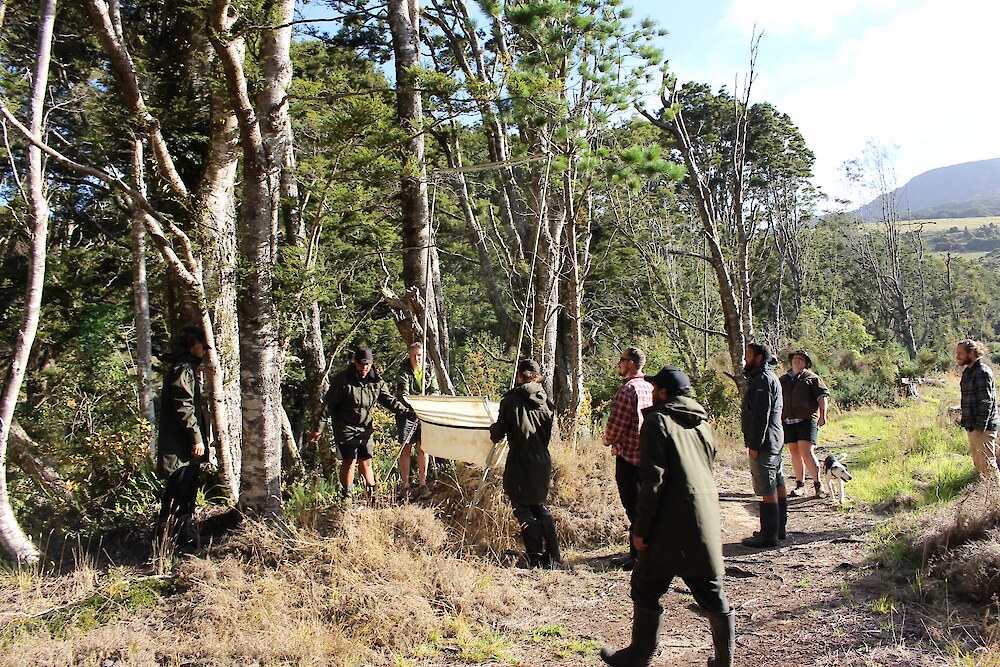
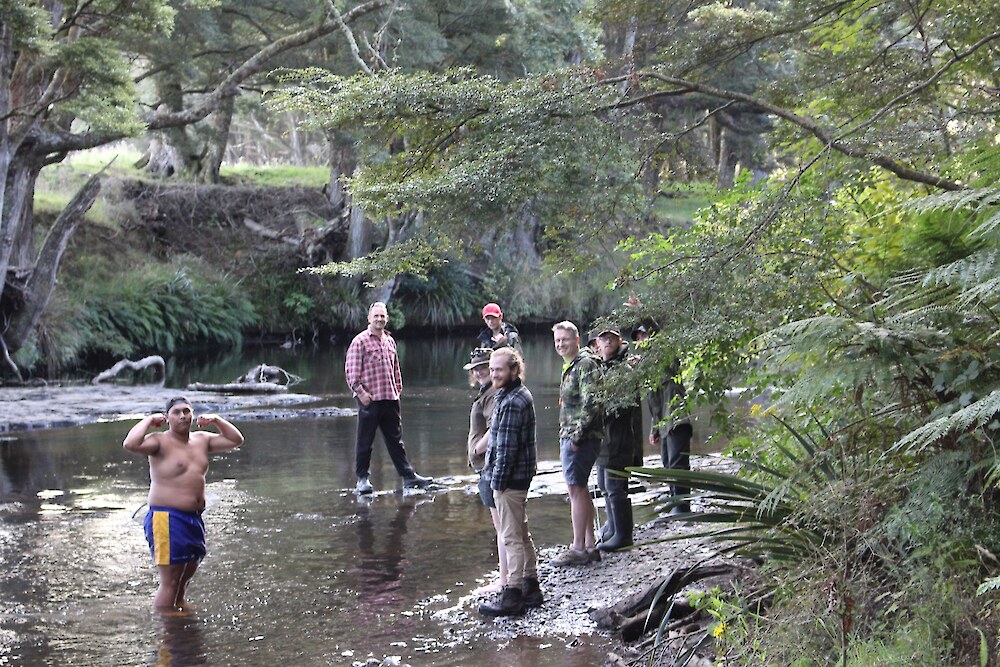
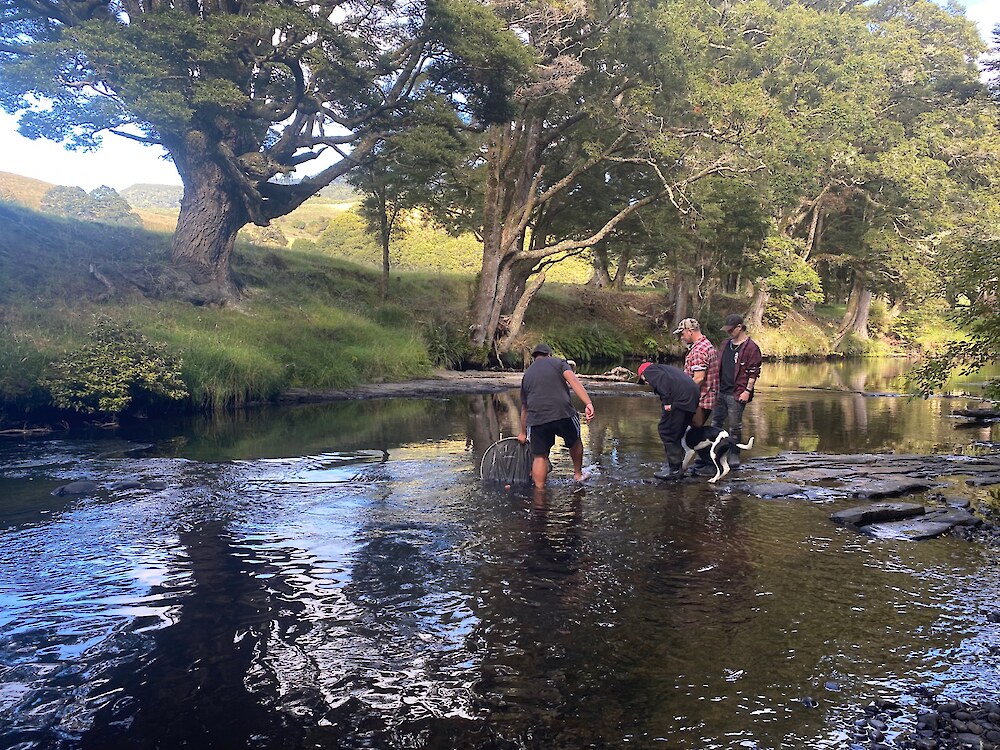
Welcome to Pekapeka camp in Tawanui (left to right) Moi Parata (Kurī), Kaloni Taylor, Raniera Smyth, Josiah Kawana, Riki Parata, Josh Aitken and Sentre HardenWelcome to Pekapeka camp in Tawanui (left to right) Moi Parata (Kurī), Kaloni Taylor, Raniera Smyth, Josiah Kawana, Riki Parata, Josh Aitken and Sentre HardenThe tauira started their day off on the right foot by setting up camp and were rewarded with the fun stuff, like swimming and the setting up the hīnaki which, they were responsible for the overseeing and the monitoring. It was great to see Kaloni Taylor really getting in there, his commitment was commendable. Raniera Smyth, the self-appointed leader continued to oversee the other tauira throughout the day, making sure they were checking the hīnaki correctly or to simply ensure they hadn’t drowned during the process.
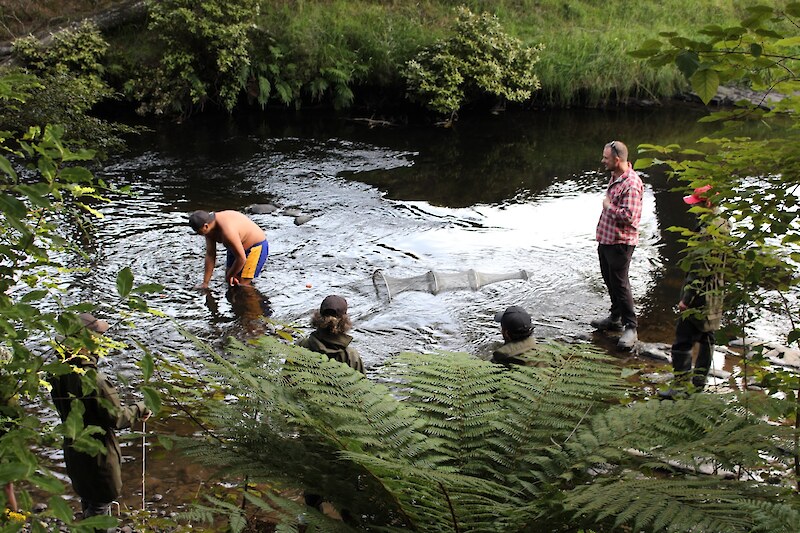
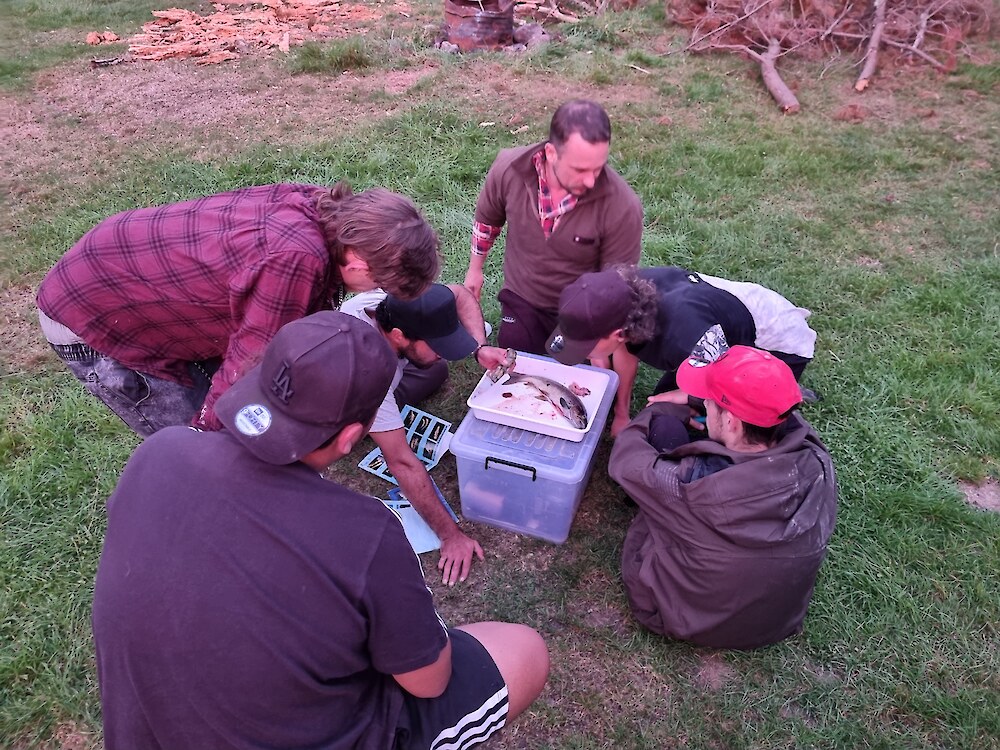
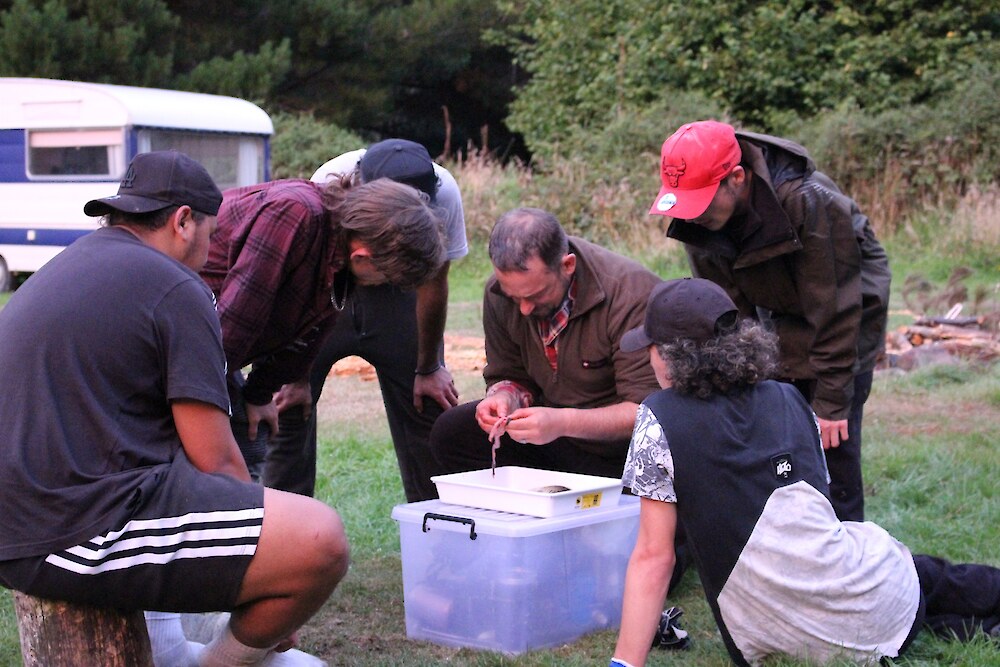
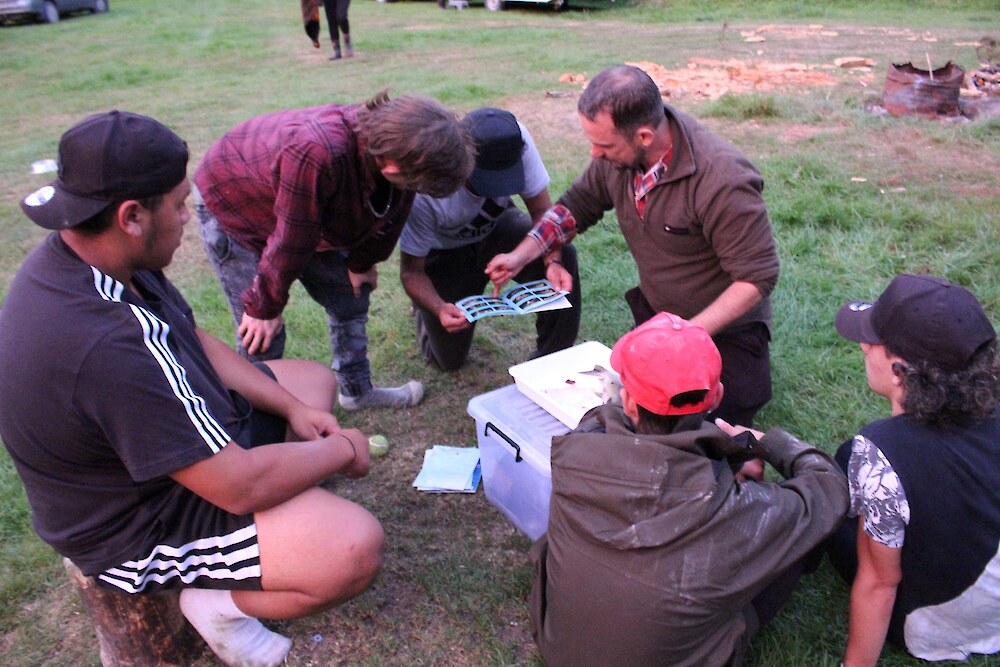
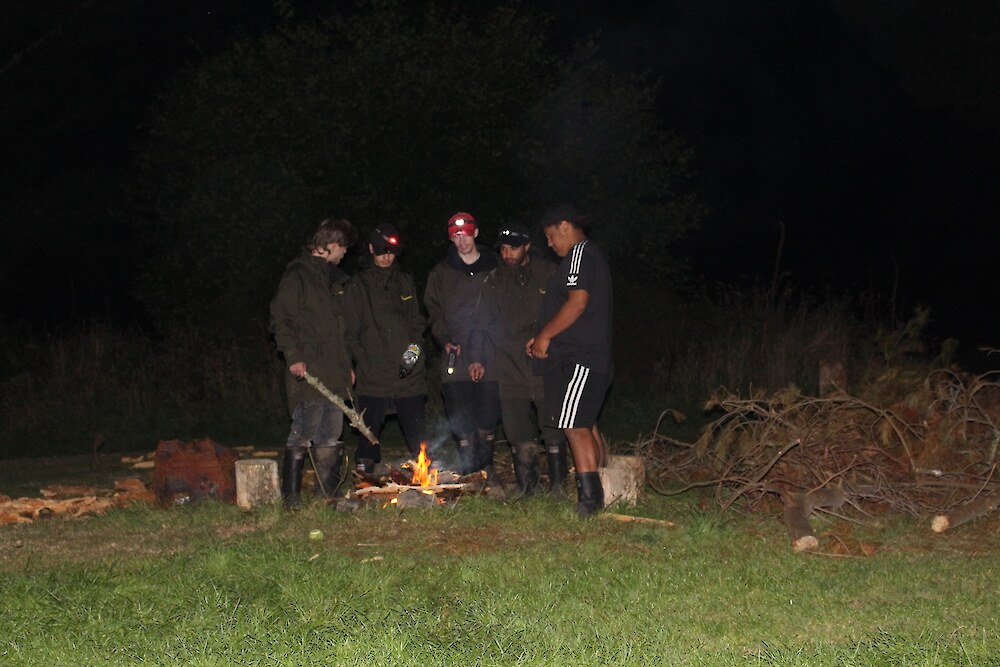
Kaloni Taylor setting the hīnaki while the other tauira watch and support.Kaloni Taylor setting the hīnaki while the other tauira watch and support.Following this, the boys gathered around Matt to watch him dissect a trout he had caught, showing the tauira what the fish had been eating and different parts of its anatomy. As mentioned by Kaloni and Sentre Harden that the trout had eaten a “Caddis and Deleatidium fly”. The time back at camp became a real live-in environment with the boys making a fire, playing ball, making up activities, such as the competition between Josiah Kawana, Kaloni and whaea Abby the Tauira Programme Coordinator! All the rōpū made the most of their time together out in te taiao. Raniera and Josiah, being the tuakana of the group, made sure that the fire kept going all night and really tautoko their tēina.

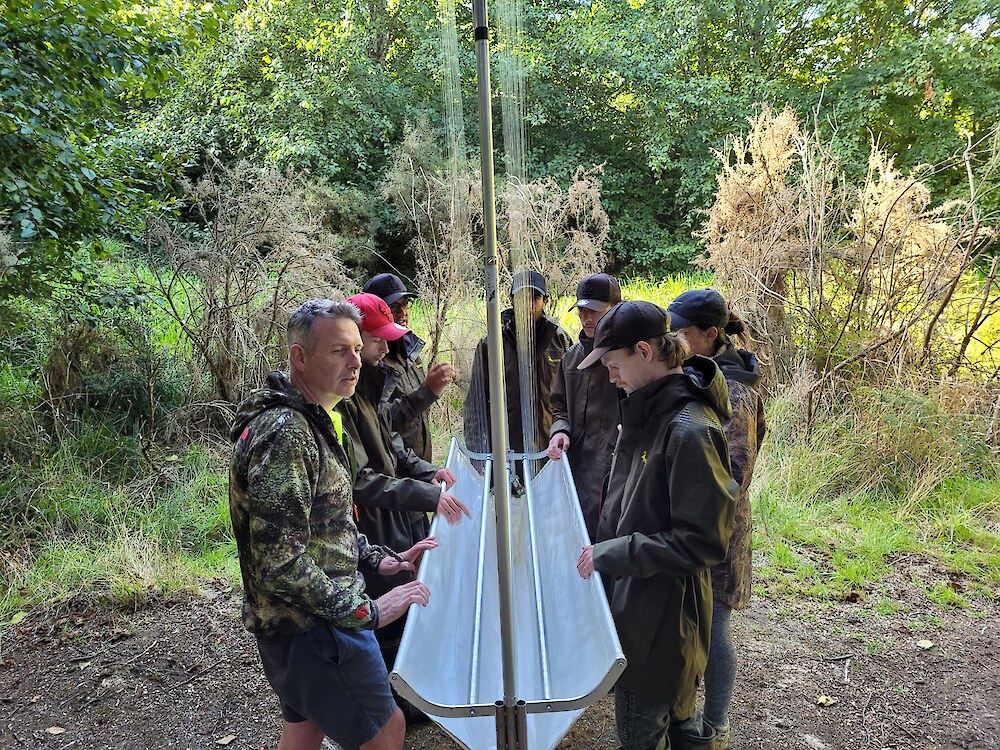
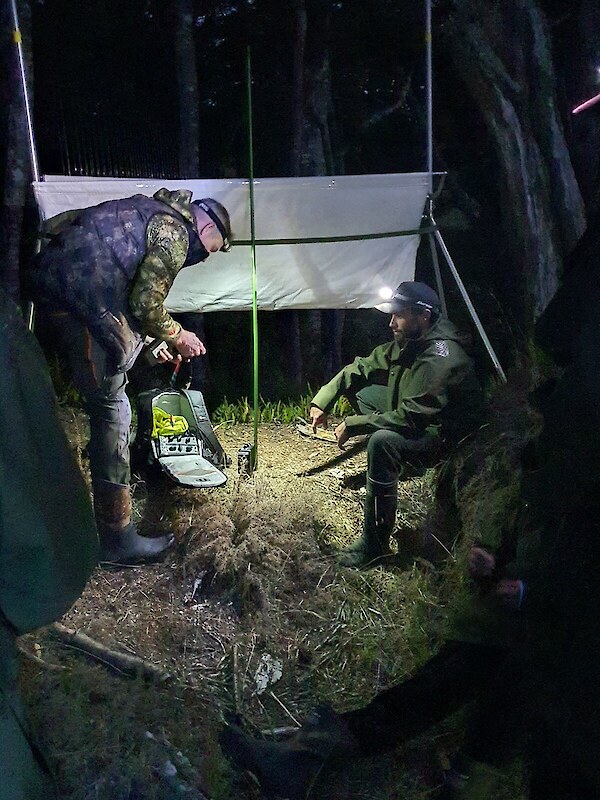
While on camp, Ian along with the tauira set Harp traps in hopes to catch and observe pekapeka-tou-roa (long tailed bats).
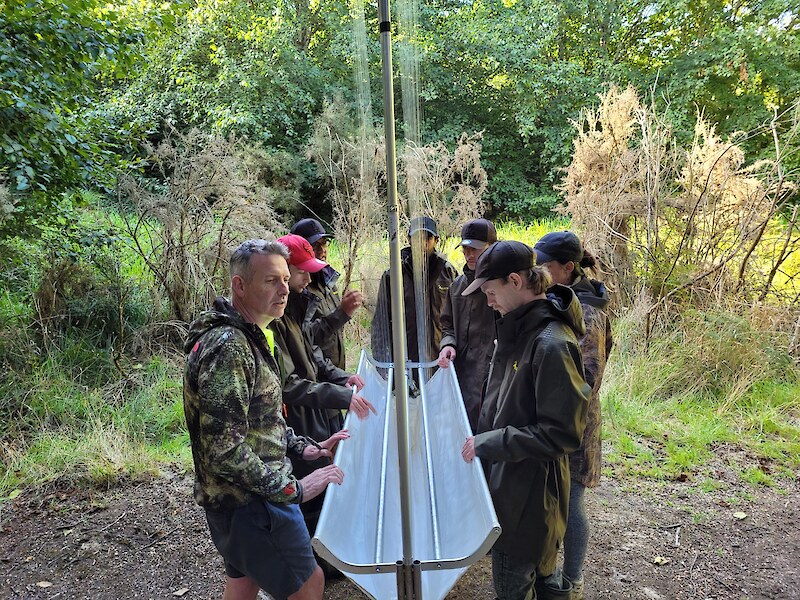
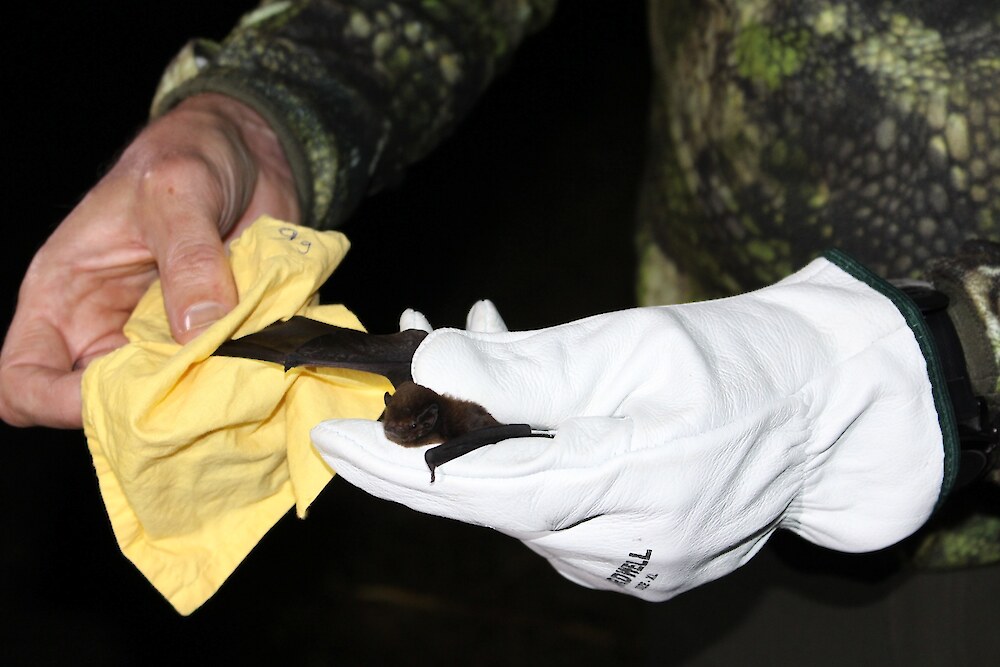
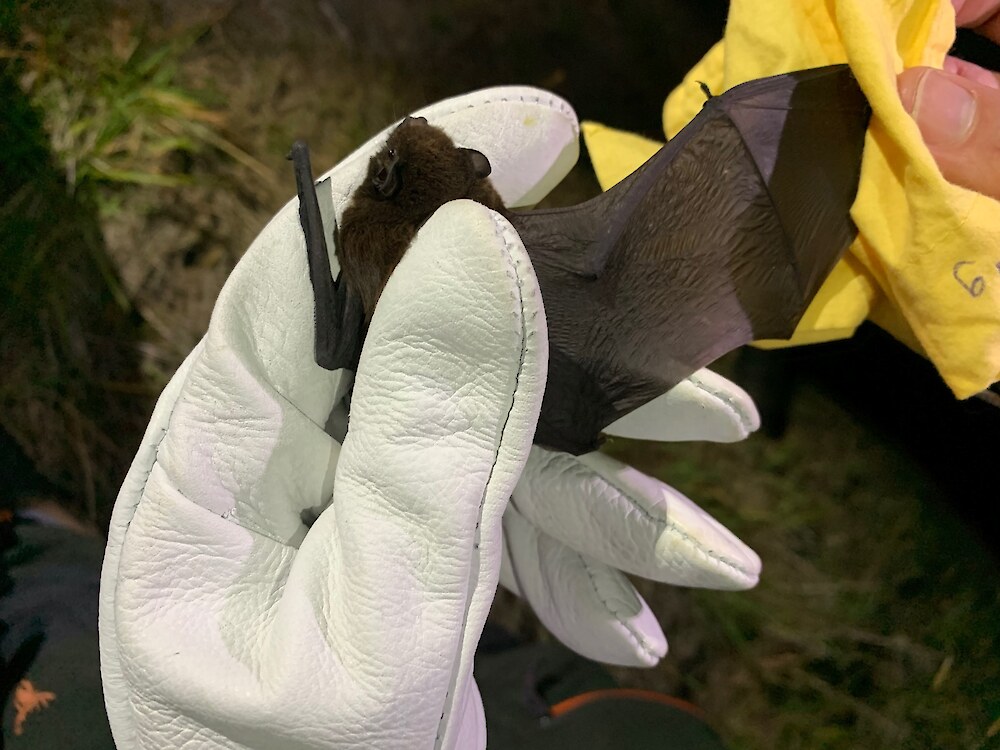
Ian explaining how to set up the Harp traps. The tauira helping to put these together and place them.Ian explaining how to set up the Harp traps. The tauira helping to put these together and place them.Around 11pm during our first observation round, although Ian was skeptical regarding our successfulness in securing any pekapeka. However, everybody got a kick out of being able to see not only 1, but 2 real live pekapeka in action. This was a very rare sight to see, as these bats are critically endangered.
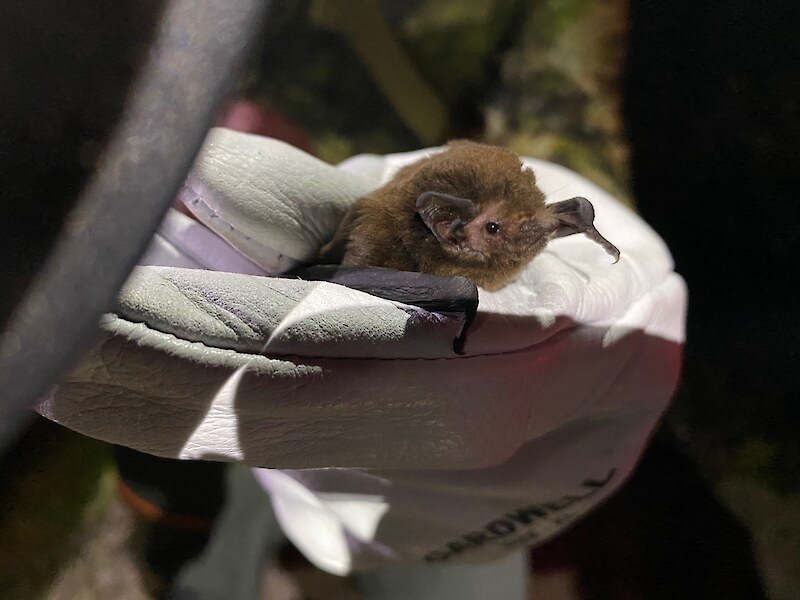
Pekapeka-tou-roa (long tailed bat).Pekapeka-tou-roa (long tailed bat).It was cool to hear some of the kōrero from our tauira, like Sentre who said, “man that’s gangsta! They’re gangsta bats” or watching Josh Aitken taking amazing footage of the pekapeka taking flight. He was super proud to share this with the group and even mentioned that he has a passion for taking videos and photos, we could have the next national geographic photographer on our hands!

Ian explained how the gear worked and its importance to this mahi, about their wings, how they worked and the significance of the bone structure in their wings. During the other observation rounds that night, the crew saw in total 7 long-tailed pekapeka. The mahi Ian does is very important and being able to not only sight them but to see them take flight after being released was a privilege.

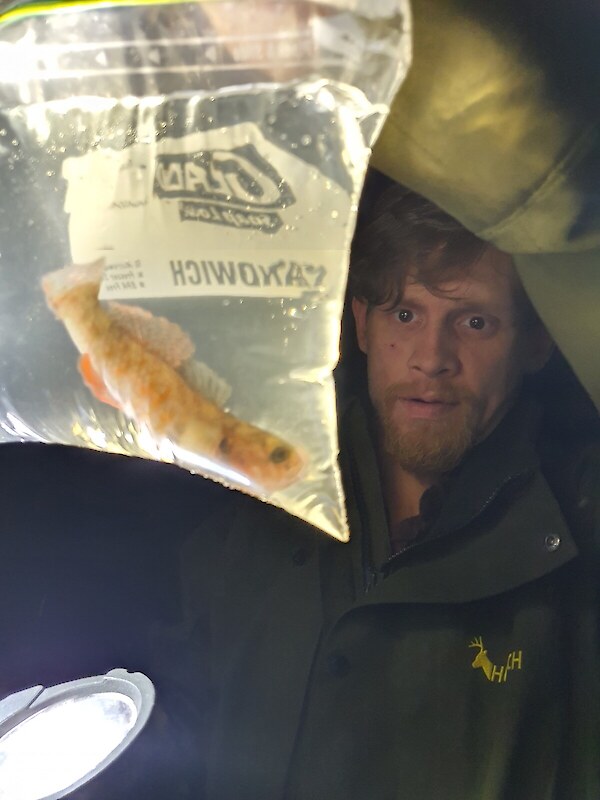
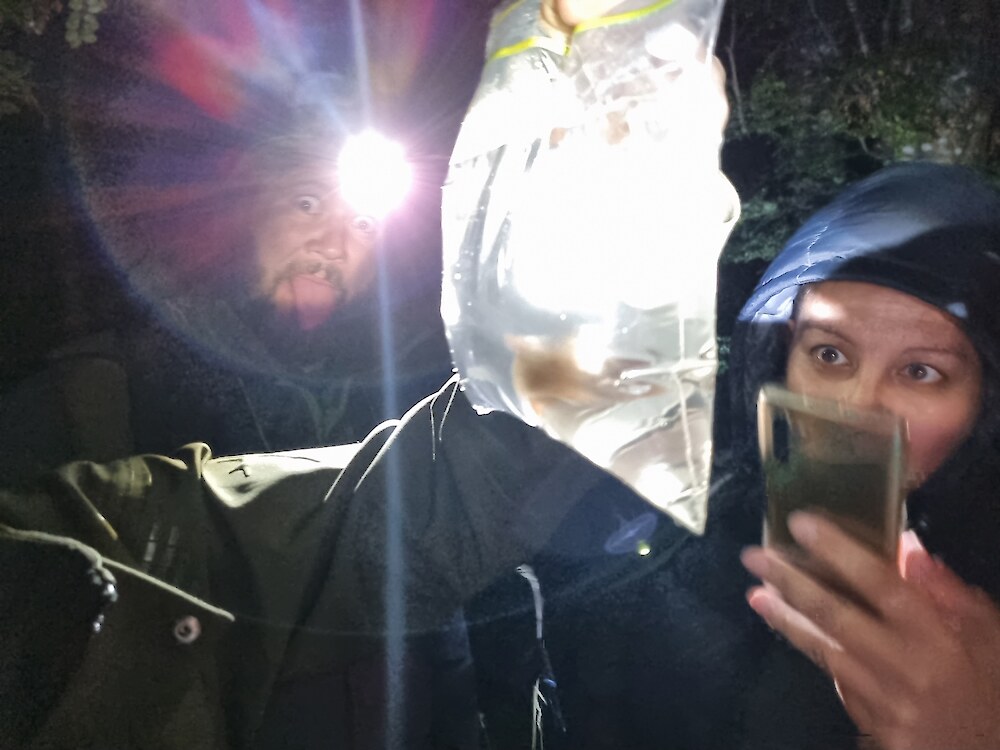
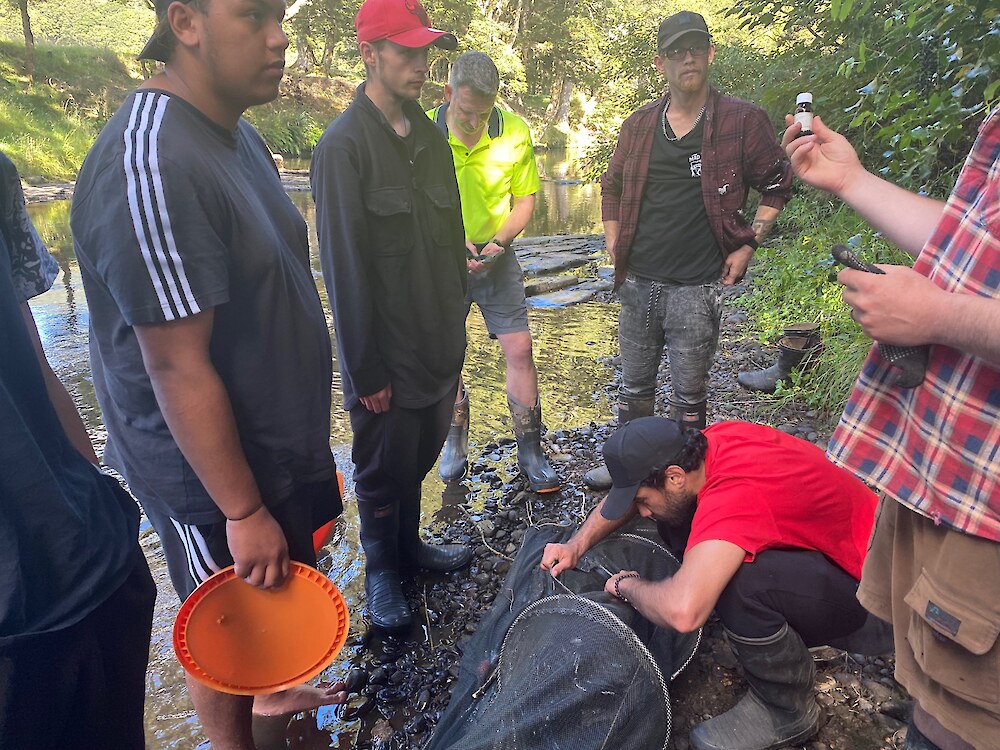
Matt Dale also took the tauira to go night spotting which led to the discovery and capture of a live Redfin Bully and Banded Kōkopu. Josiah was very interested in the discovery and helped Matt to secure and show to the rest of the rōpū.

The night also involved equipment which the boys were able to use, such as the thermal vision monocular. Raniera and Josh were occupied for ages, taking photos and videos through the lens using their phones. It was awesome to see them really utilise the equipment and searching out wildlife in the dark.

Overall highlights were seeing the bats first-hand, learning about he ika i roto i te awa, having the tauira being in amongst it, the knowledge we have gained from the amazing expertise on hand! As always, we thank Toitu te Whenua (LINZ) who supports and funds this kaupapa, and of course, the helpers that make this Kaupapa happen, you know who you are, thank you!
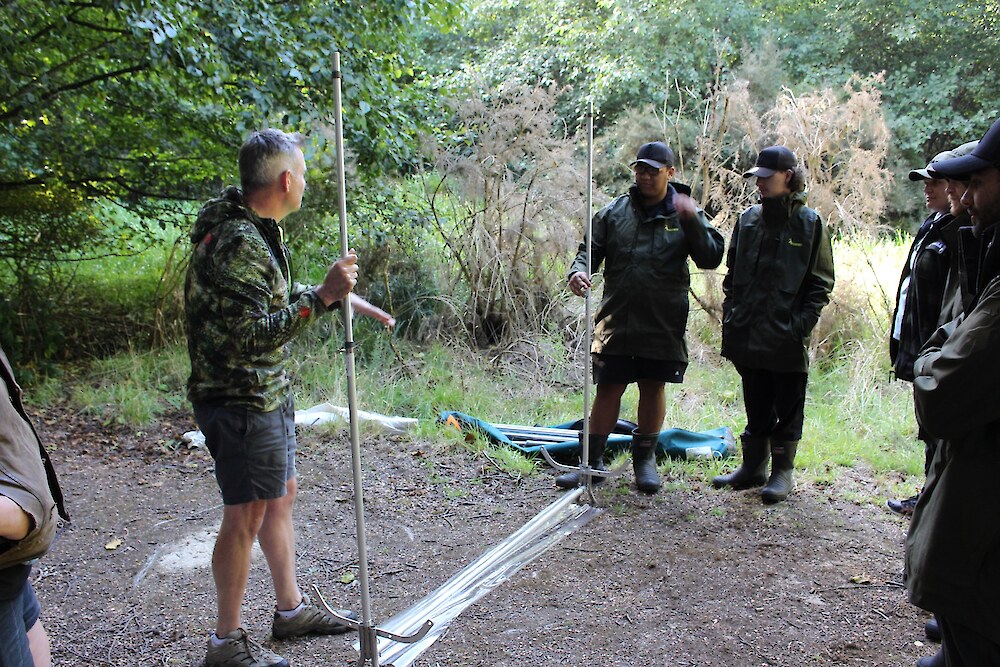
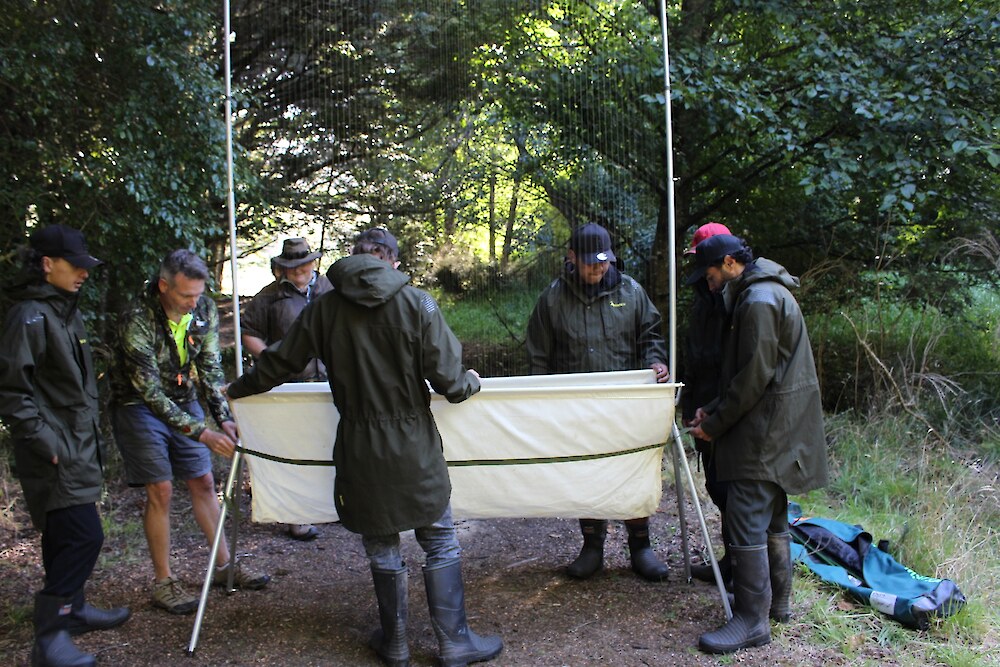
Ian explaining how to set up the Harp traps. The tauira helping to put these together and place them.
All the rōpū setting the hīnaki.
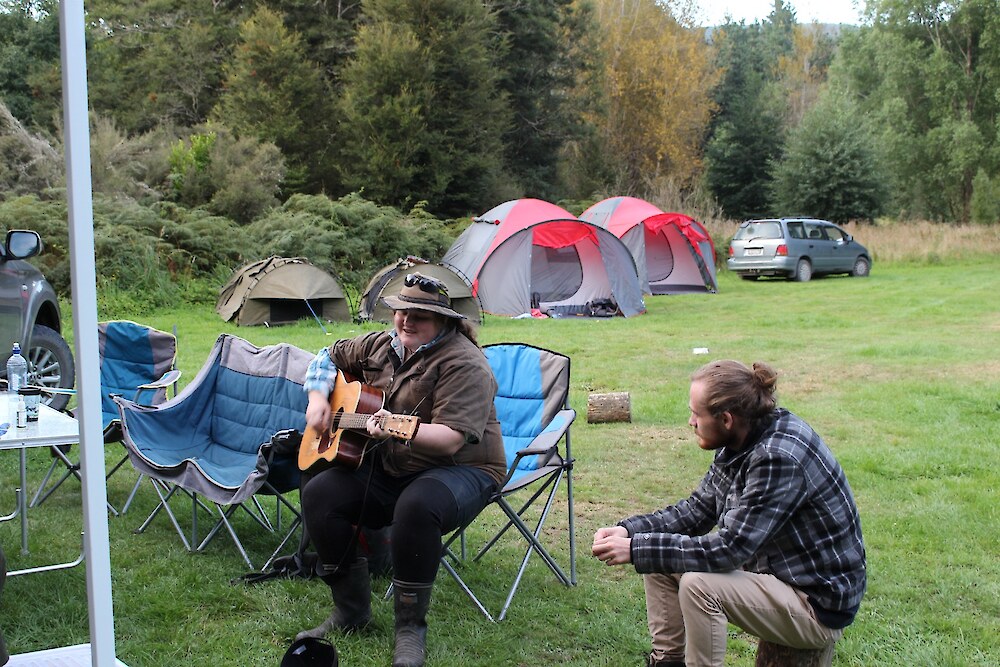
Kelsi Hayes entertaining the rōpū with her amazing guitar and waiata skills, with on-looker Luka Finn.
Matt Dale dissecting a trout and showing tauira.
Ian Davison-Watts with Raniera Smyth setting up the specialised equipment.
All the boys enjoying each others company around a fire that they have made. (left to right) Josiah Kawana, Sentre Harden, Josh Aitken, Raniera Smyth and Kaloni Taylor.
Josiah Kawana holding and showing Redfin Bully.
Riki Parata and Tamara Ramage amazed by the Redfin Bully.
Ian Davison-Watts showing and explaining Pekapeka-tou-roa (long tailed bat) wings.
Kaloni Taylor, Josh Aitken, Matt Dale, Josiah Kawana and Moi (kurī) collecting the hinaki the morning after.
Matt Dale explaining to the tauira how they sedate tuna for observation.
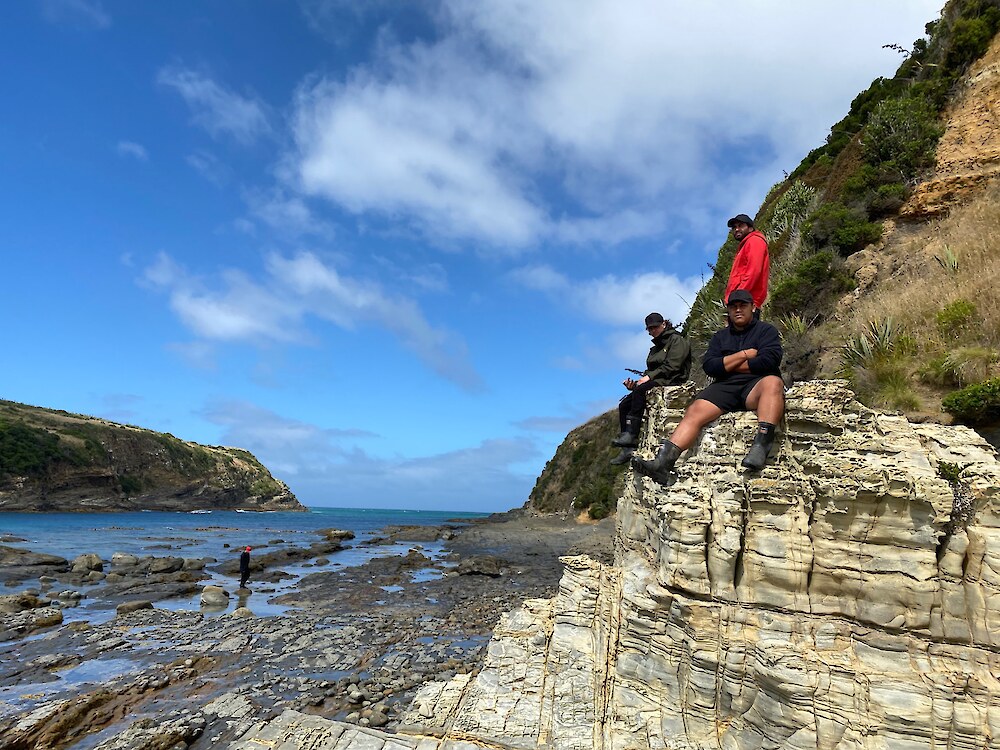
Tauira exploring Jacks Bay.

Posted: 4 March 2022
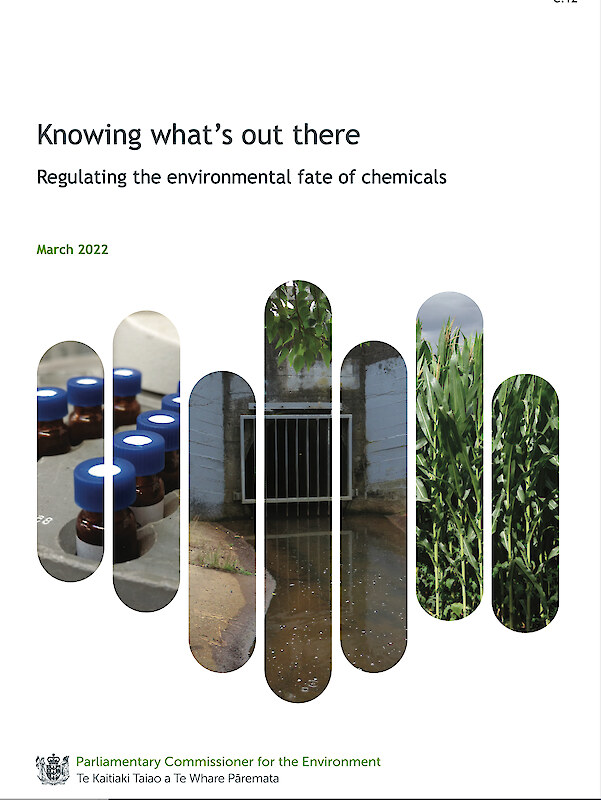
Regulating the environmental fate of chemicals

On Thursday 3 March 2022 the Parliamentary Commissioner for the Environment released the report: Knowing what’s out there: Regulating the environmental fate of chemicals.

Find out more about the report from the Parliamentary Commissioner for the Environment website or download the report directly here.

Official Media release:

The Parliamentary Commissioner for the Environment, Simon Upton, is proposing changes to the way New Zealand manages chemicals to make sure their environmental impacts are not overlooked.

“On paper, there is a robust system in place to assess risks when a chemical is introduced to the country. But many chemicals that have been in use for decades have not been subject to close scrutiny. Much of the science on their environmental impact has changed,” the Commissioner says in a report released today.

“The rules about how a chemical can be used shouldn’t be static – we need to be able to adapt as new information comes to light.

“Restrictions should be based on the latest science and informed by New Zealand-specific data on use and impact.”

The report, Knowing what’s out there: Regulating the environmental fate of chemicals, found that there are gaps in the way we monitor chemicals in the environment and in how we interpret their impact on living things.

Of the monitoring that is undertaken, there is little feedback to the chemical management system that determines how chemicals are used.

“While not all chemicals present a high level of concern, there is a lot we don’t know about chemicals reaching our environment, including how much is used, where they are used, and the effects they are having,” the Commissioner said.

“Finding out after chemicals have caused irrevocable impacts on the environment is too late.”

The Commissioner proposes that all agencies dealing with chemicals, alongside Māori, develop a common framework to better manage the environmental impacts of chemical use.

This framework should prioritise action on contaminants that pose the highest risk based on how much a chemical is being used, the potential environmental harm it could cause, and how much of it is being detected in the environment.

To gauge the scale of a chemical’s use in New Zealand, the Commissioner recommends collecting and reporting data throughout a chemical’s lifecycle. This would require importers, manufacturers, and sellers of chemicals to report on chemical quantities.

“If we know what is being used and the regional distribution of that use, we can then organise our environmental monitoring to match the scale of chemical use,” he said.

“There are over 30,000 chemicals approved for use across the country, but only around 200 chemicals are routinely tested for.

“While we cannot test every ecosystem for every chemical in New Zealand, we can do more to target those of highest potential risk to the environment.

“We also need to do a better job of setting limits for acceptable concentrations of chemicals in the environment and monitor whether these levels are being exceeded.”

To assist these goals, the Commissioner wants greater use made of environmental exposure limits and better guidance on monitoring on a regional and national scale.

Monitoring guidance should include the scope and frequency of monitoring as well as the development and implementation of Māori cultural monitoring.

“In a perfect world, if chemicals are used in the way they are approved to be used – taking into account their likely environmental fate – then what we see and find in the environment should be at acceptable levels. But theory rarely matches reality.”

“If we make these adjustments to the system we should be able to see when problems occur and amend conditions as new information arises.”

Posted: 4 March 2022
Rio Tinto starts cleaning up Tiwai Point

From Stuff - reporter Rachael Kelly

Rio Tinto will begin exporting a hazardous substance which is being stockpiled at Tiwai Point, as the company begins cleaning up the site where it has produced aluminium for more than 50 years.

The company came under pressure to clean up the smelter site after it was revealed it has been stockpiling potentially toxic waste in storage facilities and a landfill.

Despite the possibility that the smelter may stay open past its 2024 closing date, New Zealand Aluminium Smelter chief executive and site general manager Chris Blenkiron said regardless of the closure date or plan for the operation at Tiwai Point, Rio Tinto and NZAS are committed to remediating the site.

”We are not waiting, right now we are working closely with Ngāi Tahu, Environment Southland and the Ministry for the Environment on achieving the best outcomes,” he said.

The company has 217,000 tonnes of spent cell lining in two storage facilities at its site near Bluff. Some is in a purpose-built building, and 106,000 tonnes is being stored on an engineered concrete pad with purpose-built drainage. The pad is about 100m from a beach which is being affected by coastal erosion.

Spent cell lining is made up of carbon refractory bricks, which are used in the aluminium-making process for five to six years. They contain fluorides, cyanides and nitrides, and can produce explosive gases when mixed with water.

Blenkiron said contracts were in place to begin exporting spent cell lining to industrial end users.

SCL is exported for use in the cement industry and is also used in the manufacture of ceramics. The company could not say when the exporting would begin.

As well as removing ouvea premix from the paper mill at Mataura, the company has also cleared two other sites of the class six toxic substance, which produces ammonia gas if it gets wet. Two more sites are yet to be cleared.

Nearly 15 thousand tonnes of ouvea premix, a by-product of the aluminium smelting process, has been removed from sites around Southland to date, with around 9000 tonnes still to be removed.

Rio Tinto will spend a total of $6 million removing the toxic chemical from warehouses in Southland. Taha Asia Pacific stored 10,000 tonnes of premix in the former paper mill, and another 10,000 in warehouses in Invercargill before it went into liquidation in 2016.

Rio Tinto is also adopting new processes to reduce risk at the smelter site, such as the development of a dry process to clean out the base of reduction cells, which removes the use of water in this process.

In March last year Environment Minister David Parker admitted there was no agreement in place between the Government and Rio Tinto to clean up the site at Tiwai Point, where the smelter has operated for 40 years.

Rio Tinto and senior government ministers have discussed changing the mining giant’s plan to close the Tiwai Point aluminium smelter in 2024, but documents released under the OIA make clear that the date for closing the smelter, which currently employs about 1000 staff and contractors, is not “final”.

This week, Meridian opened the door to negotiations that could see the Tiwai Point aluminium smelter stay open for at least another 12 years until 2034.

Posted: 26 February 2022

Hokonui Rūnanga Mahi Update Hui

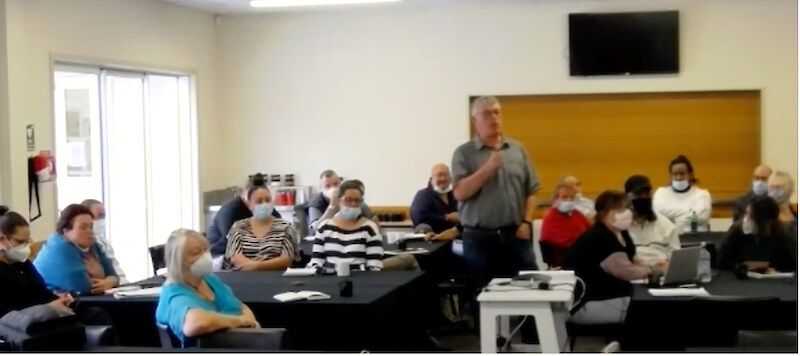
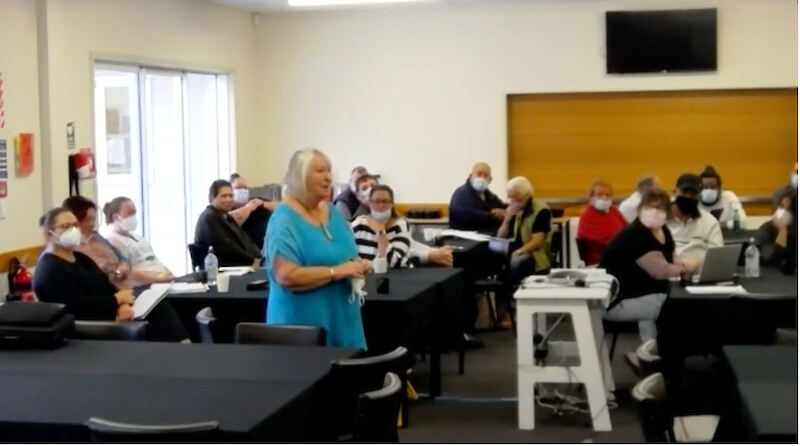
The team at Hokonui Rūnanga has grown significantly since staff supervisor Linette Sinclair first became involved 23 years ago.Linette Sinclair speaking to Hokonui whānau about her long involvement with the organisationLinette Sinclair speaking to Hokonui whānau about her long involvement with the organisation

“…this organisation has really grown not only in numbers of people but in capability. The capability here now has grown beyond our dreams”

Established in 1987 the rūnanga is managed by Terry Nicholas – the driving force behind the organisation’s transformation from humble beginnings to it’s current capacity delivering a range of whānau services and building spiritual, cultural, social and economic growth.Terry Nicholas introducing staff at the hui.Terry Nicholas introducing staff at the hui.

On Tuesday 22 February 2022, a special hui was held at the rūnanga to update members and Te Rūnanga o Ngāi Tahu of the mahi currently undertaken by the ever expanding Hokonui team.

Staff and associates presented updates on a variety of kaupapa including education and training; alternative education; biodiversity enhancement and the environment; COVID and emergency response; Whānau Ora navigators; partnering with the E Tū union; upcoming Leadership wānanga; and clean energy opportunities.

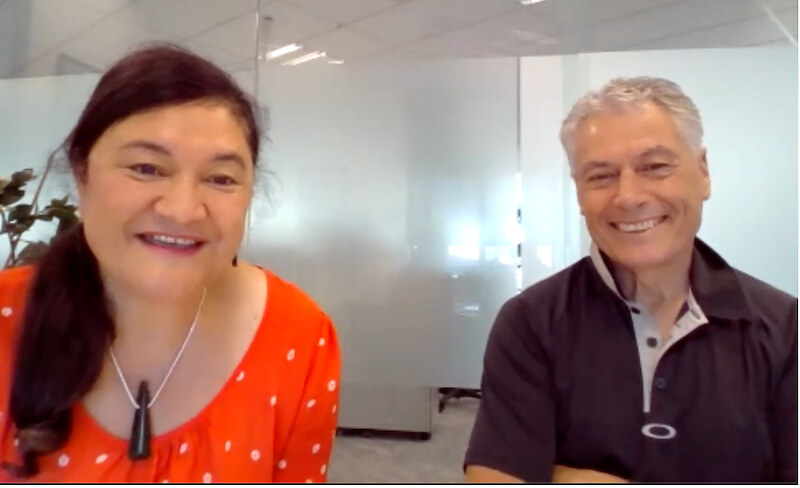
The hui was also attended by Arahia Bennett (Te Rūnanga o Ngāi Tahu CEO) and Mike Pohio (Te Rūnanga o Ngāi Tahu Holdings Chair).Arahia Bennett and Mike Pohio from Te Rūnanga o Ngai Tāhu attended the hui via Zoom.Arahia Bennett and Mike Pohio from Te Rūnanga o Ngai Tāhu attended the hui via Zoom.

Arahia stated that:

“Some of the core themes that I’ve picked up from many of you … is about wellbeing and pathway planning and engaging right from our tamariki , our rangatahi, our pakeke, and right through to our kaumatua- being involved in flourishing and growing your community”

“To see you here today and know that you are immersed in the wider Hokonui and the Murihiku community – I think things are going to get better and better for you”

“A massage pat on the back to yourselves … it’s (Hokonui Runanga) has just grown and grown. It’s our job and our duty to look beyond here and continue to support you to develop.”

Mahi updates

A summary of the main Hokonui mahi updates is provided below:

Kaitoko Matauranga – general overview

  • Have Alt Education Unit contract for surrounding 5 schools.
  • Te Hurihanganui pilot – with Ministry of Education and Waikato University (see Stuff article from 26 January 2021).
  • Sit with MoE on recruitment panels for lead advisors – done the last 7 with them for the local region
  • Working with police with newly formed organised crime project for Murihiku
  • Working closely with Oranga Tamariki (OT) – recruiting in the next few weeks for the Kairaranga. Also re-shaping our local panel.
  • Te Tapu o Tane project with the four rūnaka in Murihiku
  • Representing on the inland group for Wakatipu – with the seven rūnaka.

COVID and emergency response

Hokonui Rūnanga is a Level 3 MfE accredited organisation. We are one of the 7 community connecting contracts in Murihiku. Currently we must ‘man’ our email process from 8am to 8pm 7 days a week. We have a timing schedule to report back immediately when a referral comes in regarding someone isolating due to COVID. We cover the entire Murihiku and up to Central Otago as well.

Actively involved in anything COVID related in rohe and across the takiwa regarding COVID and emergency response – helping people in general.

Alternative Education

Have up to 11 students – ranging from Year 9 to Year 12. Currently have 7 students.

All of the students are currently doing NCEA Level 1 – which is aimed at Year 11 students. Even though not all the students are at that year level they all do the same – on the same waka together.

This term and term 2 – focussing on literacy in English. Term 3 and 4 will be Maths.

By the end of this week (week 3 for us) the students will have achieved the first 3 of 10 literacy credits.

Engage with whānau in keeping them up to date through social media. Have a FaceBook page for whanau to engage.

We use and adopt a whare tapa whā model in our space so we ensure we are catering to the needs of our ākonga – and not just making sure they fit into a box.

Got a robust and full schedule for this year.

End of last year held a greenstone wānanga – amazing experience.

Kaimahi always engaging in professional development. Currently working with Ivan and Linda (Ministry of Education) to adapt a programme of transitional pathways for our rangatahi

Biodiversity

Been a busy space – 13 employees in the Taiao unit. Plus whole rūnaka effort.

Currently engaging in 3 Jobs for Nature projects.

1. Hokonui Hills and Haumuri (Croydon Forest) – biodiversity enhancement and pest control, weed, control, planting.

2. LINZ – also got capacity building element – seed collection Kaupapa. Seed collection goes to Te Tapu o Tane (collaboration between 4 papatipu rūnanga of Murihiku)– established a nursery in Invercargill – strategic hui yester with 4 rūnanga – looking very promising. Financial modelling looking good.

3. Job for Nature in the Catlins with DOC – biodiversity and pest control.

Whānau Ora Navigators

Work with whānau to support them to be self-managing and natural leaders in their own environment. It’s about setting goals and creating pathways for them to achieve those goals and aspirations.

Professional development – Abby and Karena have skills in mental health. Although they don’t work in ‘crisis’ situations – do have skill sets to refer on and deal with it in the first instance.

Posted: 24 February 2022

First Hui for Worker Transitions Working Group

Upoko Michael Skerrett and Te Aukati Kore Lead, Ivan Hodgetts convened the first hui for the Just Transition, Worker Transitions Working Group on Wednesday 23 February 2022.

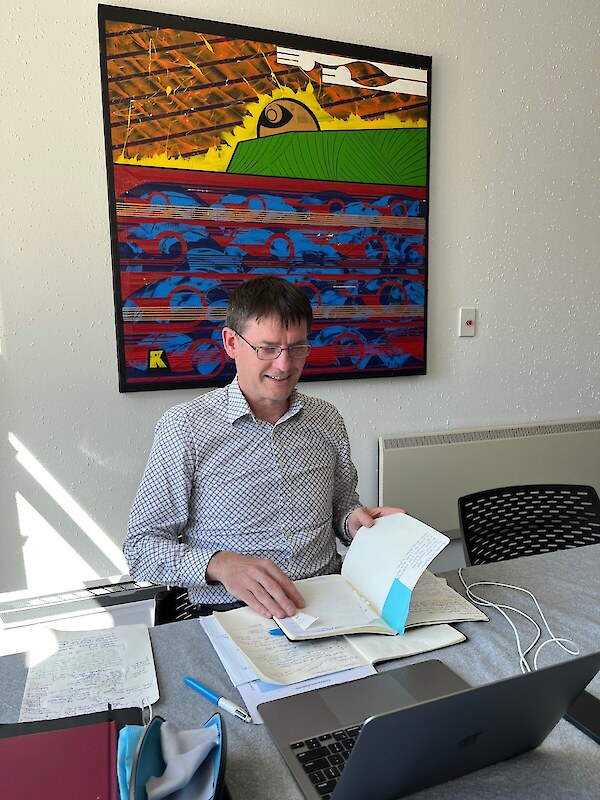
This group is focussed on considering the needs of both current and future workforce as the region makes the transition through a changing social and economic landscape.Ivan Hodgetts speaking to the Worker Transitions Working Group via Zoom yesterday.Ivan Hodgetts speaking to the Worker Transitions Working Group via Zoom yesterday.

Murihiku Regeneration is leading this kaupapa and has formed a diverse working group to provide insight and perspective from local and central government agencies, schools, tertiary education, unions, the business community and rangatahi voice.

Ivan said “the first meeting was intended to bring the group together and confirm a shared understanding of the worker transition focus. The group are already very engaged in this opportunity to focus on looking to capture the opportunity presenting for our region and ensure local people are well supported”.

The group will be developing a workplan over the coming months. As a part of this process there will be opportunity for community and sector group input through a series of hui.

The working group members are:

  • Michael Skerrett - Upoko
  • Ivan Hodgetts - Programme Lead, Te Ara Aukati Kore
  • Angelia Skerrett - Rangatahi Tumeke Tuakana - rangatahi voice
  • Jo Brand - Hokonui Rūnanga
  • Anna Huffstutler - E tū Union who will be joined by a Tiwai Smelter delegate
  • Roger Beattie (Architect) - Beattie McDowall Achitects
  • Raniera Dallas – Southern Institute of Technology
  • Gerry Ward - Former Principal, Menzies College. Currently Learning Support Coordinator, Gore High School.
  • Associate Prof Vivian Anderson – Dean, College of Education, Otago University.
  • Emma Hamilton - Regional Labour Market Manager Ministry of Social Development
  • Anne Pullar - Community Strategy Manager, Gore District Council
  • Simon Richardson - James Hargest College and Chairperson Career and Transition Educators Association (Southland)
  • Azi Bradshaw (Murihiku Regeneration) - Secretarial Support

Posted: 24 February 2022

Prev page
Page 33 of 42
Next page

Also in this section

Pānui updates Photos
  • News
    • Pānui updates
    • Photos

© 2026 Hokonui Rūnanga • Website by RS

Facebook
  • Home
  • About us
    • Who we are
    • Murihiku Regeneration
      • Structure and context
      • Office of Upoko
    • Property assets
    • Find us
    • Job vacancies
  • Our history
    • Our whakapapa - a deep connection to this place
    • Wai and Whakapapa
    • The Battle of Waitaramea
    • Poupoutunoa and Kauwaewhakatoro
    • Two Rivers: Mataura (Mata Ura) and Clutha (Mata Au)
      • Mata Ura - Mataura River
      • Mata Au - Clutha River
  • Events & key dates
    • He Ao Hou - New Futures Murihiku Teacher PD Day
    • Energy and Innovation Wānanga 2024
    • Energy and Innovation Expo 2023
      • He Ao Hou - New Futures Murihiku 22 May
      • Live Streaming of Wānanga 23 and 24 May
      • Hosts and Key Speakers 23-24 May
      • Energy and Innovation presentations - 23 May
        • Opening Addresses
        • Global Session
        • Empowering partnerships: government's role in Aotearoa's energy transition
        • Climate Economics
        • Regional Infrastructure
        • Social regeneration and innovation
        • Regional Innovation
        • The importance of the Māori economy through this change
      • Energy and Innovation presentations - 24 May
        • Regional Leadership Panel
        • Regional Plans and Priorities
        • Southern Green Hydrogen
        • Tiwai Smelter Future
        • Southland Aquaculture
        • Regional Case Studies: Decarbonisation
        • Innovation and Bluff Re-imagining
        • Confirming Priorities: wrap-up and closing
    • Science and Innovation Wānanga 2021
    • Energy, Infrastructure and Opportunities Wānanga 2026
  • Education & training
    • Education - Hokonui Rohe Team
    • Te Ara Aukati Kore - Education, Training, and Capability
      • Kia Tū Pathway Planning Programme
        • Kia Tū in schools
        • Kia Tū Tertiary Pathway Programme
        • Meet Your Kaiako - SIT Campus
      • Anamata Māia: Bold, Confident Futures Service
        • Our Kaimahi - Staff
      • Penapena Ā Kura: School Attendance Service
      • Te Aka Whai Mahi: Find Your Path
      • He Ao Hou: New Futures Murihiku
    • Have your say!
  • Environment
    • Kaupapa Taiao - Hokonui Floriculture
    • Taonga Research
      • Kanakana Research
      • Our research partners
    • Southern Ocean - Murihiku ki te Tonga
    • Energy Transition Programme
      • Regional Energy Action Plan - Towards 2030
      • Energy Transition Plan for Murihiku-Southland
      • Hydrogen and Green Energy
      • Tiwai Point
    • Te Tapu o Tāne
    • Our Kaimahi - Staff
  • Health & wellbeing
    • Whānau Ora Navigators
    • Community youth worker and advocacy service
    • Hokonui Community-Led Health
    • Kaumatua Health Days
    • Te Kakano - Nurse-led Clinics
    • Our Kaimahi - Staff
    • Hokonui Takiwā Health and Wellbeing Village of Support
    • Referral form
    • COVID-19
  • News
    • Pānui updates
    • Photos
  • Contact us
    • Register
  • Facebook
  • Search...